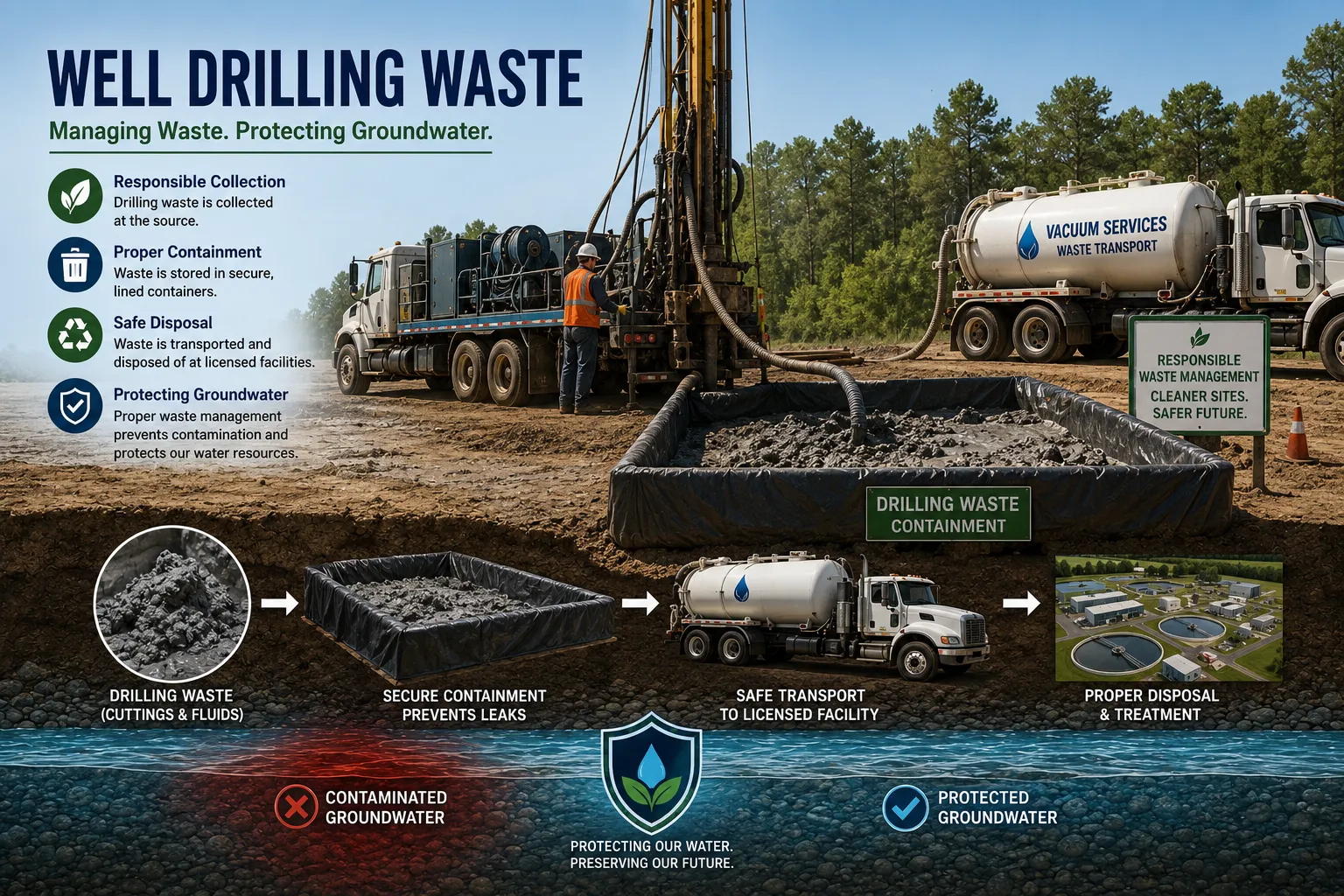
A drill bit grinds through layers of rock and sand, pushing a steady stream of thick gray mud to the surface. Most crews stop work when the pits get full, but the smartest teams use a continuous vacuum loop to haul away debris as it appears. Removing well drilling waste without delays requires high-cfm vacuum trucks, on-site separation tanks, and a pre-planned truck rotation that keeps the drill spinning. Well drilling sludge disposal services in South Florida provide the heavy-duty machinery needed to pull mud straight from the borehole to the tanker. This method stops the site from drowning in its own debris.
Speed Starts at the Borehole
Drilling creates a massive amount of waste in a short time. Mud and rock chips fly out of the ground every second. If the mud has nowhere to go, the drill must stop. Operators lose thousands of dollars every hour the rig sits idle. Using a direct suction line is the fastest way to stay ahead of the mess.
Vacuum hoses connect directly to the discharge area. This setup pulls the mud away before it ever hits the ground. It keeps the workspace dry and safe for the crew. Workers can focus on the drill instead of shoveling mud. Keeping the area clear allows the rig to move faster.
High-Power Vacuum Systems
Standard pumps cannot handle the grit found in drilling mud. Rock shards and heavy sand destroy regular equipment quickly. Professional teams use positive displacement blowers that create a massive airflow. These machines pull thick sludge through long hoses without clogging.
Strong suction moves the waste into large steel tanks. These tanks hold thousands of gallons, which means fewer stops for the crew. Technicians monitor the tank levels to ensure a fresh truck arrives before the current one gets full. This seamless handoff keeps the operation moving forward. Machines built for grit are the secret to a fast job.
On-Site Separation and Drying
Water makes drilling waste heavy and hard to move. Hauling pure liquid costs a lot of money and takes up too much space. Many fast-moving sites use "shaker" systems or mobile filters to separate the solids. They pull the water out and reuse it for the drilling process.
Dry dirt is much easier to haul than wet soup. Removing the water on-site reduces the number of truck trips by half. This saves time and keeps the road traffic low around the site. Crews can stack the dry waste in a corner or load it onto flatbeds. Less weight always means more speed.
Infrastructure Support for Drills
Well sites often rely on complex pipe systems to move water and waste. These pipes can get clogged with sand and silt over time. Drain pipe cleaning in Ft. Myers helps keep these vital lines open during big projects. A blocked pipe can shut down a drilling rig in minutes.
High-pressure water jets blast through the buildup inside the lines. Then, a vacuum pulls the debris out so it cannot settle again. Clean pipes allow for a higher flow of water to the drill head. This keeps the bits cool and the mud moving at the right speed. Maintenance prevents the sudden stops that ruin a project schedule.
Smart Logistics and Truck Timing
Empty trucks must be ready at all times. A delay in the truck schedule is a delay for the drill. Logistics managers use GPS to track every tanker on the road. They know exactly when a new truck will pull into the site.
- Staging Zones: Trucks park in a specific spot so they do not block the rig.
- Dual-Tanker Setups: One truck fills while another preps its hoses.
- Quick-Connect Valves: Hoses snap together in seconds to prevent leaks.
- Route Planning: Drivers avoid heavy traffic to keep the cycle moving.
Handling the Geology of South Florida
Florida soil presents unique problems for drillers. The sand is loose and the water table is very high. This creates a very wet and runny sludge that spreads fast. Well drilling sludge disposal services in South Florida understand how to manage this specific type of waste.
Special liners stop the wet mud from soaking into the ground. Vacuum operators use different settings to handle the sandy mix. They know how to prevent the suction from pulling too much groundwater. Local expertise ensures the project stays within environmental rules. It also prevents the rig from sinking into the soft mud.
Safety Protocols for Heavy Waste
Speed should never come at the cost of safety. Heavy vacuum hoses can be dangerous if they move suddenly. Professional crews secure every line with heavy-duty straps. They wear the right gear to protect against splashes and loud noise.
Training makes the team move faster. A crew that knows the safety rules does not make slow mistakes. They check for gas leaks and pressure spikes constantly. These checks take seconds but save hours of downtime. A safe site is an efficient site that finishes on time.
The Bottom Line
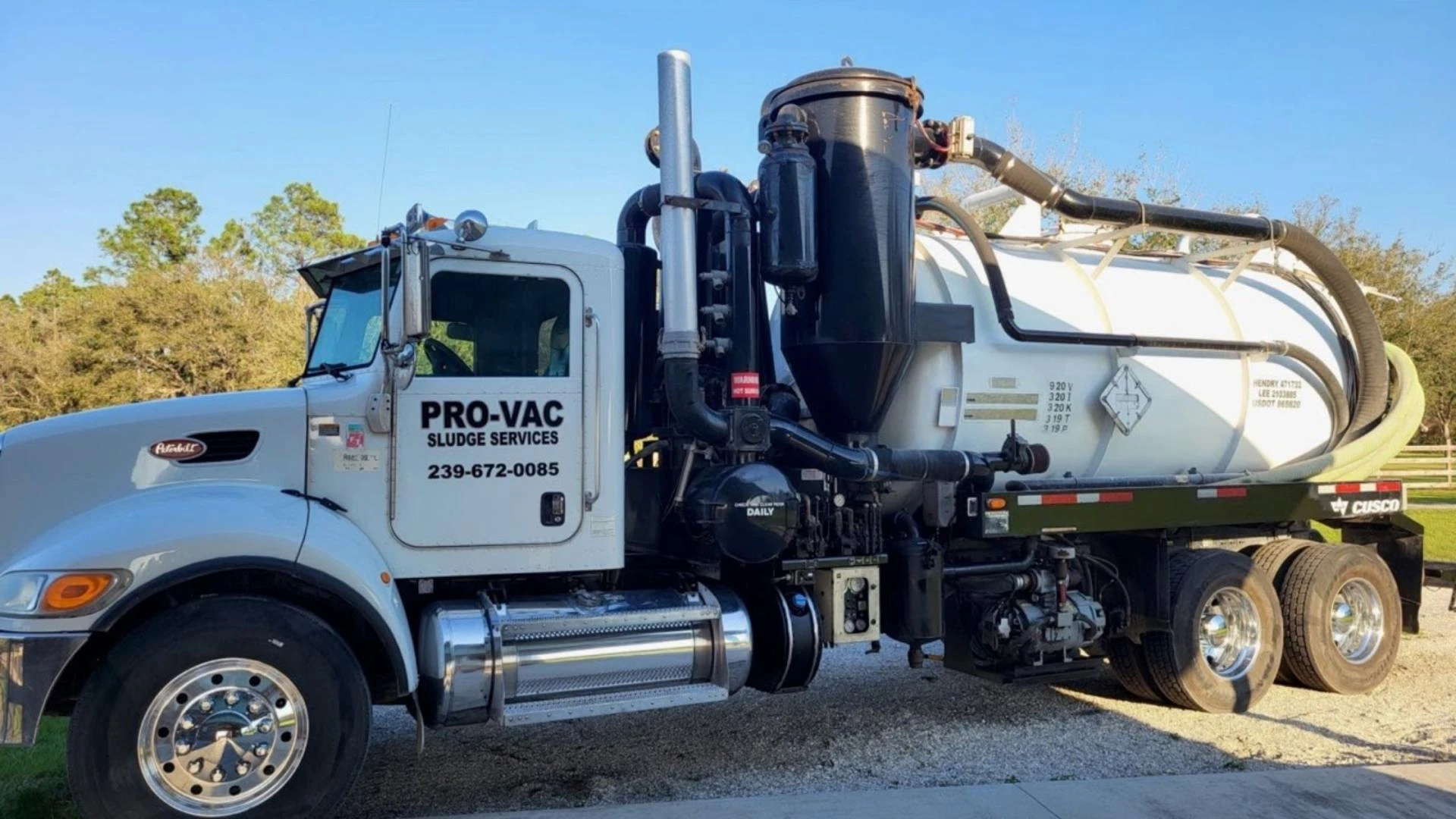
Pro-Vac Sludge Services accelerates well projects by providing rapid debris extraction and transport. This company deploys high-volume vacuum trucks to pull mud directly from the rig. Their team performs drain pipe cleaning in Ft. Myers to ensure that site infrastructure remains clear of silt. Waste stays under control because Pro-Vac Sludge Services manages the liquid-solid separation on the fly.
Contractors choose them for well drilling sludge disposal services in South Florida to avoid costly rig downtime. The company handles every step from the initial suction to the final disposal at licensed plants. They offer storm drain maintenance and industrial tank cleaning for heavy-duty sectors. Pro-Vac Sludge Services maintains a fleet of modern tankers ready for 24-hour operation. Reliable waste removal happens through their focus on constant suction and smart truck rotation.


























Sign in to leave a comment.