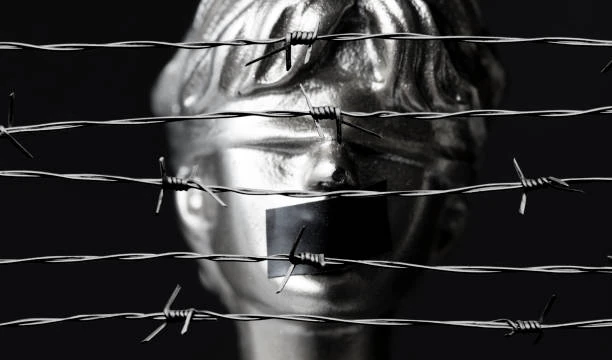
In the shadows of an all-encompassing state, the human spirit faces its most grueling test. The narrative landscape of Beneath the Regime presents a chillingly plausible vision of a society governed by absolute surveillance. This story examines the delicate balance between the instinct for self-preservation and the drive to fight for justice. Every character exists in a state of perpetual hyper-vigilance, where a single word could lead to disappearance. The central conflict is not merely physical; it is a profound psychological struggle for identity. Resistance is rarely a grand, public gesture in such a suffocating environment. Instead, it often begins with small, internal shifts that challenge the state's narrative. This article examines how the pursuit of safety often becomes a gilded cage for the oppressed.
Illusion of Safety
For many living under an authoritarian thumb, compliance seems like the only logical path to survival. They believe that by following every law, they can carve out a quiet, undisturbed life. This belief is the cornerstone of the regime’s power over the common citizen. People convince themselves that their silence is a shield against the state's reach. They go to work, participate in mandatory rallies, and avoid eye contact with neighbors. These actions create a temporary veneer of normalcy that appears to offer safety. However, this safety is entirely conditional upon the whims of the ruling elite.
The psychological comfort of compliance comes at a staggering moral cost. To remain safe, one must often witness injustices without speaking out. This passive participation erodes the individual’s sense of self-worth and integrity over time. Within the pages of the Beneath the Regime Book By Andrea D. Woolhead, we see how this dynamic forces characters into a state of cognitive dissonance. They must justify their inaction to survive, yet they feel the weight of their own complicity. This specific literary exploration highlights that safety under a tyranny is never a permanent state. It is a fragile truce that can be broken by a single anonymous accusation.
Resistance as Risk
If compliance is a shield, then resistance is a lightning rod. Choosing to oppose a regime means accepting that your life and your family’s lives are forfeit. The consequences for dissent are usually swift, brutal, and designed to serve as a public warning. Those who choose this path are often driven by a breaking point where the status quo is unbearable. They understand that their personal sacrifice may not lead to immediate victory. However, they view their actions as a necessary seed for future liberation. This brand of courage is lonely and often misunderstood by the fearful majority.
Personal sacrifices in these contexts extend beyond the threat of physical pain or imprisonment. Rebels often lose their social standing, their livelihoods, and their connections to loved ones. The regime uses collective punishment to turn a resistor’s community against them. By punishing the family of a dissenter, the state weaponizes love and loyalty. This tactic creates a profound sense of isolation for anyone considering a rebellious act. Despite these terrifying odds, the human desire for agency often proves stronger than the fear of death. Resistance becomes an assertion of humanity in a system designed to treat people like cogs.
Moral Ambiguity
In a world governed by fear, the line between hero and villain becomes incredibly blurry. Characters are frequently caught in the middle ground between survival and total integrity. Is it cowardice to stay silent to protect your children, or is it a form of pragmatism? These questions do not have easy answers, and the narrative reflects this complexity. Most people are neither saints nor monsters; they are simply trying to navigate a minefield. This ambiguity makes the characters relatable and their choices deeply painful to observe.
The boundary between pragmatism and betrayal is often invisible until it has already been crossed. A person might agree to report on a friend just to keep their own family from starving. In their mind, they are making a necessary choice for survival. Yet, this act contributes to the very system that oppresses everyone they love. This cycle of forced betrayal is how regimes break the social fabric of a nation. When trust is destroyed, the possibility of a unified resistance movement shrinks significantly. Integrity becomes a luxury that many feel they can no longer afford in a world of scarcity.
Tension Between Choice and Control
Authoritarian power thrives by limiting the scope of human agency until it almost vanishes. Every choice is monitored, and every deviation is corrected with violence or social shunning. This constant pressure shapes the way individuals perceive their own ability to act. Fear becomes the primary filter through which all decisions are made. When fear is the baseline of existence, the brain shifts into a permanent state of survival mode. In this state, long-term planning and abstract ideals like "freedom" often take a backseat to immediate needs.
Control is maintained not just through physical force, but through the manipulation of information. By controlling the narrative, the regime makes resistance seem not only dangerous but entirely futile. Characters often struggle with the feeling that their small acts of defiance mean nothing in the grand scheme. They see the regime as an immovable mountain that will outlast their own short lives. However, the tension between state control and individual choice is where the story’s energy resides. Even under total surveillance, the human mind remains a private space where rebellion can quietly grow.
Fragile Balance Between Safety and Resistance
The balance between staying safe and standing up is a moving target that shifts daily. One day, a person may be content to hide; the next, an atrocity may spark their defiance. This fragility is what makes the struggle against oppression so volatile and unpredictable. Regimes often collapse not because of a single grand invasion, but because thousands of individuals reach their limit. When the cost of compliance finally exceeds the cost of resistance, the tide begins to turn. This tipping point is the most dangerous and hopeful moment for any society.
There are broader implications for individuals living under such oppressive systems today. The story serves as a warning about how easily civil liberties can be traded for the promise of security. It reminds us that once a regime takes hold, the path back to freedom is paved with immense suffering. The struggle of the characters is a reflection of real-world history and current geopolitical tensions. We must recognize that the "illusion of safety" is often the first step toward total loss of control. Protecting the right to dissent is essential to preventing the rise of such regimes in the first place.
Conclusion
The line between safety and resistance is a thread that can snap at any moment. Through the lens of this narrative, we see the true cost of authoritarianism on the human psyche. Safety is revealed to be a deceptive comfort that often masks a deeper moral decay. Resistance, while fraught with peril, is shown to be the only way to reclaim one's humanity. The tension between these two poles creates a story that is both heartbreaking and deeply inspiring. Ultimately, the struggle is about the enduring power of the truth in a world of lies.
As we look at the characters’ journeys, we are forced to ask what we would do in their position. Would we choose the quiet life of a collaborator to protect those we love? Or would we risk everything to speak a truth that the world needs to hear? There is no simple answer, but the question itself is vital for our own moral growth. The legacy of those who resist reminds us that silence is never truly safe. True safety only exists in a world where freedom is a guaranteed right rather than a conditional gift. By understanding this fragile balance, we can better appreciate the liberties we often take for granted.















Sign in to leave a comment.