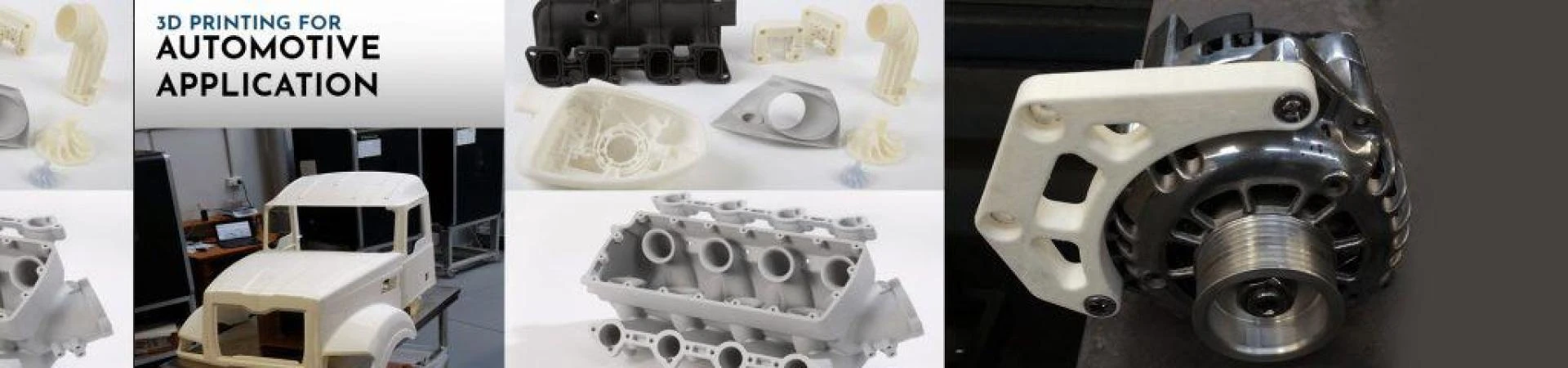

In the realm of manufacturing and product development, speed, precision, and innovation are paramount. Rapid prototyping, the process of quickly creating physical models or prototypes of a design, plays a pivotal role in turning ideas into tangible products. Plastipack Industries, a leading name in the world of 3D printing services, has been at the forefront of this transformative technology. In this blog, we'll delve into the future of rapid prototyping with a focus on Plastipack Industries' cutting-edge SLA (Stereolithography) 3D printing services.
The Significance of Rapid Prototyping
Rapid prototyping is a game-changer in product development for several reasons:
Accelerated Innovation: Rapid prototyping allows designers and engineers to quickly test and refine their ideas, leading to faster product development cycles.
Cost Reduction: It reduces the cost of design errors by catching issues early in the development process, ultimately saving time and resources.
Customization: It enables the creation of customized and intricate designs that would be challenging or impossible to achieve using traditional manufacturing methods.
Market Responsiveness: In today's fast-paced market, being the first to market with a new product or feature can be a significant competitive advantage. Rapid prototyping helps companies stay ahead.
Plastipack Industries' SLA 3D Printing: Shaping the Future
Stereolithography (SLA) 3D printing is a cutting-edge technology that Plastipack Industries has mastered to perfection. This additive manufacturing process utilizes a laser to solidify liquid resin layer by layer, resulting in exceptionally precise and detailed prototypes. Here's why Plastipack Industries' SLA 3D printing is shaping the future of rapid prototyping:
1. Unparalleled Precision:
SLA 3D printing boasts incredible accuracy, producing prototypes with intricate details and smooth surfaces. This level of precision is invaluable for evaluating form, fit, and function.
2. Speed and Efficiency:
Plastipack Industries' SLA 3D printing is remarkably fast. It can produce complex prototypes in a matter of hours or days, reducing development timelines significantly.
3. Material Variety:
Plastipack Industries offers a wide range of SLA-compatible materials, allowing clients to choose the best material for their specific project, whether it's for visual prototypes, functional testing, or end-use parts.
4. Iterative Design:
The speed and cost-effectiveness of SLA 3D printing make it ideal for iterative design processes. Designers can quickly make adjustments and create updated prototypes for evaluation.
5. Reduced Waste:
Traditional manufacturing methods often result in material waste. In contrast, SLA 3D printing is an additive process, meaning material is used only where needed, minimizing waste.
Real-world Applications
Plastipack Industries' SLA 3D printing services find applications across diverse industries:
Automotive: Prototyping of vehicle components and customized design iterations.
Medical: Creating anatomical models for surgical planning and development of medical devices.
Aerospace: Rapid prototyping of lightweight and complex aircraft parts.
Consumer Electronics: Design validation for product casings and components.
Architectural and Industrial Design: Architectural models and prototypes for design validation.
Conclusion
Plastipack Industries' SLA 3D printing services are ushering in the future of rapid prototyping. With precision, speed, and versatility, they enable businesses and innovators to turn their ideas into reality faster and more efficiently than ever before. As the world continues to embrace the transformative power of additive manufacturing, Plastipack Industries stands as a pioneer, empowering industries to innovate, create, and shape the future of design and manufacturing.




Sign in to leave a comment.