

Healthcare documentation has long been one of the most time-consuming responsibilities for medical professionals. Between chart updates, coding requirements, and patient records, clinicians often face hours of administrative work every week. The rise of AI-powered tools is beginning to change that reality.
Today, many healthcare organizations are exploring how AI Agents for Clinical Documentation can improve efficiency while maintaining documentation quality. These systems use natural language processing and machine learning to assist with note generation, data extraction, and record organization during patient encounters.
Instead of manually typing every detail, clinicians can review AI-generated drafts created from voice conversations or structured clinical inputs. This reduces repetitive work and helps providers focus more attention on patient care rather than screen time.
The benefits go beyond convenience. Faster documentation can improve care coordination, reduce claim processing delays, and minimize missing information in patient records. In busy healthcare environments, even small workflow improvements can significantly impact operational efficiency.
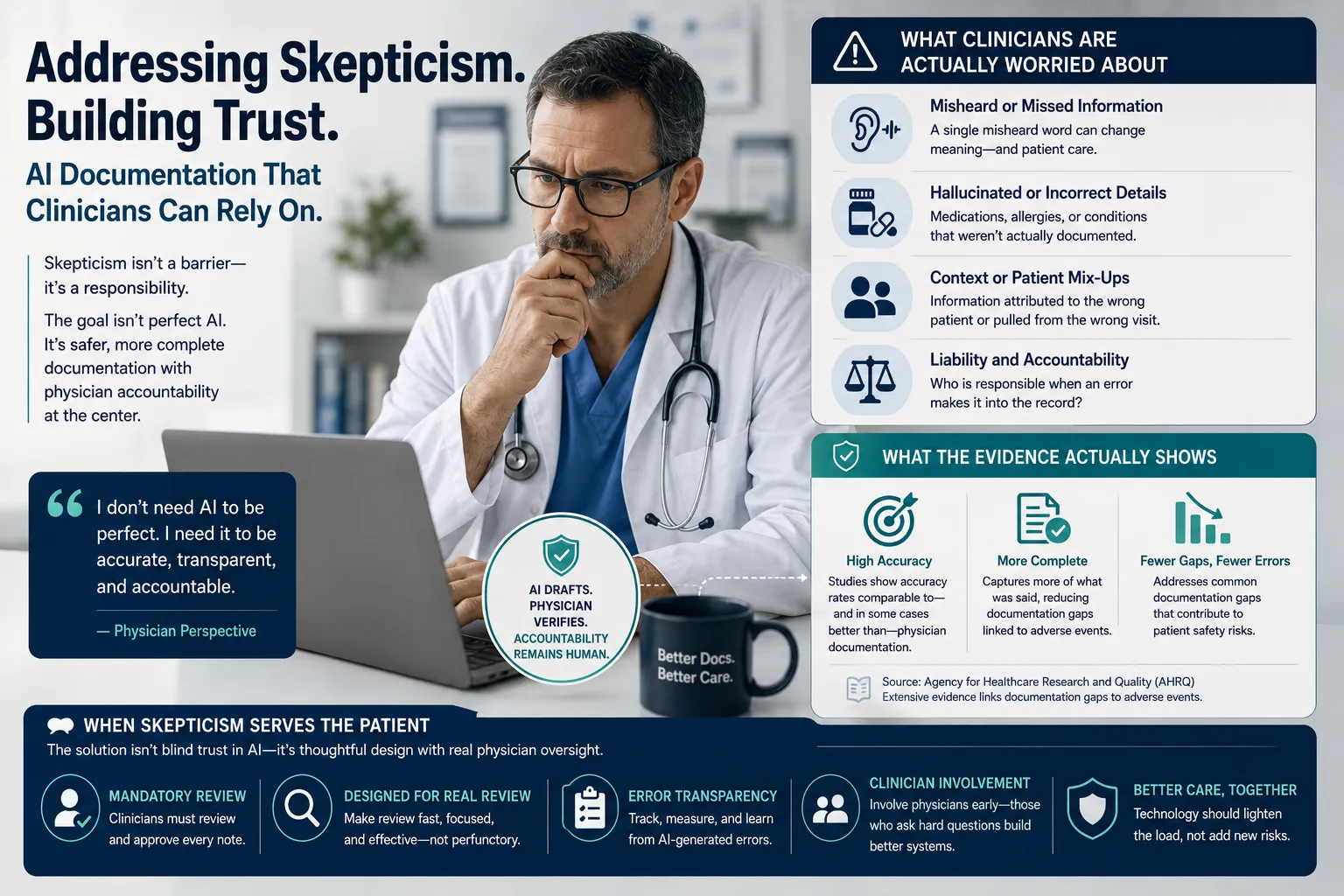
At the same time, healthcare leaders recognize that AI tools are not perfect. Complex patient histories, uncommon diagnoses, and nuanced conversations can still challenge automated systems. Human review remains essential for ensuring clinical accuracy and patient safety.
Federal agencies continue monitoring how automation affects healthcare delivery. Guidance from Centers for Medicare & Medicaid Services highlights the importance of compliance, auditability, and responsible use of technology in healthcare administration.
Academic research is also helping shape best practices. Experts at Harvard Medical School have explored how AI can support clinical decision-making while emphasizing the importance of transparency and clinician involvement in high-stakes healthcare settings.
Another major development is the integration of AI documentation tools into telemedicine platforms. Virtual care visits often generate large amounts of information that must be documented accurately and quickly. AI systems can summarize interactions, identify relevant clinical terms, and prepare structured reports for provider approval.
Organizations implementing these technologies effectively usually focus on gradual adoption rather than full automation. Confidence scoring, escalation workflows, and continuous model training help ensure the systems remain reliable over time.
As healthcare continues evolving digitally, AI-assisted documentation is increasingly viewed as a practical support system that can reduce administrative strain while helping clinicians maintain focus on patient-centered care.


























Sign in to leave a comment.