
The Problem Nobody Talks About at the Point of Purchase
Rural borewell pipelines around Ajmer fail earlier than they should. Not all of them, but enough that it's a recognised frustration among farmers and village contractors. The usual explanation is "bad pipe" — and sometimes that's true. But the real picture is messier than that.
What drives borewell pipeline failure in this region is a combination of factors: soil chemistry, groundwater composition, pressure from submersible pumps, and yes, the quality of the pipe itself. Most people only think about the last one. The result is that they replace the same pipe, make the same choices, and end up with the same problem two years later.
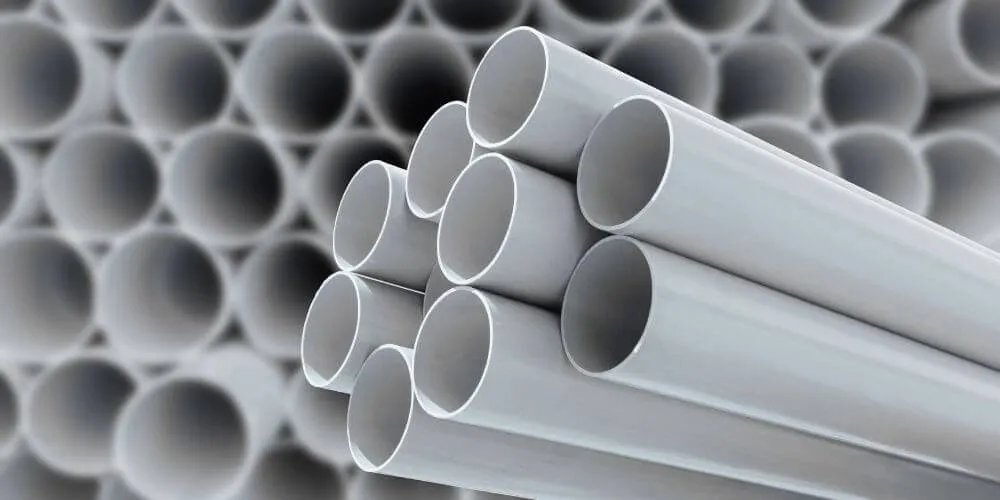
The good news is that the right approach to PVC pipe manufacturing in Ajmer accounts for all of these factors together, not just tensile strength on a data sheet.
What Rural Soil Around Ajmer Does to a Pipeline
Soil in the Ajmer district and surrounding areas tends to be hard, rocky in some patches, and high in mineral content. This affects buried pipelines in ways that aren't obvious from the surface.
Alkaline soil slowly degrades the outer layer of low-grade PVC over years. The pipe doesn't crack immediately — it gets brittle. And brittle pipe doesn't survive the vibration that a submersible pump sends through the line every time it runs. Micro-fractures form, water seeps into the surrounding soil, and pressure drops. By the time anyone notices, the damage is deep in the ground and expensive to access.
Sandy stretches near dried riverbeds are a different problem. The soil there shifts. When the ground moves, it puts lateral stress on buried pipe. A pipe with uniform, adequate wall thickness handles this. A pipe that cut corners on material grade doesn't.
How Groundwater Chemistry Plays a Role
Hard water is standard across most of rural Rajasthan. High calcium and magnesium content causes scaling inside pipes over time, which narrows the effective diameter and increases pump load. That's a pump maintenance issue, but it also puts more internal pressure on the pipeline — pressure the pipe wasn't necessarily rated to sustain continuously.
More directly damaging is water with high sulphate or chloride content, which occurs in certain areas of Ajmer district, especially near older agricultural land where groundwater has been used intensively. These compounds accelerate chemical degradation in lower-quality PVC compounds. A pipe that's supposed to last 15 years might lose structural integrity in 7 or 8.
This is why pipe grade matters more in this region than in areas with neutral groundwater. It's also why a manufacturer doing PVC pipe manufacturing in Ajmer with local water chemistry in mind is working from a more realistic baseline than one formulating for a national average.
Installation Mistakes That Shorten Pipeline Life
Even good pipe fails early if it's installed badly. A few specific errors come up repeatedly in rural borewell installations.
Joining pipe sections with mismatched fittings is common when contractors source components from multiple suppliers to save money. The joint is the weakest point in any pipeline. If the fitting isn't rated to the same standard as the pipe, that's where the failure will start.
Over-tightening threaded joints cracks the pipe collar. Under-tightening lets in air and water. Neither is obvious at installation — both show up months later.
Running a pipeline without proper support intervals means the pipe carries its own weight over long horizontal stretches. PVC has more flex than metal. Without support every metre or so on long horizontal runs, it bows, and bowing creates stress points.
Why Trutuf Pipes Is Worth Knowing About
Trutuf Pipes makes pipe for conditions in this region, not conditions on average. Their products are tested at temperatures that reflect Rajasthan summers, formulated with stabilisers appropriate for hard-water environments, and manufactured to consistent wall thickness so there are no thin spots waiting to fail.
They supply directly to contractors, farmers, and builders, which keeps pricing straightforward and means buyers get consistent product across an entire project — not a mix of batches from different production runs. For borewell pipelines specifically, that consistency matters because you can't inspect what's underground.
Conclusion
Borewell pipelines in rural areas around Ajmer fail early for predictable reasons: aggressive soil chemistry, hard or mineral-rich groundwater, pump pressure over time, and installation shortcuts. Solving just one of these without addressing the others gives partial results at best. The starting point — using pipe designed for these specific conditions — is what Trutuf Pipes is built around. If you're putting in a new borewell line or replacing one that's failed, the quality of the pipe you choose at the start will define how long you go before doing this again.
FAQs
How long should a borewell pipeline last in rural Rajasthan? A good-quality PVC borewell pipeline, properly installed and matched to local soil and water conditions, should last 15–20 years. Pipelines that fail in under 10 years are almost always the result of either substandard pipe grade, installation errors, or both.
Does borewell depth affect what pipe grade I should use? Yes. Deeper borewells mean higher water column pressure and more vibration from the submersible pump. For depths beyond 100 feet, you need heavier-grade pipe with a higher pressure rating. Ask your supplier to specify the pressure class, not just the diameter.
Why does my borewell pump lose pressure even though there's no visible leak? Pressure loss without a surface leak usually means the damage is underground — either a micro-fracture in the pipe or a joint that's weeping slowly. Scaling inside the pipe can also narrow the bore enough to reduce flow. Both need to be ruled out before assuming the pump is at fault.
Can I use the same PVC pipe for the borewell casing and the delivery line? Not always. Borewell casing pipe sits in contact with soil and groundwater continuously and needs higher chemical resistance. Delivery line pipe carries pressurised water above ground or at shallow depth. The specifications are different. Using the wrong grade in either role shortens the pipeline's working life.
Is locally manufactured pipe from Ajmer better than branded national products? It depends on what the manufacturer is actually doing with their local knowledge. A company that tests their product under Rajasthan conditions and adjusts formulation accordingly has an advantage over a national brand using a single standard mix. Ask for test data and certifications — that's more useful than brand name alone.
























Sign in to leave a comment.