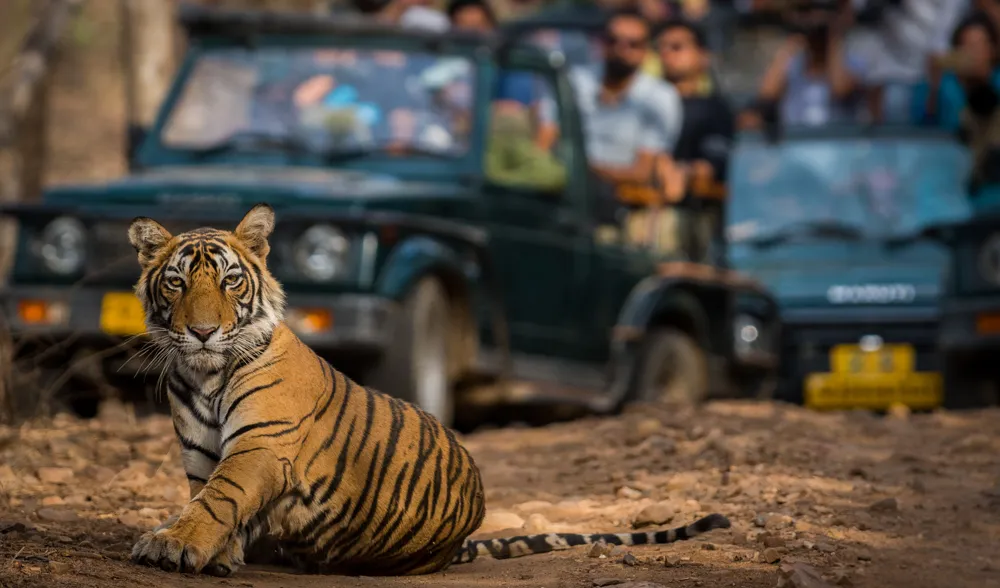

Ranthambore National Park stands as one of the world's most spectacular wilderness regions where ancient human history perfectly merges with untamed nature. For travelers planning an immersive journey into this landscape, choosing the right resort in Ranthambore serves as the foundation for an incredible wilderness adventure. The geographical layout of the park, spanning over 1,334 square kilometers at the precise junction of the ancient Aravalli and Vindhya hill ranges, creates a unique dry deciduous ecosystem found nowhere else on earth. This rugged terrain features flat-topped hills, sharp ridges, open meadows, and pristine lakes that have collectively fostered an incredible diversity of flora and fauna, making it a premier destination for global travelers and naturalists alike.
The Royal History of the Land
Long before it became a sanctuary for the preservation of endangered species, this vast expanse of dry deciduous forest served a drastically different purpose. During the eras preceding India’s independence, these woods were the private and exclusive hunting grounds of the Maharajas of Jaipur and the royal family of Karauli. The region was systematically managed by a dedicated royal hunting department known as the Shikar Khana.
The historical legacy of the park is anchored by the colossal 10th-century Ranthambore Fort, which towers 700 feet above the surrounding plains on a massive hilltop. Recognized as a UNESCO World Heritage Site, this architectural marvel has witnessed countless medieval sieges and battles. Scattered throughout the dense jungle are various historical ruins, such as the red sandstone Jogi Mahal located on the banks of Padam Talao lake, and the hauntingly beautiful Rajbagh ruins. These structures give the landscape a unique atmosphere, where wild predators regularly walk past crumbling stone arches and ancient gateways.
The Evolution of Conservation
Recognizing the severe ecological toll of unregulated hunting and rapid industrialization across the subcontinent, structural preservation efforts began in the mid-20th century. The timeline of its evolution marks a massive shift from a royal playground to a sanctuary of global ecological importance.
- 1955: The forest tract was officially designated as the Sawai Madhopur Game Sanctuary, putting a temporary halt to commercial exploitation.
- 1973: India launched the historic Project Tiger conservation initiative, and Ranthambore was proudly selected as one of the initial nine core reserves.
- 1980: To grant the highest tier of environmental security, a core zone of 282 square kilometers was formally established as a national park.
Subsequent expansions in the 1980s integrated the neighboring Kaila Devi Sanctuary and Sawai Mansingh Sanctuary into the reserve, creating a larger contiguous ecosystem that allows large mammals a broader territory for natural dispersal.
The Royal Bengal Tigers of Ranthambore
The absolute pinnacle of Ranthambore’s global fame is its thriving population of Royal Bengal Tigers (Panthera tigris tigris). Unlike tigers in many other dense tropical reserves across Asia, the apex predators here are famously diurnal, meaning they are highly active during the daylight hours. This unusual behavioral trait, combined with the open nature of the dry deciduous forest cover, offers wildlife photographers and enthusiasts unparalleled visibility.
The park's tigers have achieved legendary status through international nature documentaries. Felines like the iconic tigress Machli, known as the "Queen of the Jungle," captivated global audiences with her fierce nature and remarkable longevity. Today, the reserve is home to over 80 tigers, including thriving adult individuals and growing cubs. Visitors frequently observe these majestic cats hunting, territorial marking, and raising their offspring right alongside the established forest tracks.
Experiencing the Wilderness Firsthand
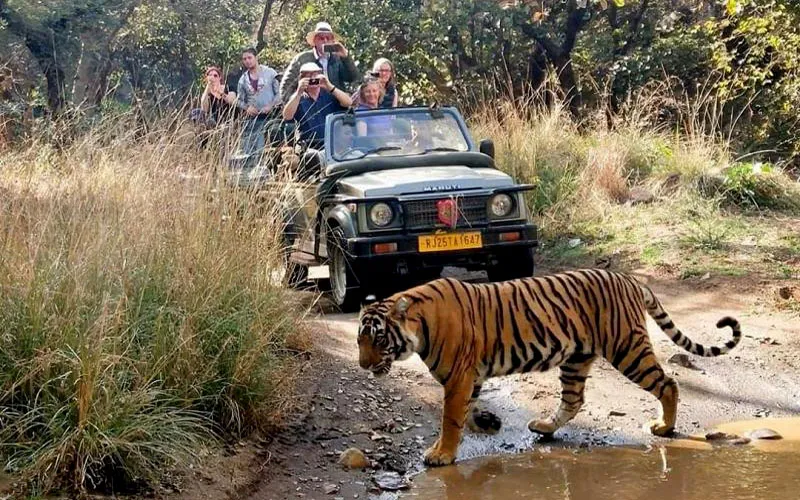
To witness these natural spectacles, embarking on a structured jungle safari in Ranthambore is an absolute necessity. Safaris are carefully regulated by the forest department and operate twice daily from October to June. Travelers can choose between custom 4x4 open-top Gypsies and larger open safari vehicles called Canters, both of which navigate the designated eco-tourism zones.
The tracking of apex predators relies on traditional tracking methods practiced by expert local guides and drivers. These professionals carefully analyze fresh pugmarks, scratch marks on Dhok trees, and listen intently for the distinct, sharp warning calls of langurs and deer. The open topography and minimal undergrowth mean that mega-fauna can often be observed at remarkably close range from the safety of the authorized vehicles.
A Rich and Diverse Ecosystem
While tigers receive the majority of the public attention, the park boasts a remarkably balanced food chain comprising over 40 species of mammals, 330 species of birds, and 35 species of reptiles. The unique vegetation cover is overwhelmingly dominated by the resilient 'Dhok' tree (Anogeissus pendula), which makes up nearly 80% of the forest canopy and manages to thrive even in shallow, rocky soils.
- Co-Predators: The park supports healthy populations of Indian leopards, striped hyenas, jackals, caracals, desert foxes, and sloth bears.
- Herbivores: Massive herds of spotted deer (chital), sambar deer (the largest Asian antelope), blue bulls (nilgai), and Indian gazelles (chinkara) graze across the open grasslands.
- Aquatic Wildlife: The major lakes—Padam Talao, Malik Talao, and Raj Bagh—are populated by massive snub-nosed marsh crocodiles and soft-shelled turtles.
- Avian Abundance: Birdwatchers can easily spot species like the crested serpent eagle, painted francolin, peafowl, and the rare Indian paradise flycatcher.
Planning Your Wilderness Stay
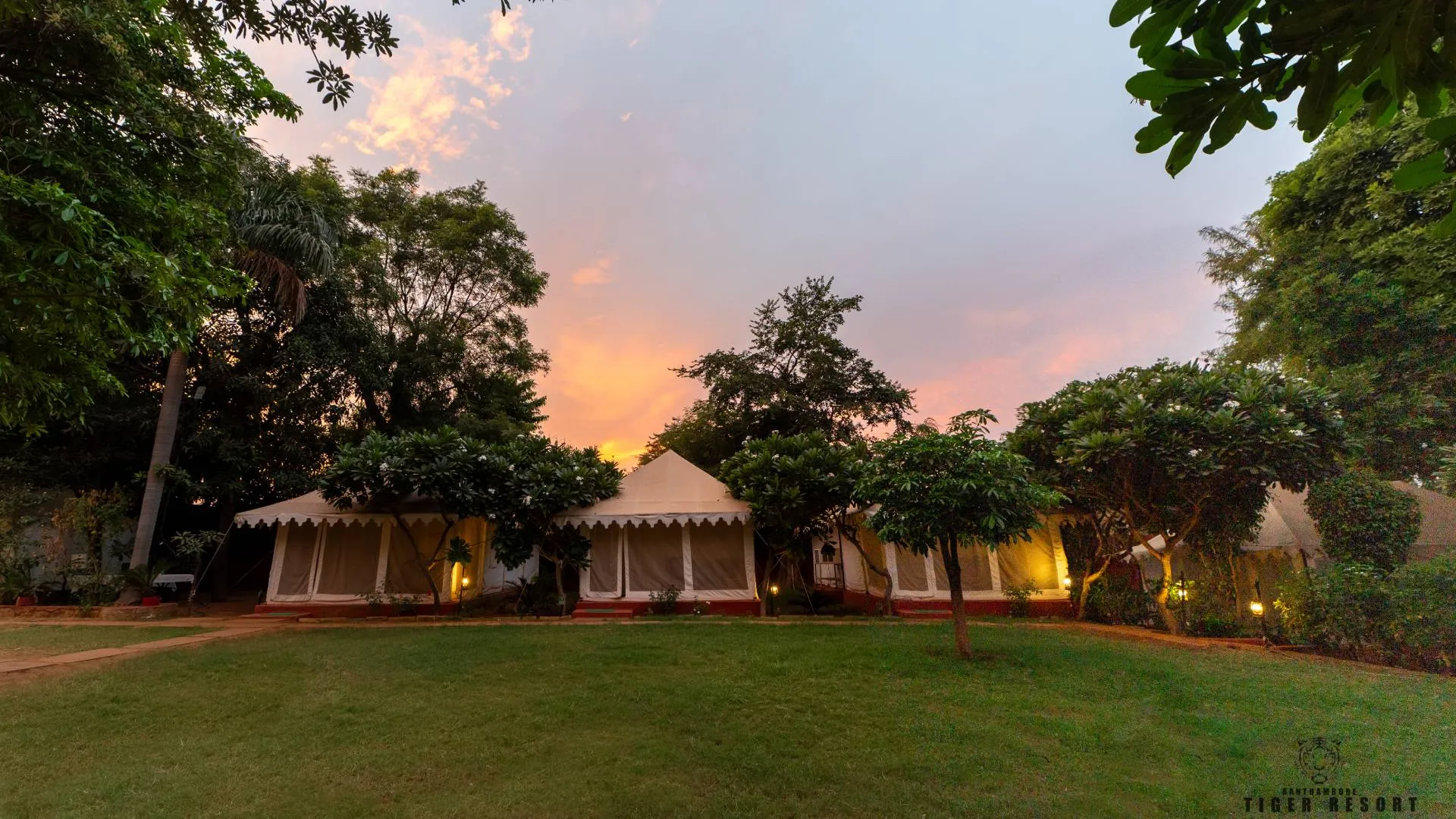
Because the park is closed during the annual monsoon season, timing and preparation are critical for an optimal experience. Securing premium accommodation in Ranthambore well in advance ensures that your excursion aligns seamlessly with the strict forest department schedules. Modern eco-lodges and resorts in the area focus heavily on sustainable tourism, providing local naturalist presentations, traditional Rajasthani dining, and direct logistical assistance for daily park entry permits. Retiring to a comfortable space that mirrors the heritage and natural beauty of the Rajasthan wilderness completes an unforgettable journey into the heart of India's tiger country.

























Sign in to leave a comment.