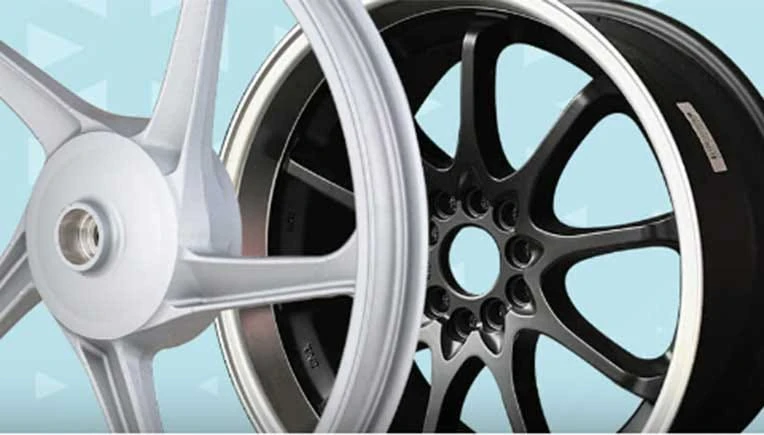

In the world of the automobile industry wheels are considered to be the epitome of style and performance. The process to manufacture alloy wheels includes a series of complex steps and each of those steps is very crucial for ensuring durability, performance, and aesthetic appeal. In the modern automotive industry, passenger car manufacturers largely depend on die-casting companies for passenger car alloy wheels.
Starting from selecting the raw materials to the final finishing touch, the whole process of aluminum wheel die casting can be broken down into the following several key steps:
Selection of raw material:The process of manufacturing passenger car alloy wheels starts with a careful selection of raw materials. All over the world, international car brands prefer aluminum alloy wheels over steel. The manufacturers choose aluminum alloys since these metal alloys are lightweight but highly robust. The aluminum alloys are further corrosion-resistant, durable, and require minimum maintenance.
Melting and Casting:After the raw materials are selected it is necessary to melt them in the furnace at a high temperature, nearly about 700 degree Celsius. Once the alloy is melted the molten alloy is poured into already manufactured molds and allowed to cool and solidify and finally take the shape of the wheel surface. Expert die-casting companies such as Rockman Industries follow Low-Pressure Die Casting, High-Pressure Die-Casting, or Gravity Die Casting processes depending on the design of the wheels and the rate of output required.
Further modification:The solidified metal is then subjected to the forging or forming process so that its shape can be refined further and its structural integrity can be enhanced. In this step, if there are any kinds of potential defects in the wheel then it can be eliminated. Moreover, forging and forming ensure uniformity across the surface of the wheel.
Machining:Precision machining is done in this step for trimming excess material, refining surface details, and creating the required features for example, bolt holes, valve stem holes, and mounting surfaces. Apart from that, computer-controlled milling machines are also sometimes used in this step to achieve the required specifications with utmost accuracy.
Heat treatment:The technique of heat treatment is also applied to the machined passenger car wheels to enhance the mechanical properties, for example, strength, hardness, as well as fatigue resistance. This step involves a controlled heating and cooling process that is tailored to the particular composition of the alloy and the required performance characteristics.
Surface finishing:After the heat treatment, the wheels undergo various surface finishing techniques to achieve the desired appearance of the wheel and protection against corrosion. This process involves painting, powder coating, polishing, or anodizing and these are based on the design preferences and functional necessities.
Quality control:Rigorous control measures are implemented throughout the alloy wheel manufacturing process. This makes sure that each of the alloy wheels meets the highest standards of performance and safety. This process includes dimensional checks, material testing, and visual inspection for detecting any kind of defects or imperfections.
Final inspection and Packaging:Before the alloy wheel is getting ready for shipment a final inspection is done to verify their adherence to specifications and standards. After proper inspection, the alloy wheels are packaged very carefully to protect them during transit. It also makes sure that the wheel arrives in pristine condition so that it can be fitted onto the passenger car.
Rockman Industries is one of the trusted die-cast aluminum wheel manufacturers in India, serves several international clients in Europe and the USA. Their passenger car alloy wheels are known for optimized performance, durability, and cost-effectiveness.

























Sign in to leave a comment.