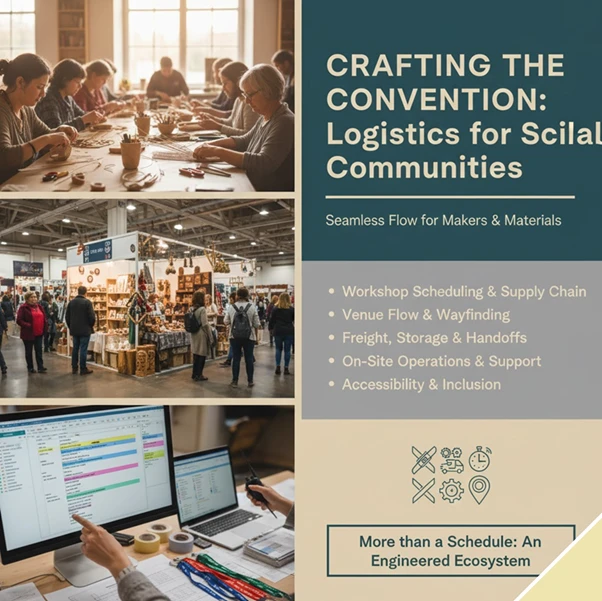
Coordinating a multi-day craft convention for a specialized community is less about “booking a venue and filling a schedule” and more about designing a temporary ecosystem where tools, materials, people, and knowledge can move smoothly for several days without friction. The best logistics plans anticipate the unique needs of makers—messy demos, delicate supplies, and highly specific workshop requirements—while still running like a professional conference.
Start with a logistics blueprint
A solid logistics plan begins by defining the event’s operational scope—how many days, how many simultaneous tracks (workshops, panels, marketplace), and what types of making will happen on-site—because each variable changes space, staffing, and freight needs. Building a reverse timeline (months out to day-of) helps prevent last-minute scrambling, especially for multi-day events where deliveries, badges, and final materials need to land before the first attendee arrives. It also helps to treat “materials and supplies” as a central workstream, not a footnote, since craft conventions often require consumables, safety provisions, and storage planning beyond typical conferences.
Venue, rooms, and flow (makers move differently)
Selecting a venue is not only about capacity—it’s about whether the building can support breakout rooms, workshop mess, and a marketplace layout that doesn’t bottleneck. In practice, this means confirming room sizes and ensuring the venue can handle multiple simultaneous setups (lecture seating in one area, worktables in another, and exhibitor booths elsewhere) while remaining easy to navigate. Accessibility and wayfinding should be treated as logistics, too: clear signage, step-free routes, accessible entrances, and staff training all reduce friction for attendees and exhibitors across a multi-day program.
Workshop scheduling is a supply-chain problem
Workshop scheduling isn’t just time-blocking; it’s coordinating instructors, room setups, and material readiness so every session starts on time with the right tools at the right stations. A practical approach is to group workshops by “infrastructure type” (wet vs. dry, noisy vs. quiet, high-mess vs. clean) so the same rooms can be reset efficiently instead of being reinvented between sessions. At one point, I had to look up what is a basketry exactly before I could properly schedule workshop spaces and material deliveries.
Freight, deliveries, storage, and “where does it live?”
Craft conventions generate a surprising amount of freight: vendor inventory, class kits, tools, signage, swag, and sometimes bulky equipment for demos. Create delivery schedules (who delivers what, when it arrives, where it’s received, and who signs for it), and confirm them with vendors so setup crews aren’t waiting on missing shipments. If the venue uses specific move-in rules—like marshalling yards, dock assignments, or check-in requirements—build those constraints into exhibitor instructions early, because they can make or break load-in day.
On-site operations: the day-by-day rhythm
Multi-day events need a daily operating cadence: opening procedures, room resets, cleaning cycles, security checks, and a predictable support desk workflow for attendees and exhibitors. Plan a “materials run” routine so high-turn consumables (tape, extension cords, sanitizer, gloves, replacement tools) can be replenished without disrupting workshops. Also plan for technical hiccups by testing AV and internet in advance and having backup equipment available, because even craft demos often rely on microphones, projectors, or cameras for close-up instruction.
Accessibility, inclusion, and comfort logistics
Specialized craft communities are diverse in mobility, sensory needs, and comfort requirements, so accessibility must be engineered into logistics rather than added as an afterthought. Practical measures include ensuring wheelchair-accessible routes and entrances, using clear large-font signage, and training staff so they can assist confidently and consistently. For multi-day events, also consider inclusion-supporting spaces—quiet rooms or low-sensory areas can reduce attendee fatigue and help people stay engaged throughout the full program.
Pre-event communications and final handoffs
As the event approaches, a key logistics milestone is delivering final conference materials (badges, lanyards, delegate packs, and similar items) to the venue with enough buffer to fix problems. Attendee comms should include operational details like parking, WiFi, and arrival guidance so check-in lines move faster and staff aren’t repeating the same directions all day. If anything is shipped to an out-of-town venue, confirm the receiving address, share tracking info with the venue contact, and include return labels to simplify post-event returns.
Post-event: breakdown, returns, and learning loops
Load-out and returns should be planned with the same seriousness as load-in, especially when exhibitors rely on precise carrier pickup windows and documentation. After teardown, schedule a post-event meeting and gather feedback while details are fresh, since this is where the next year’s logistics become smoother and more cost-effective. Even a short debrief that captures what ran late, what ran out, and where traffic jammed can significantly improve future multi-day convention flow




























Sign in to leave a comment.