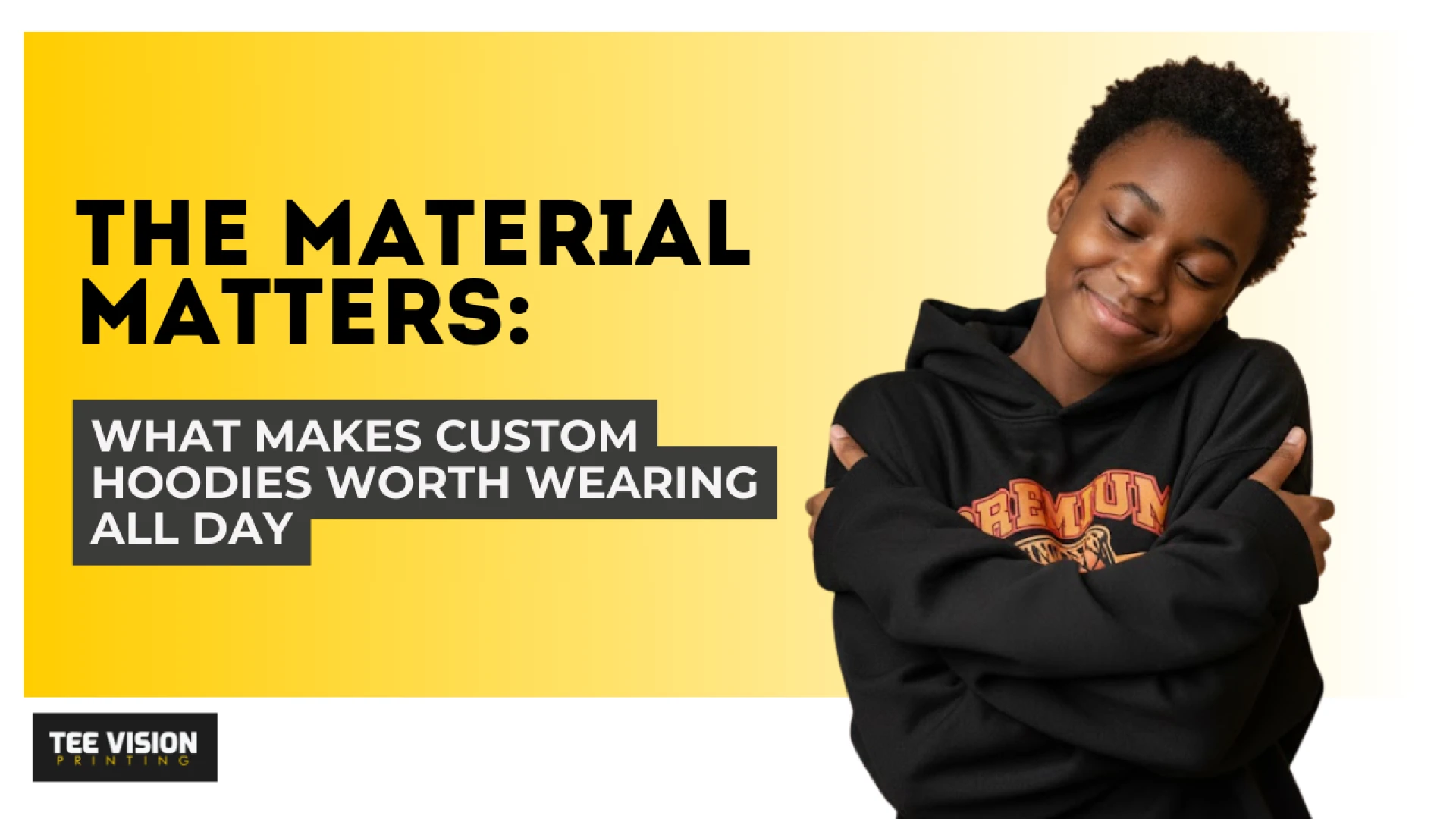

Not all custom hoodies feel the same. Some get tossed in the back of your closet after one wash while others become your go-to comfort piece for years. The difference comes down to material quality, and understanding fabric composition helps you avoid wasting money on branded apparel nobody will actually wear.
Why Fabric Quality Determines Your Hoodie's Success
Cheap materials ruin even the best designs. Your logo might look amazing on screen, but printed on thin, scratchy fabric? Nobody's wearing that more than once. The hoodie itself needs to be something people reach for on a cold morning, not just tolerate because it has your brand on it.
Material choice directly impacts how long your investment lasts. Quality fabrics maintain their shape, color, and softness through countless washes. Budget materials pill, fade, and stretch out within months. When you're using branded apparel for marketing or team building, that longevity matters way more than saving a few dollars per piece.
Cotton vs Polyester: Understanding the Basics
Pure cotton feels soft and breathable but comes with tradeoffs. It shrinks more than blends, wrinkles easier, and takes longer to dry. For custom printing, cotton absorbs ink beautifully and creates vibrant colors that really pop. The natural fiber appeal works great for people who prioritize comfort over everything else.
Polyester brings durability and moisture-wicking properties to the table. This synthetic fiber resists shrinking, holds its shape better, and dries fast after washing or sweating. The downside? Pure polyester can feel less comfortable against skin and doesn't breathe as well as cotton. Most quality hoodies use blends to get the best of both worlds.
The Sweet Spot: 50/50 Cotton-Poly Blends
Blended fabrics combine cotton's comfort with polyester's durability. A 50/50 mix gives you that soft feel people love while preventing the extreme shrinkage pure cotton causes. This balance creates hoodies that survive years of regular wear without losing shape or developing those annoying fabric pills.
These blends also hold printed designs better over time. The polyester component keeps the fabric structure intact while cotton fibers accept ink for vibrant colors. For businesses ordering custom hoodies, this material composition delivers the reliability you need without sacrificing comfort.
Fabric Weight Makes a Real Difference
Lightweight hoodies around 6 to 7 ounces work for layering or mild weather. They're affordable and versatile but won't keep you warm when temperatures really drop. These make sense for promotional giveaways or indoor teams where heavy warmth isn't necessary.
Midweight options at 8 to 9 ounces hit that goldilocks zone for most applications. They provide solid warmth without feeling bulky, making them wearable in various conditions. Heavyweight hoodies at 10+ ounces are built for serious cold weather and create that premium, substantial feel that screams quality. Your climate and use case should drive this decision.
Fleece Construction Types Explained
Standard fleece uses a brushed interior that traps air for insulation. This creates that cozy warmth everyone associates with quality hoodies. The brushing process also makes the inside incredibly soft, which matters when people wear these against bare skin or over just a t-shirt.
French terry construction features loops on the inside instead of brushing. This creates a lighter, more breathable fabric perfect for active wear or warmer climates. The texture difference is noticeable, and some people strongly prefer one over the other. Knowing what your audience likes prevents ordering mistakes.
Premium Material Options Worth Considering
Tri-blend fabrics mix cotton, polyester, and rayon for exceptional softness. These materials feel almost luxurious and drape beautifully on the body. The rayon component adds that extra smoothness people notice immediately. Tri-blends cost more but create a premium perception that elevates your brand.
Ring-spun cotton uses longer fibers twisted tightly together, resulting in stronger, softer fabric than standard cotton. This processing method removes impurities and weak short fibers, leaving only the good stuff. The difference in hand feel is obvious when you compare ring-spun to regular cotton side by side.
How Material Choice Affects Print Quality
Different fabrics accept ink differently during printing. Cotton fibers absorb ink deeply, creating rich, saturated colors that last. Polyester-heavy blends may require different printing techniques to achieve the same vibrancy. Quality printers understand these nuances and adjust their process accordingly.
The fabric's surface texture also impacts final print appearance. Smooth, tightly-woven materials showcase fine details better than loosely-woven or textured fabrics. For intricate designs with small text or detailed graphics, material selection becomes crucial to achieving professional results.
Brand Reputation Matters in Fabric Selection
Established apparel brands maintain consistent quality standards that matter for custom orders. Gildan provides reliable, budget-friendly options that hold up well for most applications. Independent Trading Co. delivers premium heavyweight construction for buyers wanting that elevated feel. Bella + Canvas focuses on modern fits and soft tri-blends that appeal to fashion-conscious customers.
Brand consistency means reorders match your original pieces. Buying from reputable manufacturers ensures the navy hoodie you order today looks and feels identical to the batch you ordered six months ago. This reliability prevents those awkward situations where your team's gear doesn't match.
What Tee Vision Printing Stocks for Quality Results
Tee Vision Printing works with proven brands that deliver consistent quality across their product lines. Their hoodie selection includes both midweight and heavyweight options from Gildan for budget-conscious projects that don't sacrifice durability. For premium feel and construction, they stock Independent Trading Co. hoodies that provide that substantial warmth serious cold weather demands. Zip-up and pullover styles give you flexibility for different preferences.
Beyond hoodies, their material selection extends across their full product range. They carry Bella + Canvas tees known for soft tri-blend fabrics, Los Angeles Apparel for that vintage feel, and quality long sleeves in various constructions. Whether you need screen printing for vibrant bulk orders, direct-to-garment for detailed designs, or embroidery for that premium stitched appearance, having access to multiple quality fabric options under one roof streamlines your project.
Care Instructions That Preserve Material Quality
Washing in cold water prevents unnecessary shrinkage and color fading. Hot water breaks down fabric fibers faster and can damage printed designs prematurely. This simple switch adds years to your apparel's lifespan without any extra effort.
Avoiding high heat in the dryer keeps fabrics from breaking down. Air drying takes longer but preserves that new hoodie feel much longer. For blended materials, low heat settings offer a middle ground that gets hoodies dry without causing damage. Teaching your team or customers these basics protects your investment.
Making Smart Material Choices for Your Project
Quality custom hoodies start with quality materials. Understanding fabric composition, weight options, and construction types helps you order apparel people genuinely want to wear. When your branded gear becomes someone's favorite hoodie, your marketing investment pays dividends for years.
Ready to create branded apparel that feels as good as it looks? TeeVisionPrinting.com combines quality material options from trusted brands with printing expertise that brings your designs to life. From selecting the right fabric weight for your needs through final production, working with professionals who understand material quality ensures your custom hoodies deliver the comfort and durability your brand deserves.
Frequently Asked Questions
What's the best material for custom hoodies? A 50/50 cotton-polyester blend offers the ideal balance of comfort, durability, and print quality for most applications.
How do you tell if a hoodie is good quality? Check the fabric weight, seam construction, and whether it uses ring-spun cotton or quality blends from reputable brands.
Will my hoodie shrink after washing? Cotton-poly blends minimize shrinkage, though some minor shrinking may occur with the first wash regardless of material.
What weight hoodie is warmest? Heavyweight hoodies at 10+ ounces provide maximum warmth, ideal for cold weather or outdoor activities.
Do expensive hoodies last longer? Quality materials and construction typically outlast budget options by years, making them more cost-effective long-term.
Can you print on any hoodie material? Most materials accept printing, though cotton and cotton blends generally produce the most vibrant, long-lasting results.





















Sign in to leave a comment.