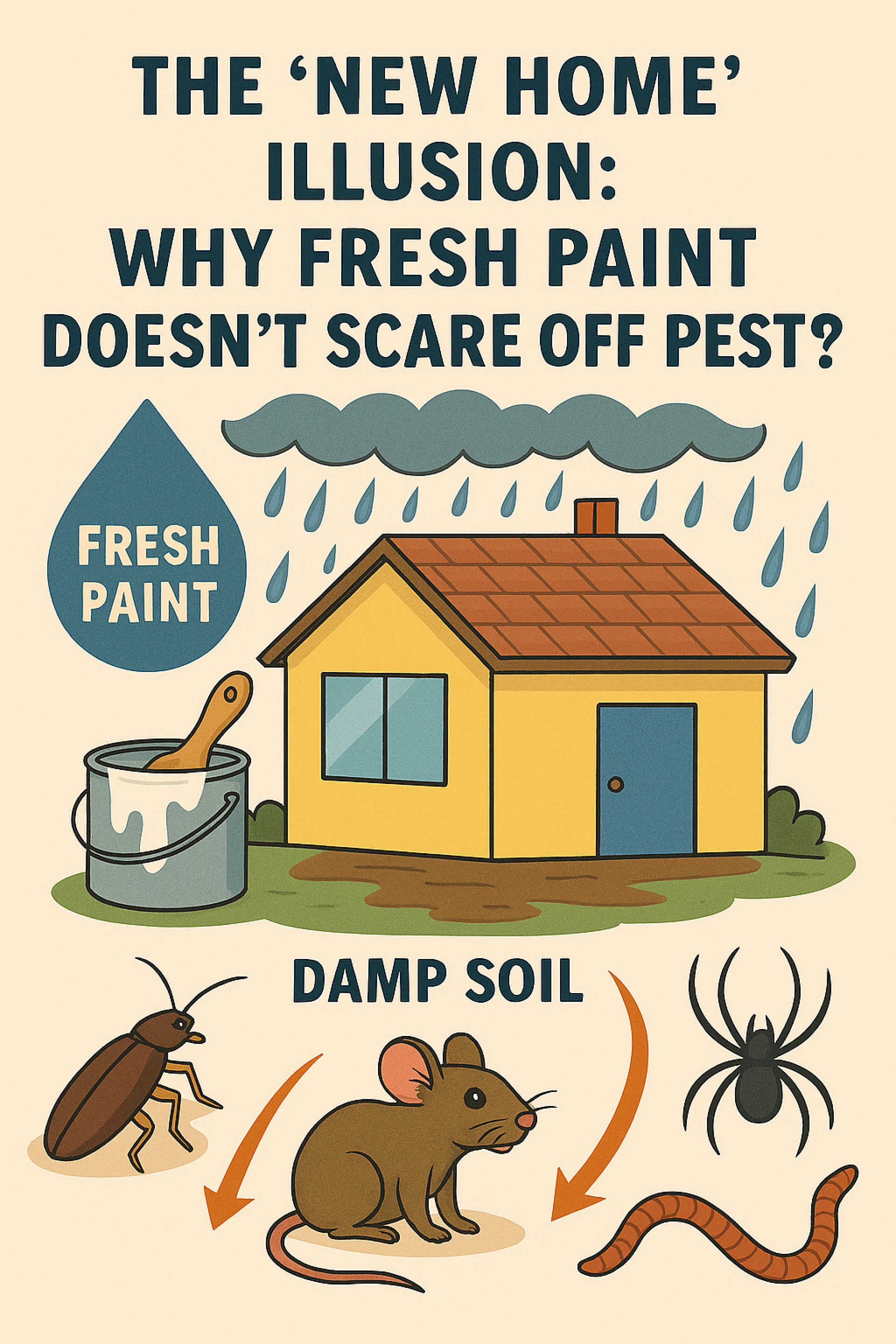
There’s a specific kind of pride that comes with turning the key in a brand-new property. Everything is crisp. The floors are unscuffed, the walls are a perfect eggshell white, and that "new house smell" fills the air. It feels like a fortress—untouched and impenetrable.
So, when a trail of ants wanders across a granite countertop or a cockroach scurries behind a modular cabinet just weeks after move-in, the reaction is usually a mix of heartbreak and genuine confusion. “How is this possible? No one has even lived here yet!”
What looks like a flawless haven to us is, to pests, a newly shaken playground teeming with chances to settle in. At Chennai Pest Control circles, it's a well-known irony: new constructions are often more vulnerable to infestations than established homes. It’s not a sign of bad luck; it’s a result of the construction process itself.
The Hidden Catalyst: What Happens During Construction?
To understand the problem, we have to look at what happened before the foundation was even poured.
1. The Great Soil Displacement
Every new building starts with a massive disruption of the earth. In Chennai, the soil is often teeming with subterranean termite colonies. When builders dig for foundations and basements, they don't "remove" these insects—they aggravate them. These colonies are displaced and, in their search for a new food source and stable environment, they find the most convenient structure nearby: your new home.
This is why Termite Control Chennai is arguably the most critical step in any new build. If the soil isn't pre-treated, those termites will find their way through the tiniest hairline cracks in the concrete slab as it cures.
2. The "Wet Building" Syndrome
Construction is a surprisingly "wet" process. Think about it:
- Concrete and mortar require massive amounts of water to mix.
- Curing walls need to be sprayed down.
- Plumbing systems are pressure-tested.
- New landscaping involves heavy irrigation.
This moisture often gets trapped behind drywall, under floorboards, or inside wall cavities. To a pest, a damp, dark wall cavity is a five-star hotel.
Why Modern Design Is a Double-Edged Sword?
We love modern aesthetics—minimalist lines, false ceilings, and sleek modular kitchens. However, these features often inadvertently create the perfect "pest highways."
- False Ceilings: These create a massive, unmonitored void where rodents and insects can travel across the entire building without ever being seen.
- Modular Kitchens: While beautiful, the gaps behind the cabinets are rarely sealed perfectly. If moisture gets trapped back there, it becomes a breeding ground for German cockroaches.
- Utility Penetrations: Modern homes have complex electrical and HVAC systems. Every pipe and wire that enters a wall creates a potential entry point if the sealing isn't 100% airtight.
The 2026 Reality: Pests in a Growing Chennai
As Chennai continues its rapid urban expansion, we are seeing new trends in pest behavior. With more high-rise apartments and integrated townships being built, the "neighborhood effect" is real. When one plot is cleared for construction, the pests from that land migrate to the nearest completed building.
| Feature | Risk Level | Why Pests Love It |
| New Foundation | High | Disturbed termite colonies seeking wood/cellulose. |
| Landscaping | Medium | Fresh mulch and new plants bring in ants and beetles. |
| Stagnant Drains | High | Unused pipes allow "dry traps," letting sewer gas and roaches in. |
| Construction Debris | Low/Med | Leftover wood or cardboard provides food and nesting. |
Crucial Tips for New Property Owners
If you've just bought a property or are in the final stages of building, don't wait for the first "sighting" to act. Being proactive is significantly cheaper than being reactive.
- Flush the Pipes: If the house has been sitting empty, run all the taps and flush all toilets. This refills the "P-traps," preventing cockroaches from crawling up through the dry sewer lines.
- Inspect the "Permit" Paperwork: Ensure your builder actually performed a pre-construction termite treatment. If they didn't, you need to prioritize a post-construction barrier immediately.
- Ditch the Cardboard: Moving day usually involves hundreds of boxes. Cardboard is like "junk food" for termites and a favorite nesting spot for silverfish. Unpack quickly and get the cardboard out of the house.
- Seal the Gaps: Use high-quality caulk to seal gaps around plumbing fixtures and baseboards before you move all your furniture in.
Frequently Asked Questions (FAQs)
Q: Can termites eat through new concrete? A: No, they can't eat concrete. However, as new concrete settles, it develops microscopic cracks. Termites only need a gap of $1/32$ of an inch to squeeze through and reach the wooden framing or furniture inside.
Q: Why do I see so many spiders in a new house? A: Spiders go where the food is. If your new home has construction lights on at night, it attracts moths and small flies. The spiders move in to set up "shop" and feast on these early arrivals.
Q: Is it safe to do pest control if I have new paint and flooring? A: Absolutely. The Best Pest Control Services In Chennai use modern, odorless, and non-staining formulations that won't damage your high-end finishes or bother your family.
Final Thoughts: Protecting Your Investment
A new home is likely the biggest investment of your life. It represents years of hard work and dreams. It’s easy to get caught up in the excitement of decor and furniture, but don't forget the invisible shield your property needs. Pests don't respect "newness"; they only respect barriers.
By understanding that a new building is essentially an "open invitation" to the local insect population, you can take the steps necessary to keep it as pristine as the day you got the keys.
Conclusion
At JCS Pest Control, we believe that a healthy home starts with a strong defense. We don't just "spray and leave"; we analyze the unique footprint of your new property—considering Chennai’s specific humidity levels and soil types. Whether it's securing your foundation with expert Termite Control Chennai or performing a deep-clearance before you move your family in, we are here to ensure your "fresh start" stays exactly that.



























Sign in to leave a comment.