

Summer ends the same way every year.
One day, you're slathering on sunscreen and packing pool bags. Next, the door lines up backpacks, alarms are set for 6:45 AM again, and the whole rhythm of your house flips upside down. New teachers, schedules, and shoes that were "cool" for exactly one week. Everything changes.
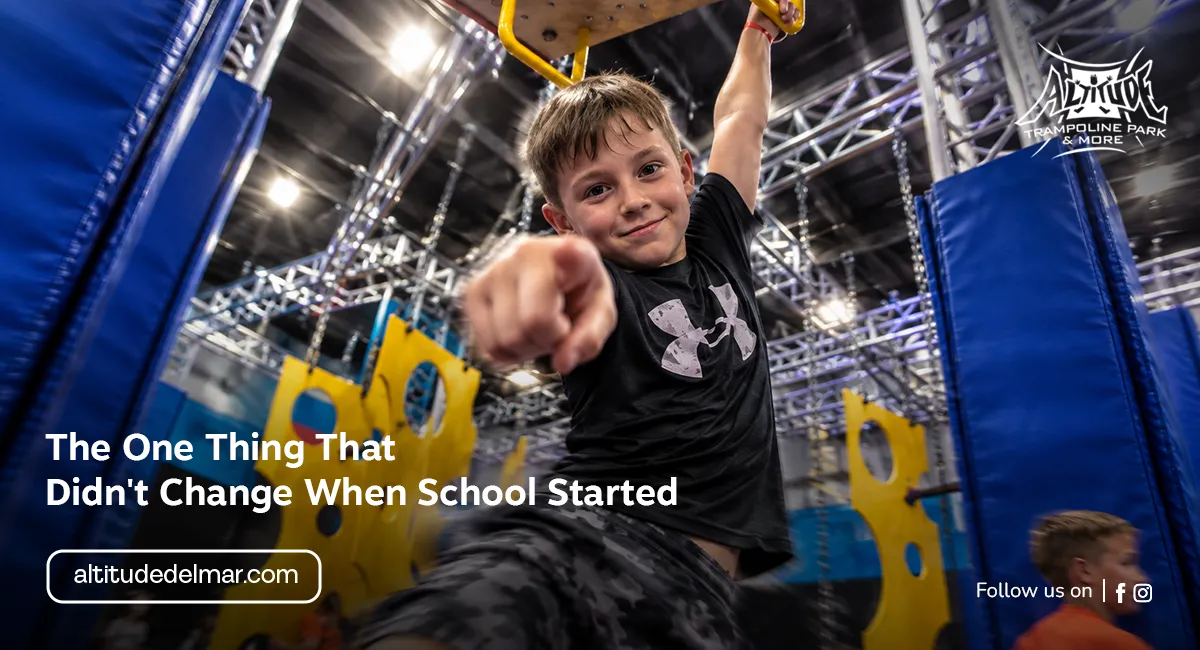
Except for one thing.
That one Saturday morning ritual where your kid bounces through the door of Altitude Trampoline Park. Breathless and grinning before they've even made it to the front desk? That stayed exactly the same.
And honestly, that's not an accident but the whole point.
Kids Need One Thing That Stays
Kids thrive on predictability. Not boring, rigid, eat your vegetables at 6 pm predictability, but the kind that says, "No matter how wild the week gets, this part of your life is safe, and it's fun, and it's yours."
Researchers who study family rituals have found that these small, repeated moments of connection do something bigger than just create memories. They build a sense of identity and security in kids. A weekly trip to jump, flip, and laugh until their stomachs hurt isn't just "playtime," but an anchor. It's the thing they can count on when the rest of the calendar is chaos.
Back-to-school season throws a lot at kids all at once. New routines, social dynamics, more homework, less daylight, and higher expectations. It's a genuinely big adjustment, even if we don't always call it that. And what kids need in the middle of all that newness isn't another new thing.
It's a familiar one.
That's why the Saturday morning bounce session hits different once school's back in session. It's not just fun, but relief. It's the exhale after a week of holding it together.
The Weekday Version Nobody Talks About
Let's talk about the after-school hours, because that stretch between 3 PM and dinner is its own special kind of chaos.
Your kid gets off the bus wired, wound up, and full of pent-up energy they've been sitting on all day. Six-plus hours of "sit still," "raise your hand," and "quiet voices" doesn't exactly burn off a kid's natural need to move. So it comes out somewhere, usually as bickering with a sibling, bouncing off the couch, or a meltdown over something that wouldn't matter at all.
There's real science behind why movement matters so much right after school. Physical activity triggers a release of BDNF (brain-derived neurotrophic factor), which basically acts like fertilizer for the brain. It helps kids regulate emotions, focus better, and even retain what they learned that day.
The kid who jumps for 45 minutes after school is often the kid who sits down for homework with way less of a fight.
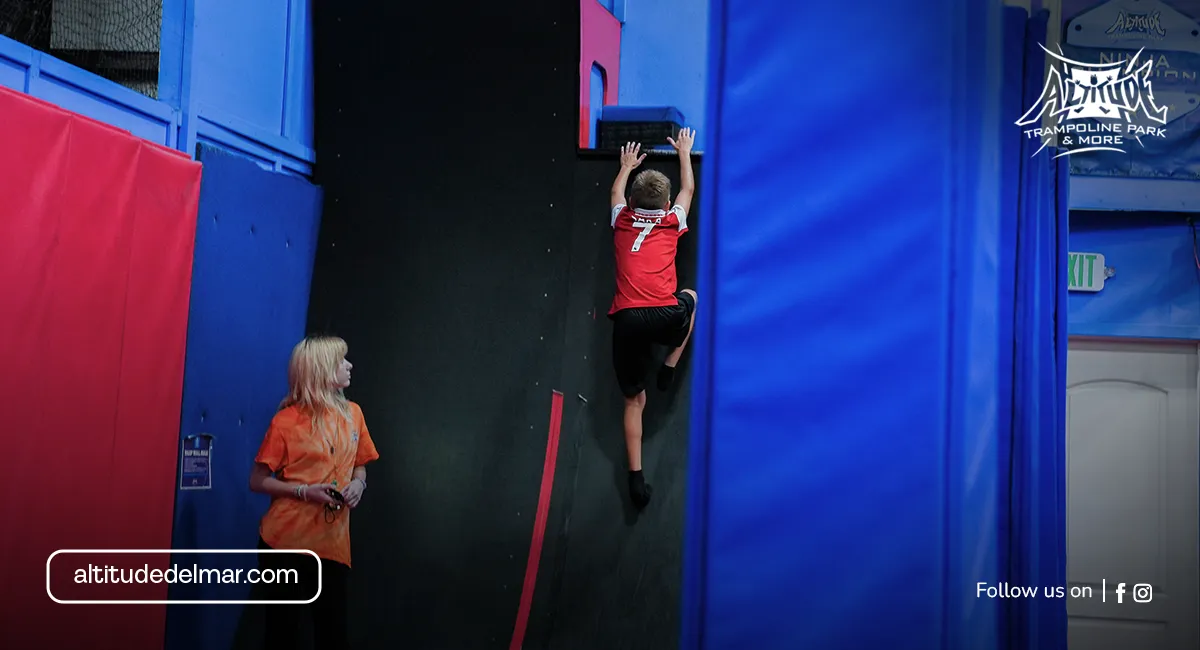
So instead of fighting that after-school energy, Altitude gives it somewhere to go. Trampoline courts, foam pits, dodgeball, and the ninja course are not just letting off steam. It's actually resetting their whole nervous system. And air-conditioned, rain-or-shine, way-too-hot-outside comfort means it works exactly the same in September as it did in July.
Same joy, release, and "wow, that was exactly what I needed" feeling for both of you.
Vacation Brain vs. School Brain
Summer isn't better for kids just because it's unstructured. Novelty and freedom are great in small doses, but too much of them can leave kids a little unmoored. No schedule, rhythm, or "next thing" to look forward to.
School, for all its stress, gives structure. But it can also drain the fun out of a season fast.
Altitude works precisely because it doesn't care which season it is. It's not a summer thing or a school-year thing, but your kid's thing. Whether they're bouncing in during winter break or squeezing in a Tuesday visit before a Wednesday spelling test, the courts don't change. The grin doesn't change. The feeling of weightlessness that split second at the top of a jump doesn't change either.
There's a reason that feeling is so magnetic. Psychologists call it "flow state." The place where you're so absorbed in what you're doing that time disappears, and self-consciousness melts away. Trampolining is basically a flow-state machine for kids. No phones, homework brain, or "what if I mess this up" anxiety. Just movement, rhythm, and pure presence.
That doesn't punch a clock according to the school calendar. It's available every single week.
Why "The Same Place" Is Actually the Secret
We live in a culture obsessed with the new. New restaurants, apps, and everything. And there's a time and place for novelty. It's genuinely good for the brain, sparking dopamine and curiosity in healthy ways.
But kids also crave continuation. A place they know, a staff member who remembers their name, and "usual spot" on the trampoline court. A birthday party location they've been to before, so it's already the coolest place they know, rather than an unknown gamble.
This is actually why so many families end up building their whole rhythm around one weekly stop. It's not about lacking imagination but building comfort. Anticipatory nostalgia is a real, well-documented phenomenon. Even before an experience happens, our brains start generating warm, happy feelings about it, just from knowing it's coming. Kids who know "we're going to Altitude on Saturday" start feeling better about their whole week by Wednesday. That's not marketing spin but how anticipation works on a developing brain.
So when your kid says, "Is it almost Saturday?" on a random Tuesday afternoon, that's not random. That's their brain doing exactly what it's supposed to do. Building excitement for something safe, joyful, and known.
The Best Part? It Grows With Them
A five-year-old wobbling through their first foam pit jump and a twelve-year-old perfecting a backflip on the trampoline courts are having two completely different experiences, but the same underlying one. The thrill scales, confidence builds, and "I did it!" moment just gets more impressive as they get older.
That's part of why Altitude works as a long-term rhythm and not just a one-off outing. It's not something your kid ages out of after one visit. The climbing walls get more interesting as they get taller. The ninja course gets more satisfying as they get stronger. And the dodgeball games get a lot more strategic once they've got a season or two of trash talk under their belt.
Meanwhile, you get your own version of the constant. Watching your kid light up in the same way they did back in June. Whether it's the dog days of summer or a random Thursday in October.
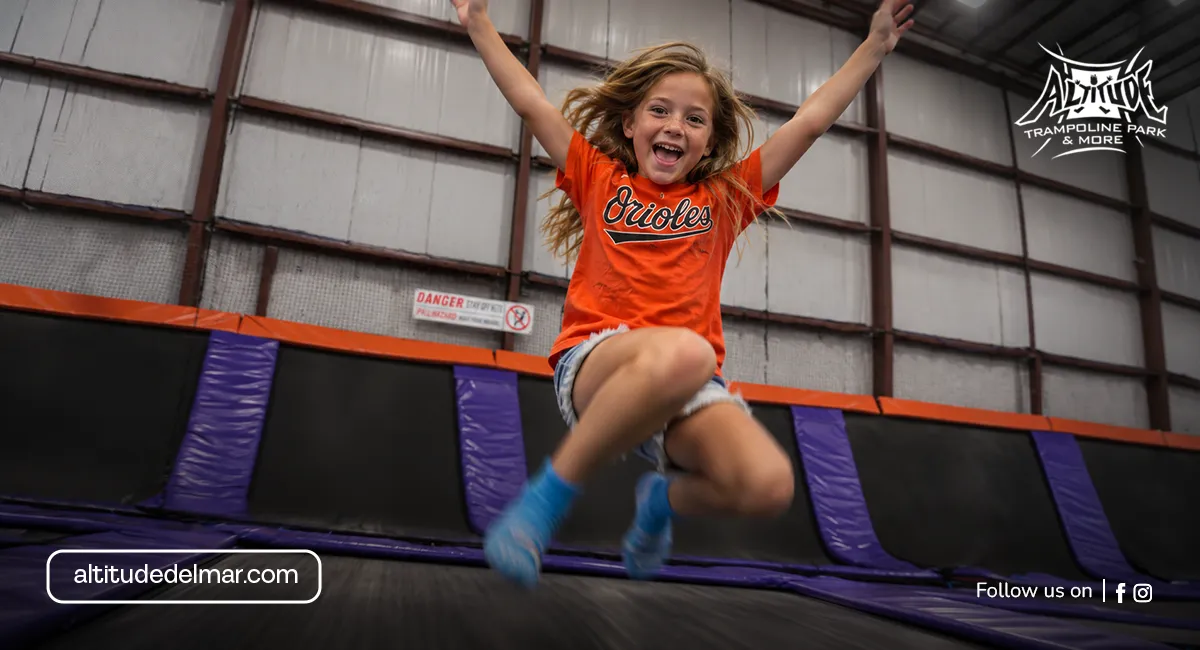
Some Celebrations Shouldn't Change Either
If your kid's birthday falls smack in the middle of a hectic school month, there's something wonderfully simple about not having to reinvent the whole party wheel. Altitude's party packages take that stress off your plate entirely. Dedicated party rooms, an experience the kids are already obsessed with, and zero pressure to come up with a "theme" from scratch. Just the place they already love, made extra special for a day that's all about them.
No Pinterest boards, last-minute decoration runs, and juggling backyard weather forecasts. Just cake, jumping, and a room full of kids who are already having the time of their lives.
Conclusion
School changes. Weather changes. Schedules, moods, homework loads, and extracurricular chaos shift constantly. But some things shouldn't have to change. Honestly, kids are better off when at least one thing doesn't go wrong.
That one thing? It's yours to keep.
Come bounce it out this week at Altitude Trampoline Park. Same courts, energy, and grin your kid had all summer long. Whether it's June or January, some things are just worth keeping constant.




















Sign in to leave a comment.