
Introduction
Welcome to the age of mobile technology! It's hard to imagine a world without our trusty smartphones in hand. From catching up with loved ones, navigating through new places, or even ordering food we rely on our mobile devices for almost everything. But have you ever wondered how far we've come from the days of basic flip phones to the advanced smartphones we have today? In this blog, we'll take a journey through the evolution of mobile technology and how it affects our daily lives.
Mobile technology has undergone a remarkable evolution over the past few decades, transforming the way individuals communicate, access information, and interact with digital content. From the introduction of 2G technology to the widespread deployment of 5G networks, the progression of mobile technology has been marked by significant advancements in speed, connectivity, and data capabilities, revolutionizing the digital landscape and driving innovation across various industries.
The journey from 2G to 5G represents a pivotal shift in mobile communication, with each generation of technology introducing new features, improved performance, and enhanced user experiences. As the world transitions to the era of 5G, characterized by unprecedented speed, ultra-low latency, and massive connectivity, the impact of mobile technology on global connectivity, digital transformation, and technological innovation continues to expand, offering unparalleled opportunities for businesses, consumers, and society at large.
This overview will delve into the evolutionary progression of mobile technology, highlighting the key milestones, features, and advancements that have shaped each generation, and exploring the transformative impact of 5G technology on the digital ecosystem, the Internet of Things (IoT), and the future of connectivity.
Evolution of Mobile Technology
Mobile technology has come a long way since its inception, changing the way we live and interact with the world around us. From simple cell phones used for basic communication to powerful smartphones that can do almost everything, the evolution of mobile technology has been nothing short of remarkable.
Introduction to Mobile Technology
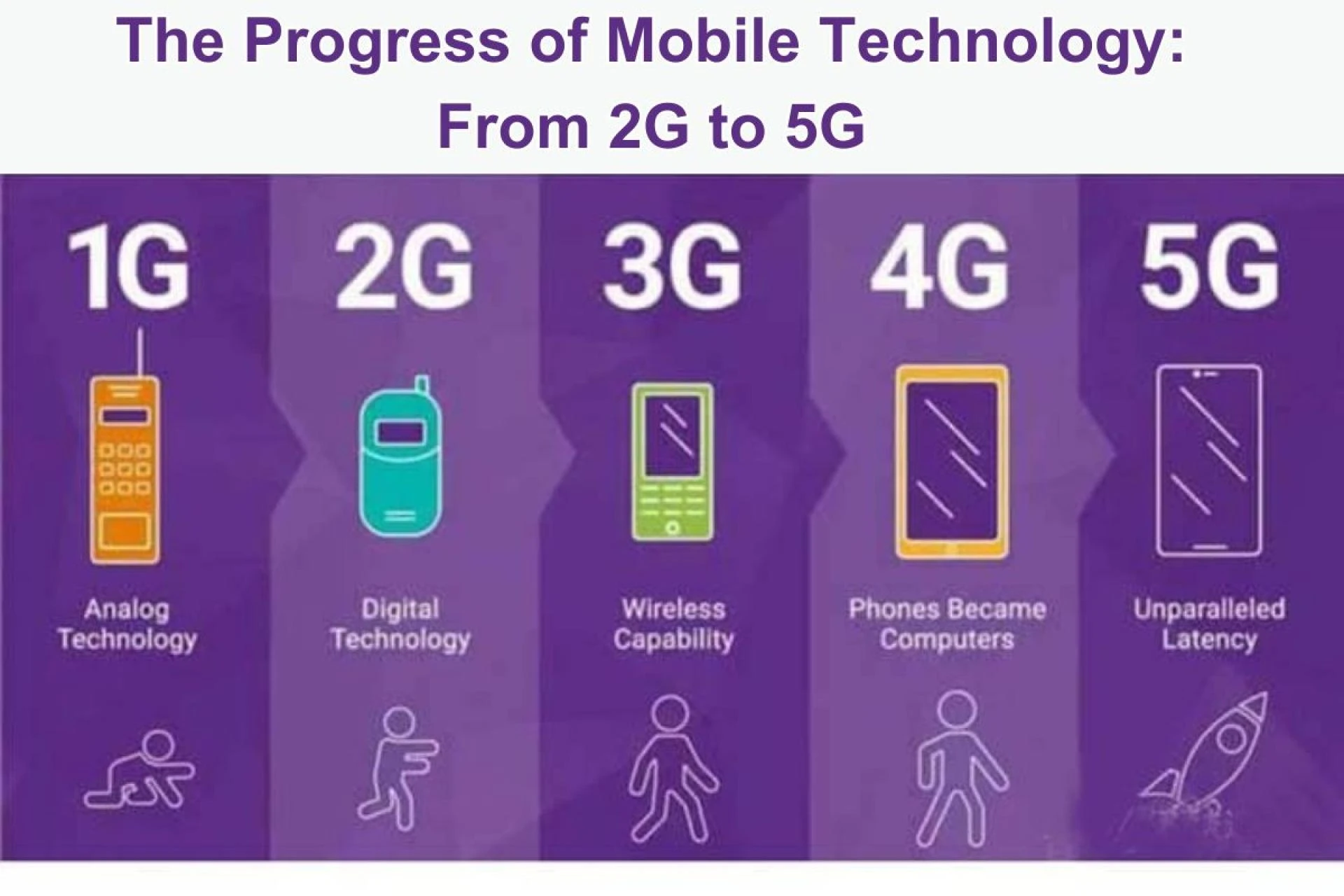
It all started with the first mobile phone call made on April 3, 1973. Since then, mobile devices have undergone a dramatic transformation. The first generation (1G) of mobile technology brought about analogue voice calls, followed by 2G which introduced digital communication and paved the way for text messages and basic internet access.
The Shift from 2G to 5G
The biggest leap in mobile technology came with the introduction of 3G which offered faster internet speed and improved multimedia capabilities. This was followed by 4G which enabled streaming of high quality videos and other content on our smartphones. And now, we are on the verge of entering a new era with 5G technology.
So, what makes 5G so special? For starters, it boasts of significantly higher internet speeds – up to 100 times faster than 4G. This means you can download an HD movie in just a matter of seconds. But more than that, this new generation of mobile connectivity will bring about revolutionary changes in industries such as healthcare, transportation, and education through its low latency and ability to connect multiple devices simultaneously.
Role of Mobile Application Developers
Such advancements in mobile technology would not have been possible without skilled developers constantly pushing the boundaries. These developers play a crucial role in shaping the growth of mobile technology by creating innovative applications that enhance user experience.
Key Approaches to Mobile Application Development
Mobile application development involves various approaches and methodologies that enable developers to create efficient, user-friendly, and high-performing applications for mobile devices. Some key approaches to mobile application development include:
Why is Mobile Application Development Important?
Mobile application development is important for a variety of reasons, particularly in the context of the evolving digital landscape and the growing reliance on mobile devices. Some key reasons why mobile application development is significant include:
Increased Mobile Device Usage: With the widespread adoption of smartphones and tablets, mobile devices have become integral to daily life, making mobile applications an essential tool for accessing information, conducting transactions, and engaging with digital content.
Enhanced User Engagement: Mobile applications enable businesses to engage with their target audience more effectively, offering personalized experiences, interactive content, and seamless access to services, thereby fostering customer loyalty and satisfaction.
Market Reach and Accessibility: Developing mobile applications allows businesses to expand their market reach and accessibility, catering to a broader audience across different geographical locations, time zones, and demographic segments, thus fostering global connectivity and interaction.
Improved Customer Service: Mobile applications facilitate convenient and efficient customer service, enabling businesses to provide real-time support, personalized recommendations, and streamlined communication channels, thereby enhancing the overall customer experience and satisfaction.
Competitive Advantage: Investing in mobile application development provides businesses with a competitive edge in the digital marketplace, allowing them to differentiate their offerings, stand out among competitors, and meet evolving customer demands, thus positioning themselves for long-term success and growth.
Revenue Generation: Mobile applications offer various monetization opportunities, including in-app purchases, subscriptions, advertisements, and premium services, enabling businesses to diversify their revenue streams and capitalize on the growing mobile app market.
Newest Mobile Application Development Trends
5G Integration: The rollout of 5G technology has opened up new possibilities for mobile app developers to create applications that leverage the benefits of ultra-fast connectivity, low latency, and high bandwidth, enabling the development of advanced and immersive user experiences.Augmented Reality (AR) and Virtual Reality (VR): The integration of AR and VR technologies in mobile applications has gained momentum, offering enhanced user engagement, interactive experiences, and immersive storytelling. AR and VR are being used across various industries, including gaming, education, healthcare, and retail, to deliver innovative and captivating user experiences.
Internet of Things (IoT) Integration: The integration of IoT technologies with mobile applications has facilitated the development of interconnected ecosystems, enabling users to control and monitor smart devices and appliances through their mobile devices. IoT integration has extended the capabilities of mobile applications, particularly in the areas of home automation, healthcare, and industrial automation.
Mobile Wallet and Contactless Payments: The increasing adoption of mobile payment solutions and digital wallets has transformed the way users conduct financial transactions, leading to the development of secure and user-friendly mobile payment applications. The integration of biometric authentication and tokenization has enhanced the security and convenience of mobile payment services.
Artificial Intelligence (AI) and Machine Learning (ML): AI and ML technologies have become integral to mobile application development, enabling the creation of intelligent applications with features such as personalized recommendations, predictive analytics, and natural language processing. AI-powered chatbots and virtual assistants have improved customer support and engagement within mobile applications.
Instant Apps and App Clips: Instant apps and app clips allow users to access a portion of an application's functionality without the need for full installation, providing a seamless and lightweight user experience. Instant apps and app clips facilitate quick access to app content, promoting user engagement and app adoption.
Enhanced Security Measures: With the increasing concern over data privacy and security, mobile application developers are focusing on implementing robust security measures, including end-to-end encryption, biometric authentication, and multi-factor authentication, to safeguard user data and ensure secure user experiences.
Comparing 2G and 5G Technologies – Key Differences
Firstly, let's understand that both 2G and 5G are mobile network technologies that enable us to make calls, send messages, and access the internet on our mobile devices. However, there are significant differences between these two in terms of speed, coverage, and capabilities.
Speed is a crucial aspect when it comes to mobile connectivity. And this is where 2G and 5G differ significantly. 2G stands for second generation technology which was introduced in the early 1990s. It provided basic digital voice communication with a maximum speed of 64 kbps (kilobits per second). On the other hand, 5G or fifth generation technology is relatively new and offers blazing fast speeds of up to 10 Gbps (gigabits per second) – that's almost a hundred times faster than its predecessor! This means you can download large files, stream high quality videos without any lag or delay.
Another key difference between these two technologies is their coverage area. While 2G has a wider reach and covers larger areas compared to 5G, the latter offers better coverage density. In simpler terms, more users can be connected to a single tower without experiencing any drop in network quality. This makes 5G ideal for densely populated areas like cities where there is a high demand for data usage.
How the Progression from 2G to 5G has Revolutionized the Field of Mobile Technology.
The field of mobile technology has come a long way since the introduction of 2G networks in the early 1990s. From then on, we have witnessed a rapid evolution of mobile technology with the introduction of 3G, 4G, and now the highly anticipated 5G network. This progression has revolutionized the way we interact with our devices, opening up new opportunities for innovation and growth in various industries. In this section, we will delve into how the progression from 2G to 5G has transformed the world of mobile technology.
One of the most significant changes that came with each generation upgrade is the speed at which data can be transferred. While 2G networks could transmit data at a maximum speed of only 50 kilobits per second (kbps), 5G boasts speeds up to 20 gigabits per second (gbps). That is an astonishing increase in data transfer rate that enables users to download large files and stream high quality videos seamlessly. With this improvement, tasks that used to take minutes now take seconds, making our lives more efficient and productive.
Bandwidth refers to the amount of data that can be transmitted within a given period, while latency is the delay between when a request is made and when it receives a response. With larger bandwidths and lower latency rates, mobile applications can function more smoothly without any lags or delays. This advancement has been particularly beneficial for mobile application developers who can now create more sophisticated apps without worrying about performance issues.
You can also read:



























Sign in to leave a comment.