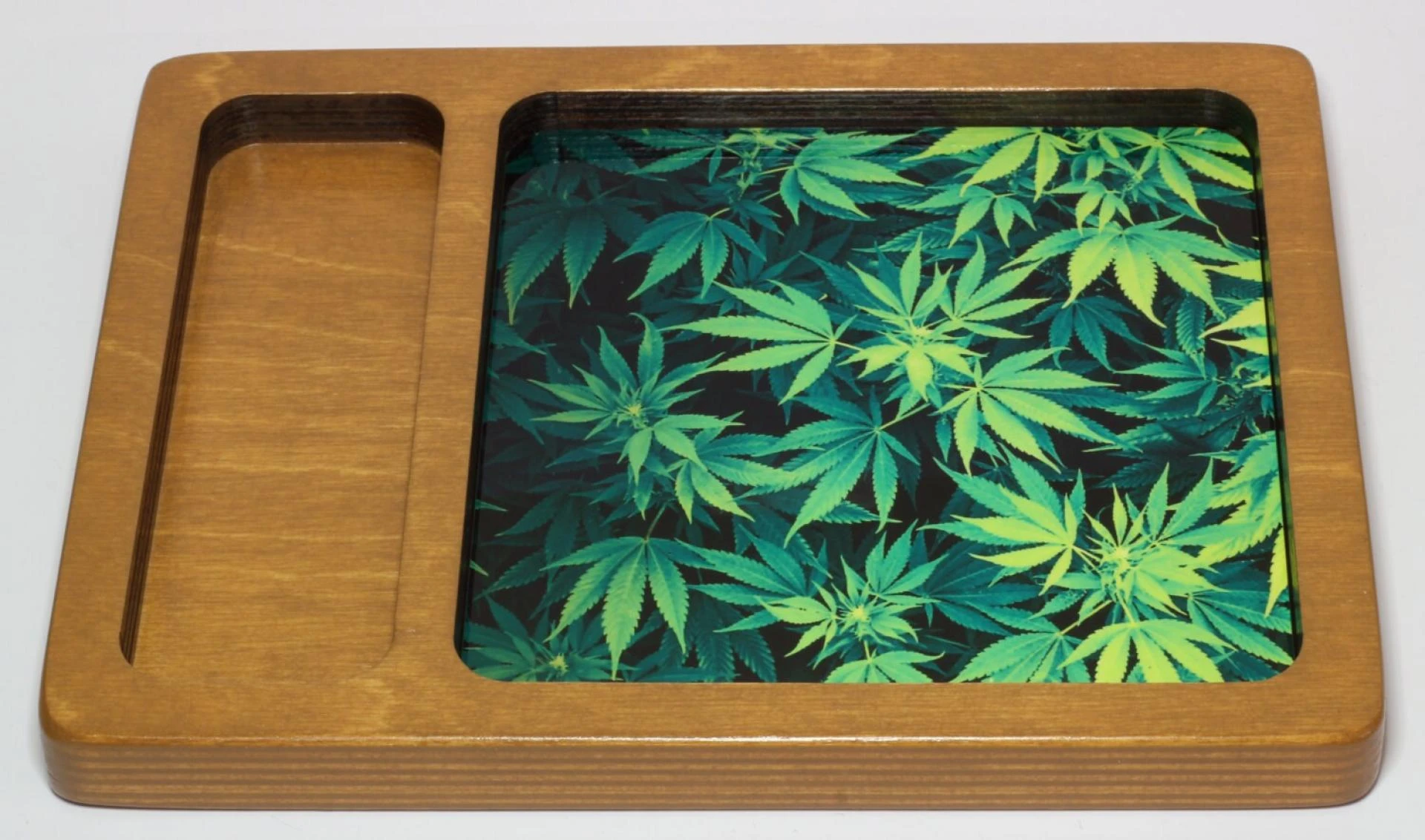

Cannabis industry, businesses are increasingly leveraging innovative marketing strategies to capture consumer attention and drive sales. One subtle yet influential tool in this landscape is the promotional weed tray.
While at first glance these trays may seem like simple accessories for holding and rolling cannabis, their design and distribution are rooted in psychological principles that can significantly shape consumer behavior. Understanding this intersection of psychology and marketing provides insight into why these seemingly minor promotional items can have a notable impact on brand perception and purchasing decisions.
Visual Appeal and Attention Capture
One of the primary psychological principles at play in promotional weed trays is visual appeal. Humans are highly responsive to visual stimuli, and research shows that aesthetically pleasing objects can enhance perceptions of quality and desirability.
Promotional trays often feature vibrant colors, bold graphics, or clever branding elements that are designed to stand out in dispensaries or social settings. This visual distinctiveness helps capture attention in a competitive market where consumers are constantly bombarded with options.
In consumer psychology, the concept of attentional bias explains how certain stimuli attract our focus more than others. A visually striking weed tray can serve as a focal point, drawing potential customers toward a brand they might otherwise overlook. The more often a consumer encounters a branded tray, the stronger the association between the visual cue and the brand, subtly reinforcing brand recognition and loyalty.
Scarcity and Exclusivity
Another psychological factor is the principle of scarcity. Promotional trays are often released as limited-edition items or in small quantities. This scarcity can create a sense of urgency and exclusivity, motivating consumers to act quickly to obtain them. Scarcity taps into a deep-seated human tendency: the fear of missing out (FOMO). When consumers perceive that an item is rare or highly coveted, they are more likely to value it and the associated brand.
Cannabis culture often celebrates collectible items, and limited-run trays can become symbols of status within social circles. Owning a unique or branded tray may not only facilitate practical use but also signal insider knowledge or affiliation with a particular brand, enhancing the consumer's self-concept and social identity.
Reward and Reinforcement
Promotional weed trays also engage with the psychological principle of reward and reinforcement. Receiving a free or attractive accessory with a purchase can create a positive emotional experience, reinforcing the behavior that led to the reward. This is akin to a small-scale operant conditioning model, where the tray serves as a positive reinforcer that increases the likelihood of future purchases from the brand.
Moreover, cannabis consumption is already associated with pleasure and relaxation, so pairing it with a visually appealing or tactilely satisfying accessory strengthens the overall experience. Consumers may begin to associate the positive feelings elicited by using the tray with the brand itself, fostering brand loyalty over time.
Brand Identity and Social Signaling
The psychology of promotional weed trays also ties into social signaling and identity formation. In a culture where cannabis use is both personal and social, accessories serve as extensions of identity. A carefully branded tray communicates values, aesthetic preferences, or subcultural affiliations. Consumers often choose trays that align with their self-image or the image they wish to project, a behavior explained by social identity theory.
Social media has amplified this effect. Users frequently post photos of their rolling setups or “stashes,” and the presence of a branded or unique tray can serve as a form of social signaling. By showcasing a particular tray, consumers subtly endorse the brand to peers, effectively turning personal use into a micro-influencer marketing channel.
Subliminal Messaging and Brand Recall
The repetitive exposure to a brand logo or design on a tray can influence consumer behavior through subtle cognitive mechanisms. The principle of the mere exposure effect suggests that people tend to develop a preference for things simply because they are familiar with them. Even when consumers are not consciously thinking about a brand, repeated encounters with a branded tray can enhance brand recall and preference.
Additionally, the tactile interaction with a tray—touching it, arranging cannabis, or rolling—reinforces neural pathways associated with the brand. This multi-sensory engagement goes beyond visual exposure, creating a stronger and more durable impression on memory. In marketing psychology, these subtle forms of brand reinforcement are highly effective, often more so than traditional advertisements.
Consumer Behavior and Impulse Purchases
Promotional weed trays can also influence consumer behavior in terms of purchase patterns. In-store displays of free or discounted trays often trigger impulse buying, a behavior driven by emotion rather than rational evaluation. When consumers see a visually appealing tray associated with a product, the positive emotional response can override deliberative decision-making, leading to spontaneous purchases.
Moreover, the concept of reciprocity plays a role. Offering a free tray or a branded gift creates a sense of obligation in the consumer to “return the favor” by engaging with the brand, whether through making a purchase or developing loyalty. This subtle psychological nudge can significantly boost sales and repeat business over time.
Design Psychology and User Experience
Beyond branding, the physical design of weed trays also impacts consumer behavior. Trays that are ergonomically designed, easy to clean, and visually harmonious enhance the user experience. Consumers are more likely to use and display trays that provide convenience and satisfaction, which in turn keeps the brand top-of-mind. Design elements such as color, texture, and shape are not merely aesthetic—they influence perceived functionality, quality, and overall brand value.
Conclusion
Promotional weed trays may appear to be a minor marketing tool, but they operate at the intersection of psychology, design, and consumer behavior. By leveraging principles such as visual appeal, scarcity, reward reinforcement, social signaling, and brand familiarity, cannabis brands can subtly shape consumer preferences and loyalty. These trays are more than functional accessories—they are instruments of brand engagement that influence perception, encourage impulse purchases, and foster a sense of identity among users.































Sign in to leave a comment.