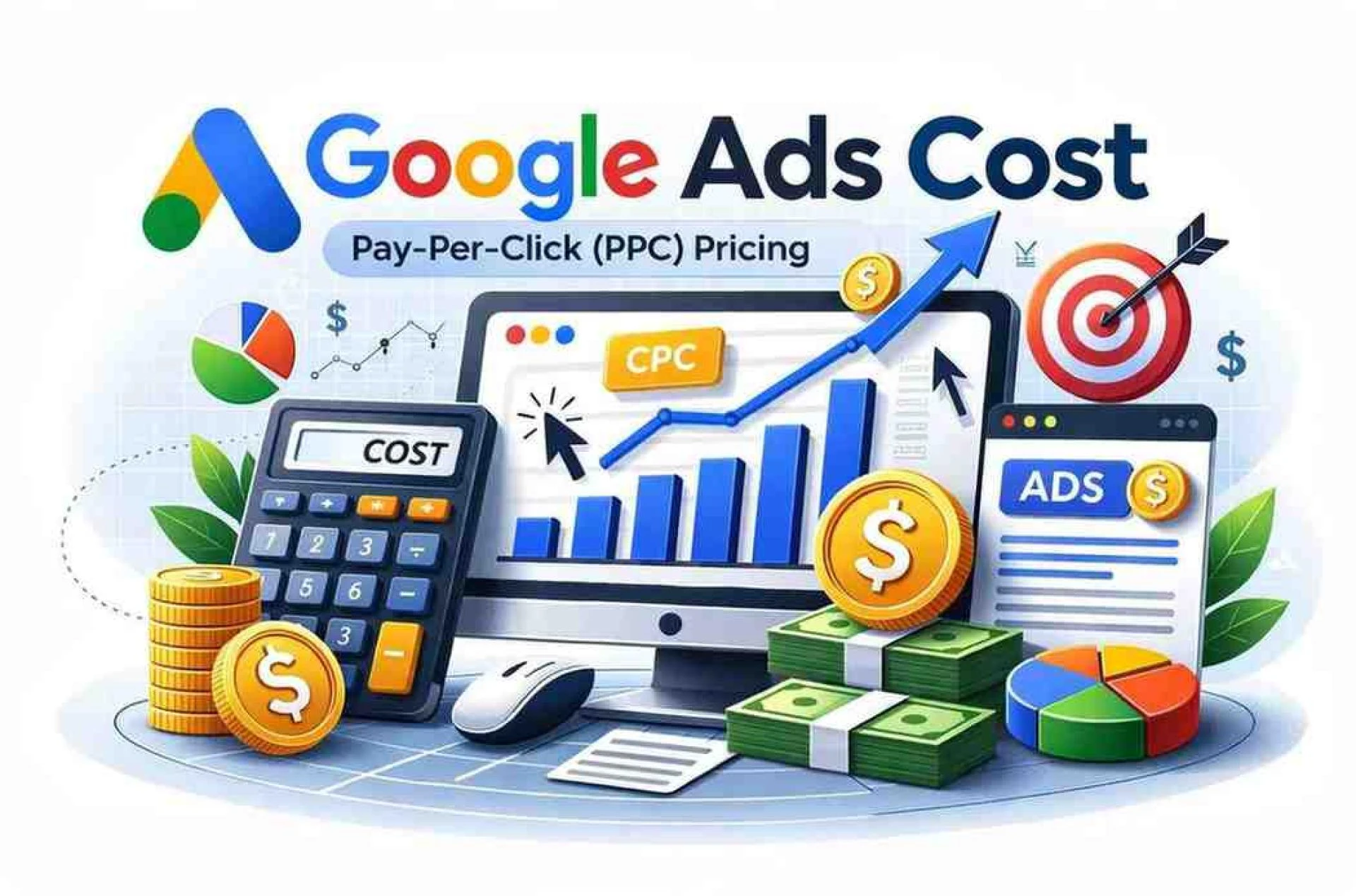

Running successful online advertising campaigns requires a clear understanding of how pricing works. Many businesses jump into paid advertising without fully knowing what influences their spending, which can lead to wasted budgets and poor results. To run effective campaigns, it’s essential to understand the real factors that determine Google Ads Cost and how they affect your return on investment.
Understanding Google Ads Pricing Basics
Google Ads operates on a pay-per-click (PPC) model, meaning advertisers pay only when users click on their ads. However, the amount you pay per click is not fixed. It depends on an auction system where multiple advertisers compete for the same keywords.
When a user searches for a query, Google evaluates all relevant ads and ranks them based on a combination of bid amount and quality score. This ensures that users see the most relevant ads while advertisers compete fairly.
Understanding Google Ads Cost begins with recognizing that it is not just about how much you bid, but also how relevant and useful your ads are.
Key Factors That Influence Google Ads Cost
Several important factors directly affect how much you pay for your campaigns. Being aware of these elements helps you optimize your strategy and reduce unnecessary spending.
Major Cost Influencers
- Keyword Competition
Highly competitive keywords attract more advertisers, increasing the cost per click. - Quality Score
Google evaluates your ads based on relevance, expected click-through rate, and landing page experience. Higher scores can lower your costs. - Ad Rank
A combination of your bid and quality score determines your ad position and cost efficiency.
Focusing on these elements can help you control your Google Ads Cost while improving performance.
Role of Keyword Selection
Keywords are the foundation of any Google Ads campaign. The type of keywords you choose can significantly impact both your costs and results.
Broad keywords may generate a high volume of traffic but often come with higher costs and lower conversion rates. Long-tail keywords, on the other hand, are more specific and usually less competitive, making them more cost-effective.
Proper keyword research ensures that your ads reach the right audience without overspending.
Importance of Ad Quality and Relevance
Ad quality plays a critical role in determining your campaign’s success. Google rewards advertisers who create relevant and engaging ads by offering better positions at lower costs.
A compelling headline, clear messaging, and a strong call-to-action can improve click-through rates. Additionally, a well-optimized landing page that matches the ad content enhances user experience and boosts performance.
Improving ad quality is one of the most effective ways to manage Google Ads Cost without increasing your budget.
Bidding Strategies and Their Impact
Google Ads offers various bidding strategies that can influence your overall costs. Choosing the right strategy depends on your campaign goals.
Manual bidding gives you full control over your bids, while automated bidding uses machine learning to optimize for clicks or conversions. Strategies like target CPA (cost per acquisition) and target ROAS (return on ad spend) focus on maximizing results rather than just traffic.
Selecting the right bidding approach can help you balance cost and performance effectively.
Budget Management Techniques
Managing your budget properly is crucial for running successful campaigns. Without proper control, costs can quickly escalate.
Effective Budget Control Methods
- Set Daily Budgets
Define a daily spending limit to keep your expenses under control. - Monitor Performance Regularly
Analyze campaign data to identify what’s working and what needs improvement. - Optimize Underperforming Ads
Pause or adjust ads that are not delivering results to avoid wasting money.
These strategies can help you maintain a healthy balance between spending and returns.
Impact of Targeting Options
Targeting plays a major role in determining how efficiently your budget is used. Google Ads allows you to target audiences based on location, demographics, interests, and behavior.
Precise targeting ensures that your ads are shown to people who are more likely to convert. Poor targeting, on the other hand, can lead to wasted clicks and higher costs.
Refining your targeting strategy is essential for controlling Google Ads Cost and improving campaign effectiveness.
Common Mistakes That Increase Costs
Many advertisers unknowingly make mistakes that lead to higher advertising expenses. Avoiding these errors can save money and improve results.
Using overly broad keywords, ignoring negative keywords, and failing to optimize campaigns regularly are common issues. Another mistake is not tracking conversions, which makes it difficult to measure success and adjust strategies.
Learning from these mistakes can help you run more efficient campaigns.
Tips to Reduce Google Ads Cost
Reducing costs while maintaining performance is a priority for most advertisers. By implementing smart strategies, you can improve efficiency and maximize returns.
Focus on improving your quality score by creating relevant ads and optimizing landing pages. Use negative keywords to filter out irrelevant traffic. Test different ad variations to identify the most effective combinations.
Regular analysis and optimization are key to achieving long-term success with Google Ads.
Conclusion
Understanding the real factors that impact Google Ads pricing is essential for running successful campaigns. From keyword selection and ad quality to bidding strategies and targeting, every element plays a role in determining your overall costs.
By learning how Google Ads Cost is calculated and applying best practices, businesses can create campaigns that deliver strong results without overspending. With careful planning, continuous monitoring, and strategic optimization, Google Ads can become a powerful tool for driving growth and achieving marketing goals.

























Sign in to leave a comment.