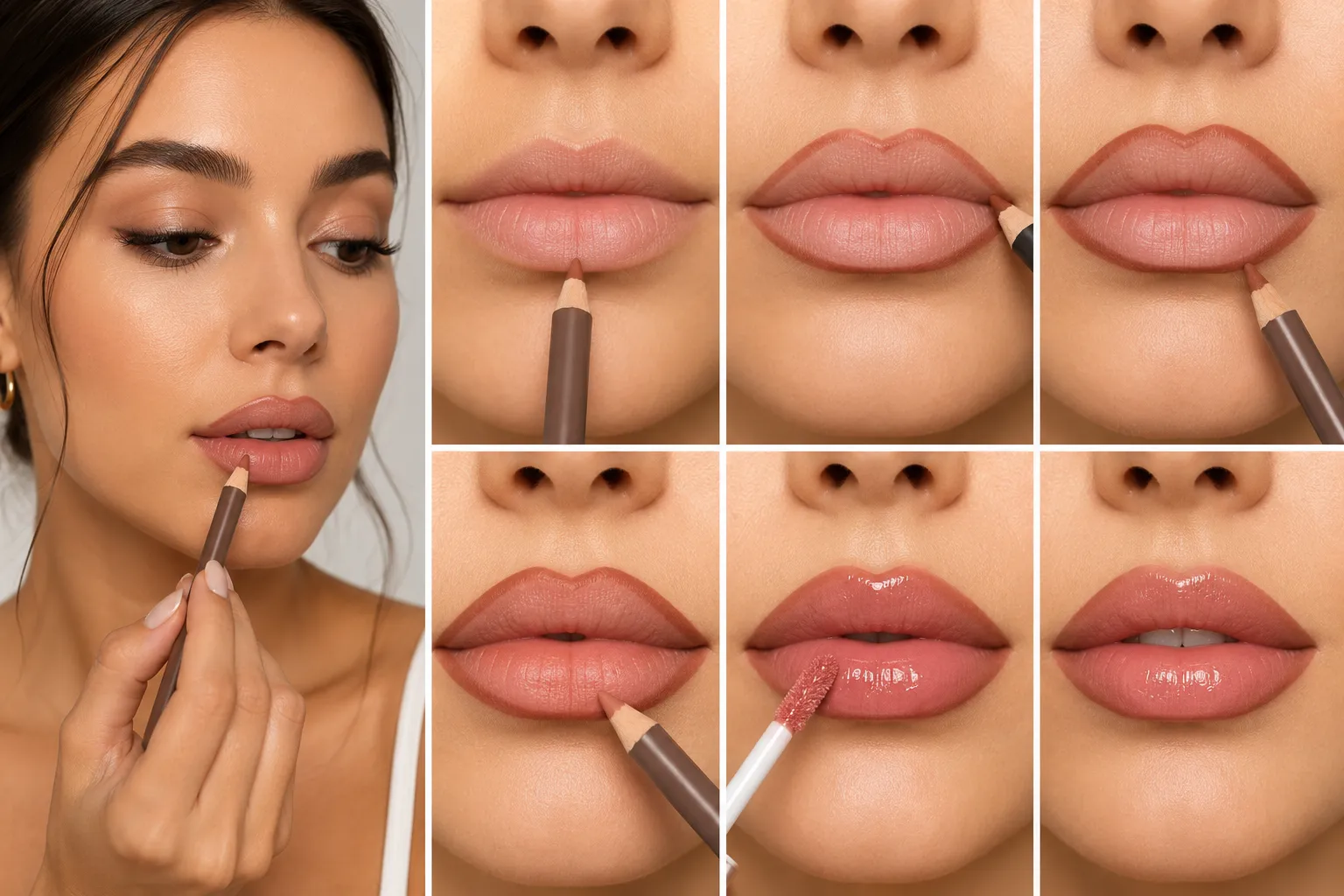

Many people either skip lip liner altogether or apply it incorrectly, then wonder why their lipstick feathers by midday, bleeds into fine lines, or wears off unevenly after a few hours. In most cases, the lipstick isn't the problem. A lip liner does far more than people realize—it helps keep color in place, defines the shape of your lips, and creates a base that allows both Matte and Lipgloss formulas to adhere better instead of slipping away.
The best part is that you don't need professional makeup skills to get it right. It's simply a matter of following a few easy steps in the correct order something most of us were never taught.
Step 1: Start with Clean, Prepped Lips
Apply a small amount of concealer or translucent powder over your lips to reduce natural pigmentation and excess oil, especially if you're wearing a bold Matte shade. Skipping this step often causes the lip liner to shift instead of staying in place.
Step 2: Choose the Right Lip Liner Shade
Select a lip liner that's close to either your natural lip color or the shade of your lipstick. Avoid choosing one that's several shades darker just for extra definition—that trend has long since passed.
- Outline your natural lip shape using short, controlled strokes rather than one continuous line.
- Follow the natural curve of your cupid's bow instead of creating a squared-off shape.
- If your lips are slightly uneven, make subtle corrections rather than completely redrawing their outline.
Step 3: Fill in the Entire Lip
This is the step many people overlook. Instead of lining only the edges, fill in your entire lip with lip liner. Doing so creates a solid base that helps prevent color from bleeding while giving your lipstick or Lipgloss something to grip onto, making it last much longer.
Step 4: Adjust Your Technique Based on the Finish
| Finish | Liner Tip |
| Matte | Let the lip liner set for a few seconds before applying your lipstick on top. |
| Lipgloss | Use a slightly softer or fresher liner so it blends smoothly and doesn't leave a harsh outline once the gloss reflects light. |
Conclusion
Applying lip liner first isn't just a beauty editor's trick it's what separates lipstick that lasts through meals from lipstick that needs constant touch-ups. Once you get into the habit, the entire process takes no more than thirty seconds.
FAQs
Q1. Do I need a lip liner if I'm only wearing gloss?
Yes. If you want your gloss to stay in place, a lip liner creates a barrier that helps prevent it from spreading beyond your natural lip line.
Q2. Does my lip liner have to match my lipstick exactly?
Not necessarily. A close match works perfectly well, especially with Matte lipsticks where the liner mainly provides structure rather than visible color.
Q3. Why does my matte lipstick still crack even when I use lip liner?
Cracking is usually caused by dry lips rather than the liner itself. Exfoliate and moisturize your lips beforehand, then allow each layer to set before applying the next.
Q4. Can I use the same lip liner for both Lipgloss and Matte looks?
Yes. However, a creamier liner tends to pair better with Lipgloss, while a firmer, more pigmented liner generally performs better under Matte lipsticks.
















Sign in to leave a comment.