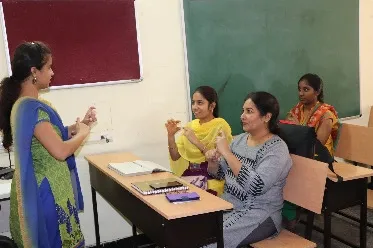

Maya had always been fascinated by the way people communicated. She loved stories, conversations, and the little expressions that could say so much without a single word. But after meeting a deaf child at a community event, she discovered an entirely new language—one spoken through hands, facial expressions, and movement. That evening, Maya couldn't stop thinking about the child she had met. She realized that communication should never be limited by whether someone can hear or speak. She wanted to understand more, so she began exploring sign language courses that could teach her the fundamentals and help her communicate more confidently.
Her first class was both exciting and challenging. The instructor introduced basic signs, hand shapes, facial expressions, and simple phrases. Maya quickly discovered that sign language wasn't simply about memorizing hand movements. It required attention, expression, patience, and an understanding of how visual communication works. At first, she mixed up signs and struggled to remember new vocabulary. Instead of becoming discouraged, she practiced whenever she could—while looking in the mirror, greeting friends, and even silently describing everyday activities.
Slowly, those unfamiliar movements became natural.
As Maya progressed through her sign language courses, something else changed too. She became more aware of the communication barriers many deaf and hard-of-hearing people can encounter in schools, workplaces, hospitals, and public spaces. Learning sign language wasn't just giving her a new skill; it was changing the way she viewed inclusion.
A few months later, Maya met the same child again. This time, she greeted her using sign language. The child's face immediately lit up. There was no need for a long conversation. A simple exchange of signs created a connection that words alone might never have achieved. Maya finally understood that learning a language isn't only about speaking it correctly. Sometimes, it's about making another person feel seen, welcomed, and understood.
That moment became the most meaningful reward of her sign language courses.
Today, Maya encourages anyone interested in learning sign language to begin with curiosity and an open mind. Whether the goal is to communicate with a deaf family member, support inclusion at work, expand professional skills, or simply understand another form of expression, every new sign can open a door. Because communication isn't limited to sound. Sometimes, a pair of hands can tell a story, express kindness, and build a bridge between two people—and that is where the true beauty of sign language begins.


























Sign in to leave a comment.