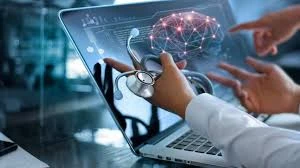

In recent years, the integration of artificial intelligence (AI) and machine learning (ML) into healthcare software development services has revolutionized the industry, offering unprecedented capabilities in diagnostics, treatment planning, patient care, and operational efficiency. This article explores the transformative impact of AI and ML technologies in modern healthcare software development services, highlighting their key roles, benefits, and future implications.
Understanding AI and Machine Learning in Healthcare Software Development
Healthcare software development services encompass a wide array of applications designed to streamline clinical workflows, improve patient outcomes, and enhance overall healthcare delivery. AI and ML technologies play pivotal roles in enhancing these services by leveraging vast amounts of data to derive actionable insights and predictions.
AI refers to the simulation of human intelligence in machines that are programmed to think and learn like humans, while ML is a subset of AI that enables systems to automatically learn and improve from experience without being explicitly programmed. In the context of healthcare software development services, AI and ML algorithms analyze complex datasets, detect patterns, and make data-driven predictions, thereby supporting healthcare providers in making informed decisions and delivering personalized patient care.
Applications of AI and ML in Healthcare Software Development
Diagnostic Imaging: AI-powered algorithms can analyze medical images (e.g., X-rays, MRIs) with high accuracy, assisting radiologists in detecting abnormalities and making faster diagnoses. For example, AI can flag potential areas of concern in mammograms, improving early detection rates for breast cancer.
Predictive Analytics: ML models can analyze patient data to predict disease progression, identify at-risk populations, and recommend personalized treatment plans. This proactive approach helps healthcare providers intervene early, potentially reducing hospitalizations and improving patient outcomes.
Natural Language Processing (NLP): NLP techniques enable healthcare software to extract meaningful insights from unstructured clinical notes, patient records, and research literature. This capability facilitates efficient information retrieval, supports clinical decision-making, and enhances the accuracy of electronic health records (EHRs).
Virtual Health Assistants: AI-powered virtual assistants, such as chatbots and voice-enabled interfaces, enable patients to interact with healthcare providers, schedule appointments, receive medication reminders, and access relevant health information. These assistants enhance patient engagement and operational efficiency within healthcare organizations.
Drug Discovery and Development: AI accelerates the drug discovery process by analyzing molecular structures, predicting drug interactions, and identifying potential candidates for clinical trials. ML algorithms can also optimize treatment regimens by considering individual patient characteristics and genetic profiles.
Operational Efficiency: AI-driven solutions optimize hospital operations by predicting patient admissions, managing bed allocations, scheduling surgeries, and forecasting resource requirements. These efficiencies minimize administrative burdens, reduce wait times, and enhance overall healthcare delivery.
Benefits of AI and ML in Healthcare Software Development Services
Enhanced Diagnostic Accuracy: AI algorithms can detect subtle patterns in medical images or patient data that may not be apparent to human observers, leading to earlier and more accurate diagnoses.
Personalized Medicine: ML models analyze individual patient data (genetic, environmental, lifestyle factors) to tailor treatment plans, improving therapeutic outcomes and reducing adverse effects.
Cost Efficiency: By automating repetitive tasks and optimizing resource allocation, AI reduces operational costs associated with healthcare delivery, allowing organizations to allocate resources more effectively.
Improved Patient Engagement: Virtual health assistants powered by AI enhance patient-provider communication, promote self-management of chronic conditions, and deliver personalized health education, thereby fostering patient engagement and adherence to treatment protocols.
Research Advancements: AI facilitates large-scale analysis of healthcare data, enabling researchers to identify epidemiological trends, discover novel biomarkers, and develop insights into disease mechanisms, accelerating scientific discoveries and medical breakthroughs.
Challenges and Considerations
Despite its transformative potential, integrating AI and ML into healthcare software development services presents several challenges:
Data Privacy and Security: Protecting patient confidentiality and ensuring data security are paramount concerns when deploying AI solutions in healthcare settings.
Regulatory Compliance: Healthcare software must adhere to stringent regulatory standards (e.g., HIPAA in the United States) to ensure patient safety and data integrity.
Algorithm Bias and Interpretability: AI models may exhibit biases or lack transparency in decision-making processes, necessitating careful validation and ongoing monitoring.
Skill Gap: Developing and maintaining AI-driven healthcare solutions requires specialized expertise in AI, ML, healthcare informatics, and regulatory affairs, highlighting the need for continuous education and training within healthcare organizations.
Future Directions
The future of AI and ML in healthcare software development services holds tremendous promise. Emerging technologies such as federated learning, which enables collaborative model training across multiple institutions while preserving data privacy, and explainable AI, which enhances the interpretability of ML algorithms, are poised to address current challenges and unlock new opportunities in personalized medicine, population health management, and clinical research.
Conclusion
AI and machine learning are transforming healthcare software development services by enhancing diagnostic accuracy, enabling personalized medicine, improving operational efficiency, and advancing scientific research. As these technologies continue to evolve, healthcare organizations must navigate regulatory complexities, address ethical considerations, and invest in talent development to harness the full potential of AI-driven innovations. By leveraging AI and ML responsibly, healthcare providers can deliver higher quality care, improve patient outcomes, and shape the future of healthcare delivery.
In conclusion, the integration of AI and ML in modern healthcare software development services represents a paradigm shift towards data-driven, patient-centered care, paving the way for innovation and continuous improvement in healthcare delivery worldwide.





























Sign in to leave a comment.