
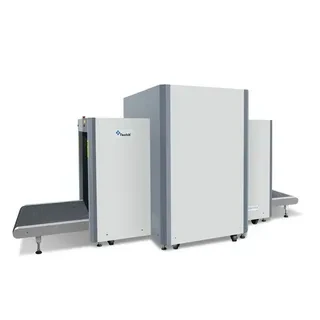
In today\'s world, security is a paramount concern, especially in areas like airports, train stations, and large public gatherings. X-ray baggage inspection systems have long been a critical tool in enhancing security by detecting prohibited items in luggage. However, the integration of Artificial Intelligence (AI) into these systems is revolutionizing the way we approach security, making inspections faster, more accurate, and more efficient.
Enhancing Detection Capabilities
Improved Accuracy
Traditional X-ray systems rely heavily on human operators to identify potential threats. While trained professionals are adept at recognizing dangerous items, human error is an inevitable factor. AI, with its machine learning algorithms, can analyze X-ray images with a level of precision that surpasses human capabilities. By being trained on vast datasets of X-ray images, AI systems can identify even the most subtle anomalies, enhancing the accuracy of threat detection.
Speed And Efficiency
AI-powered X-ray baggage inspection systems can process images much faster than human operators. This increased speed is crucial in high-traffic areas like airports, where long queues can lead to significant delays. By quickly identifying bags that require further inspection, AI helps streamline the entire security process, reducing wait times for passengers while maintaining high-security standards.
Advanced Image Analysis
Pattern Recognition
AI excels in pattern recognition, an essential feature for identifying prohibited items in luggage. Modern AI algorithms can detect patterns and shapes that correspond to weapons, explosives, and other contraband. These systems can also differentiate between benign objects and potential threats, reducing the number of false positives and ensuring that security personnel focus only on suspicious items.
Adaptability And Learning
One of the significant advantages of AI is its ability to learn and adapt over time. Machine learning models can be continually updated with new data, improving their accuracy and efficiency. As new threats emerge, AI systems can be trained to recognize them, ensuring that security measures stay ahead of potential risks. This adaptability is a key factor in maintaining robust security protocols in an ever-evolving threat landscape.
Reducing Operator Fatigue
Consistent Performance
Human operators are susceptible to fatigue, which can lead to lapses in concentration and decreased performance over time. AI systems, on the other hand, provide consistent performance without the risk of fatigue. By handling the initial image analysis, AI allows human operators to focus on decision-making and response, enhancing overall security effectiveness.
Support For Human Operators
AI does not replace human operators but rather augments their capabilities. By providing a second layer of analysis, AI supports operators in making informed decisions. This collaborative approach ensures that the expertise and intuition of human operators are complemented by the precision and speed of AI, leading to a more effective security process.
Future Prospects
Continuous Improvement
The integration of AI in X-ray baggage inspection is still in its early stages, with significant potential for future development. As AI technology continues to advance, we can expect even more sophisticated systems capable of handling a wider range of threats with greater accuracy and efficiency.
Broader Applications
While airports are the primary beneficiaries of AI-enhanced X-ray systems, other sectors can also benefit. Train stations, sports arenas, and other public venues are increasingly adopting these technologies to improve security. The versatility of AI in analyzing X-ray images makes it an invaluable tool in various contexts where security is a priority.
Conclusion
Artificial Intelligence is playing a transformative role in modern X-ray baggage inspection systems. By enhancing detection capabilities, improving speed and efficiency, and reducing operator fatigue, AI is setting new standards for security measures. As technology continues to evolve, the integration of AI into security systems will become even more critical, ensuring safer environments for all.



























Sign in to leave a comment.