

Your cells run on a 600-million-year-old power grid, and it turns out certain wavelengths of light can plug straight into it. That's not marketing language — it's mitochondrial biology. Inside every cell you have, a tiny enzyme called cytochrome c oxidase is tuned to absorb red and near-infrared light almost as precisely as a radio dial is tuned to a frequency. When it absorbs that light, it makes more cellular fuel — faster.
This is the mechanism behind red light therapy, and it's why clinics offering red light therapy in Charleston, SC and infrared light therapy have moved from niche wellness add-on to a mainstream recovery tool — used by chronic pain patients, competitive athletes, and people who simply want their joints to feel ten years younger. Below, we break down what's happening at the cellular level, what the research actually shows, and how this pairs with hands-on care like chiropractic care in Charleston, SC for compounding results.
Key Takeaways
- Mechanism: Red and near-infrared light is absorbed by cytochrome c oxidase in mitochondria, supporting more efficient ATP (cellular energy) production.
- Evidence strength: Strong for short-term pain relief, muscle recovery, and inflammation; weaker and still developing for long-term or systemic claims like anti-aging or lifespan extension.
- Typical session: 10–20 minutes, minimal side effects, no UV-style burn risk.
- Best used alongside: Chiropractic care, physical therapy, and other recovery modalities — not as a standalone replacement for structural treatment.
- What to check before trying it: Wavelength range (620–700nm and 780–950nm are the therapeutically relevant bands) matters more than brand name.
What Is Red Light Therapy?
Red light therapy (RLT), also called photobiomodulation, is a non-invasive treatment that exposes skin and tissue to specific wavelengths of red (620–700nm) and near-infrared (780–950nm) light. These wavelengths penetrate the skin, get absorbed by mitochondria, and are associated with increased cellular energy production, reduced inflammation, and accelerated tissue repair.
Unlike UV light — which damages DNA and ages skin — red and near-infrared light sit in a part of the spectrum your cells are biologically wired to use constructively. There's no heat damage, no radiation risk, and no recovery downtime. A typical session involves standing or lying in front of an LED panel for 10–20 minutes while it bathes the treatment area in light.
What separates RLT from "stand near a heat lamp" wellness fads is the volume of research behind it. Photobiomodulation has been studied across dermatology, sports medicine, neurology, and pain management for decades, with a substantial and growing body of peer-reviewed literature — making it one of the more extensively studied modalities in regenerative wellness, even as researchers continue refining standardized protocols.
How Does Red Light Therapy Work at the Cellular Level?
Red and near-infrared light is absorbed by cytochrome c oxidase (Complex IV), an enzyme inside mitochondria. This absorption is believed to help displace nitric oxide that was inhibiting the enzyme, which restarts and speeds up the electron transport chain — the process your cells use to manufacture ATP, the molecule that powers virtually every cellular function.
Here's the proposed chain of events, step by step:
- Photon absorption — Red/NIR light penetrates the skin (typically 5–10mm at 660nm, deeper at 850nm) and is absorbed by chromophores in the mitochondria, primarily cytochrome c oxidase.
- Nitric oxide displacement — Photon absorption is hypothesized to cause photodissociation of nitric oxide from the enzyme complex, since nitric oxide competes with oxygen on cytochrome c oxidase and can inhibit the electron transport chain.
- Electron transport chain acceleration — With the inhibition reduced, the enzyme works more efficiently, pulling more oxygen through the chain.
- ATP increase — More efficient electron transport is associated with more ATP synthesized per cell.
- Downstream signaling — The released nitric oxide and resulting reactive oxygen species may act as signaling molecules, supporting anti-inflammatory gene expression and repair pathways.
The research here shows real, measurable effects, though the exact magnitude varies considerably by study, cell type, and wavelength used. Peer-reviewed lab research has reported ATP increases ranging from roughly 25% to as high as 70% in various cell types and conditions, with mitochondrial activation via cytochrome c oxidase the most commonly cited mechanism. The variability across studies reflects real differences in dose, wavelength, and tissue type — it's an active and evolving area of research rather than a single settled number. Even a modest, consistent boost in cellular ATP output could help explain why athletes using photobiomodulation report improvements in endurance and recovery, particularly when applied consistently to damaged or metabolically stressed tissue.
It's worth noting this isn't a vague "energy" claim — it reflects measurable enzymatic activity, and it offers a plausible explanation for why some users report feeling effects relatively quickly after a session, since ATP production can ramp up once the rate-limiting enzyme is activated.
What Wavelengths Actually Matter — and Why?
Therapeutic photobiomodulation effects cluster around specific wavelength bands — roughly 620–700nm (red) and 780–950nm (near-infrared) — because these match the absorption peaks of mitochondrial chromophores. Wavelengths outside this range, including most visible blue, green, and yellow light, produce minimal cellular effect through this particular mechanism.
This is a critical distinction for anyone shopping around: not all "red light" devices are built the same, and wavelength selection isn't cosmetic — it's central to the mechanism of action.
| Wavelength Range | Common Name | Tissue Penetration | Primary Use Case |
|---|---|---|---|
| 620–700nm | Red light | 5–10mm (skin, superficial muscle) | Skin health, surface inflammation, wound healing |
| 700–780nm | Deep red | 10–15mm | Transitional — joint and shallow muscle tissue |
| 780–850nm | Near-infrared (NIR) | 20–30mm+ | Deep muscle, joints, connective tissue |
| 850–950nm | Far near-infrared | 30mm+ | Deep tissue, larger joints, some bone-adjacent tissue |
| UV / Blue / Green | N/A | Surface only | Minimal photobiomodulation activity; different mechanism entirely |
Quality clinical-grade panels typically combine two wavelengths — most commonly 660nm and 850nm — so the treatment reaches both surface-level skin cells and the deeper mitochondria embedded in muscle and joint tissue during a single session. Absorption peaks for mitochondrial chromophores cluster around the 620nm, 680nm, 760nm, and 820–830nm ranges, which is why these specific wavelengths tend to produce therapeutic effects while other visible light largely doesn't.
If you're evaluating a Charleston-area provider or an at-home device, the wavelength spec sheet is the first thing worth checking — not the brand name on the box.
What Conditions Does Red Light Therapy Actually Help With?
Clinical and lab research most consistently supports red light therapy for reducing musculoskeletal pain, supporting muscle recovery after exercise, aiding wound and tissue healing, and reducing localized inflammation. Evidence is strongest for short-term pain and recovery outcomes; long-term and systemic claims (like lifespan extension) remain unproven in human trials.
The use cases generally fall into three buckets:
For chronic pain and injury recovery:
- Osteoarthritis and joint stiffness
- Tendonitis and ligament strain
- Post-surgical and post-injury tissue repair
- Nerve-related pain and neuropathy symptoms
- General musculoskeletal inflammation
For athletes and performance-focused users:
- Post-workout muscle recovery and reduced soreness (DOMS)
- Support for muscle strength, endurance, and reduced injury risk as part of a structured recovery protocol
- Faster return-to-training timelines after minor strain injuries
For holistic and preventative wellness:
- Circulation support via nitric oxide release
- Skin health, collagen support, and surface-level healing
- General inflammation management for active, aging bodies
Reviews of photobiomodulation in athletic populations have concluded that the therapy can support regenerative processes by stimulating mitochondria and reducing inflammation, while also noting that researchers still need more standardized protocols to reliably compare results across different sports and use cases.
Where the evidence gets thinner is anything related to systemic, long-term outcomes. Some marketing implies anti-aging or lifespan effects, but as of current research, there is no human clinical trial evidence that these protocols extend lifespan or health span — even though the underlying cellular mechanism is biologically plausible and supported by some animal studies. This is the honest, current state of the science: strong mechanistic and short-term outcome data, with longer-term human evidence still developing.
How Does Red Light Therapy Compare to Other Recovery Modalities?
Compared to cryotherapy, heat therapy, and standard physical therapy, red light therapy is unique in directly targeting mitochondrial energy production rather than primarily managing symptoms like swelling or stiffness. It's frequently used alongside — not instead of — other modalities for compounding effects.
| Modality | How It Works | Typical Session | Best For |
|---|---|---|---|
| Red/NIR light therapy | Supports mitochondrial ATP production and reduces inflammation at the cellular level | 10–20 min | Cellular repair, chronic inflammation, overall recovery speed |
| Cryotherapy | Vasoconstriction, rapidly reducing acute swelling | 2–4 min | Immediately after acute injury or intense workout |
| Heat therapy | Vasodilation, relaxing tight muscle tissue | 15–20 min | Pre-activity muscle loosening, chronic stiffness |
| Chiropractic adjustment | Restores joint and spinal alignment, improving nervous system function | 15–30 min | Structural misalignment rather than soft-tissue symptoms |
| Standard physical therapy | Guided, progressive movement to rebuild strength and function | 30–60 min | Functional rehab and long-term strength gains |
The biggest misconception is treating these as competing options. In practice, they're complementary because they intervene at different points in the healing process — one realigns structure, one manages acute inflammation, one supports the cellular repair happening underneath it all.
How Does Red Light Therapy Work With Chiropractic Care?
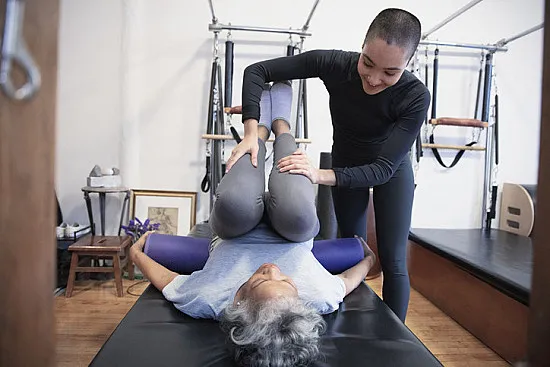
Chiropractic adjustments restore joint and spinal alignment, improving nervous system function and mobility. Red light therapy may then support the cellular repair process in the tissue affected by that adjustment — potentially reducing post-adjustment soreness and helping results hold longer. Many Charleston-area providers now offer both in the same visit.
Before an adjustment: Red light therapy may help relax tense musculature, potentially making it easier for the chiropractor to perform adjustments.
After an adjustment: This is the more common sequence. Adjustments can place mild stress on muscles and surrounding tissue, and red light therapy may help support the repair of these tissues, potentially reducing soreness. Inflammation in the surrounding tissue may also temporarily increase right after an adjustment as the body begins to heal, and red light therapy may help support that recovery process.
Chiropractic care addresses the structural problem — the misaligned joint, the restricted vertebra, the postural imbalance driving the pain. The tissue around that joint still needs to heal and adapt to the new alignment. Red light therapy may offer near-term benefits for pain and inflammation, while chiropractic care offers longer-term structural support to help the body stay balanced.
For Charleston residents dealing with chronic back pain, repetitive strain from manual labor or athletics, or recovery from an auto accident, this pairing — chiropractic care in Charleston, SC combined with infrared light sessions — has become one of the more requested integrated treatment plans in the local wellness and recovery space.
Is Red Light Therapy Safe? What Should You Expect From a Session?
Red light therapy carries a strong safety profile with minimal reported side effects — primarily mild, temporary redness at the treatment site. Unlike UV exposure, it doesn't damage skin DNA or carry burn risk at standard clinical doses, making it appropriate for frequent, ongoing use for most people.
A typical session breakdown:
- Duration: 10–20 minutes per session, depending on treatment area and device output.
- Sensation: Mild warmth; no pain, no UV-style burning.
- Frequency: Most clinical protocols suggest 2–4 sessions per week for active concerns, tapering to a maintenance frequency once symptoms improve.
- Side effects: The most commonly reported side effect is temporary redness or mild swelling at the treatment site, which typically resolves within a few hours.
- Contraindications: People on photosensitizing medications, those with certain skin cancers, or pregnant individuals should consult a provider before starting — this is a standard precaution rather than a documented specific risk.
FAQs
How long until I notice results from red light therapy?
This varies by person and goal. Some people report feeling more relaxed or noticing reduced soreness within a few sessions; others, especially those targeting chronic conditions, may need several weeks of consistent sessions before noticing a meaningful change. Consistency tends to matter more than any single session.
Is red light therapy backed by real science, or is it just a wellness trend?
The underlying mechanism — light absorption by cytochrome c oxidase supporting ATP production — is well documented in peer-reviewed research. The evidence is strongest for short-term outcomes like pain reduction, inflammation, and muscle recovery. Claims about long-term or systemic effects like anti-aging or lifespan extension are not yet supported by human clinical trials, even though they're commonly used in marketing.
Can I use red light therapy and chiropractic care on the same day?
Many providers offer both in the same visit, often with red light therapy after the adjustment to help support tissue recovery. Talk to your provider about the sequencing that makes sense for your specific treatment plan.
Are at-home red light devices as effective as in-clinic treatments?
It depends mainly on wavelength accuracy and power output (irradiance) rather than price alone. Devices outside the 620–700nm and 780–950nm therapeutic bands are unlikely to produce the same cellular effects, regardless of how they're marketed.
Conclusion
Red light therapy isn't a wellness fad riding on vague "energy" language — it's a mechanistically well-understood intervention, backed by a substantial body of research, that does one specific thing fairly well: it supports your mitochondria in producing ATP more efficiently. That cellular effect is linked to reduced inflammation, faster tissue repair, and measurable recovery benefits across pain management, athletic performance, and general wellness — with the strongest evidence in short-term outcomes.
It's not a replacement for structural care. It's a complement to it. Paired with chiropractic care in Charleston, SC, red and infrared light therapy addresses both sides of the recovery equation — the alignment problem and the cellular repair problem — which is why more integrated clinics across Charleston are offering the two together.
Have you tried red light therapy on its own or alongside chiropractic care? Drop your experience — good or skeptical — in the comments below.
This article is for general informational purposes only and is not a substitute for professional medical advice. Consult a healthcare provider before starting any new treatment, especially if pregnant or taking photosensitizing medication.


























Sign in to leave a comment.