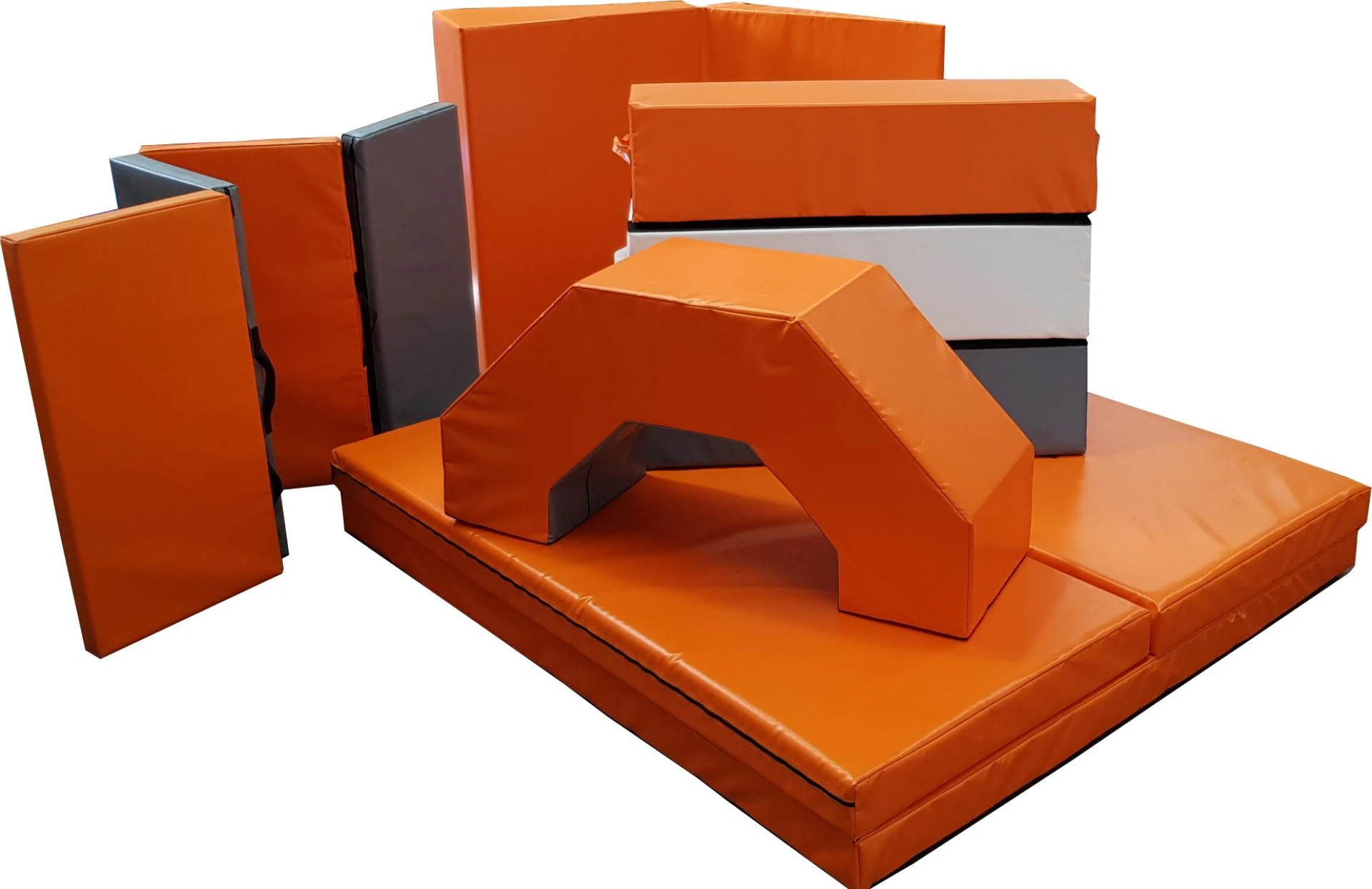

In the realm of gymnastics, the interplay between athlete and equipment is a symphony of precision engineering and the finest human ability.
Among the myriad of equipment essential to the sport, gymnastic mats serve as the silent guardians of safety and performance enhancement.
Understanding the scientific underpinnings of these mats not only illustrates their role in gymnastics but also showcases the meticulous considerations that go into their design and usage.
Engineering principles and material science
At their core, gymnastic mats are feats of engineering, designed to manage the forces generated by athletes during routines. The efficiency of these mats hinges on their ability to absorb kinetic energy—the energy of motion.
When a gymnast executes a skill, such as a tumbling pass, they impart kinetic energy onto the mat upon impact.
Ideally, the mat should absorb a significant portion of this energy to mitigate the force returned to the gymnast, thereby reducing the risk of injury.
The science behind energy absorption relates closely to the principles of material science and mechanical engineering. Mats are typically constructed from foam materials, often polyethylene or polyurethane, chosen for their hysteresis properties.
Hysteresis, in this context, refers to the material's ability to undergo deformation under force and then return to its original shape once the force is removed, all while dissipating energy.
The rebound effect
The rebound effect, or how much bounce a mat provides, is a critical aspect that impacts performance. A balance must be struck between sufficient energy absorption to prevent injury and enough energy return to aid athletes in performing multiple successive skills.
The rebound is a byproduct of the mat's elasticity—its ability to restore shape after compression.
Gymnastic mats have evolved to have layered construction, often with a firm, closed-cell foam layer for stability and a softer, open-cell foam layer for shock absorption.
This combination allows for a controlled rebound; the mat compresses under impact, then springs back with less force than was initially applied, assisting the gymnast in propelling into the next move.
Stability and force distribution
In the world of gymnastics, the importance of a well-designed mat cannot be understated. These mats are not just mere landing surfaces; they are carefully engineered to ensure the highest levels of safety and performance.
The materials used in these mats are key to their functionality. High-grade foam, known for its resilience and ability to absorb shock, is a standard choice.
This foam aids in cushioning the impact, thus protecting gymnasts from the harsh realities of gravity and momentum.
Moreover, the size and shape of the mat are tailored to specific disciplines. For instance, mats used in artistic gymnastics are designed differently from those in rhythmic gymnastics, catering to the unique demands of each discipline.
The thickness of the mat also varies, with a thicker mat providing more cushioning, ideal for high-impact events like vaulting and tumbling.
In addition to physical attributes, the colour and pattern of the mat also play a subtle yet significant role. Bright, contrasting colours are often used to improve visibility, aiding gymnasts in better judging their movements and distances.
Overall, the engineering design of gymnastic mats is a fine balance between safety, functionality, and aesthetics.
It's a testament to the meticulous attention to detail required in the sport, where every element, no matter how seemingly minor, can have a substantial impact on an athlete's performance and safety.
Translating science into safer practices
The scientific insights into mat technology have a direct translation into practice. Coaches and gym owners must be well-informed when selecting products, taking into account the skill level of their athletes, the type of gymnastics being practised, and the mat's performance characteristics.
Furthermore, the item’s role in developing technique should not be underestimated—mats that provide appropriate feedback and resistance can aid in refining an athlete's form and execution.
Safety standards and regulations often mandate specific mat characteristics for competition and training. In Australia, for example, gymnastics facilities adhere to Australian Standards for Sports Equipment, ensuring that products meet stringent safety and performance requirements.
These standards are continually reviewed and updated to reflect the latest research and technological advancements.
Incorporating the fundamentals of science into the fabric of gymnastic practice is important for the advancement of both athlete welfare and performance metrics.
By creating an environment where equipment is chosen based on evidence and data, we develop a safer and more effective training ground.
This commitment to informed selection translates to an increased level of trust and professionalism within the sport, enhancing the reputation of facilities that put safety and science at the forefront of their operations.
In conclusion, gymnastic mats are more than mere padding; they are complex engineering solutions designed to work with physics to enhance and safeguard gymnasts.
Their ability to absorb and return energy, provide stability, and distribute forces is essential to an athlete's performance and longevity in the sport.
Just as the upholstery in Melbourne is crafted with precision to provide comfort and durability, gymnastic mats are meticulously engineered for safety and efficiency.






























Sign in to leave a comment.