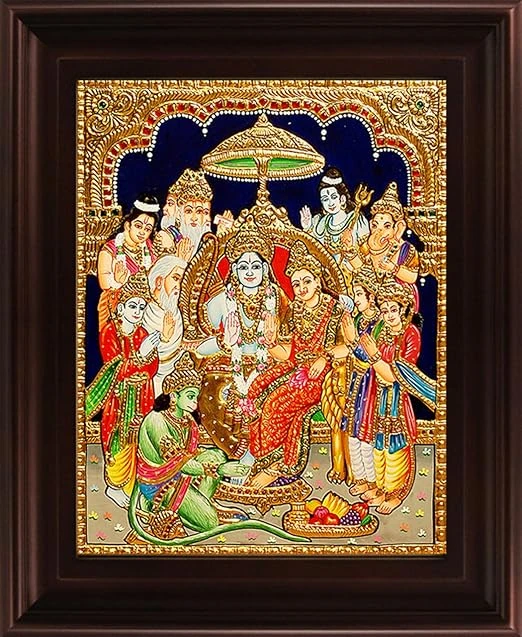

Tanjore paintings are a revered form of traditional South Indian art that has captivated art lovers for centuries. Originating from Tanjore (Thanjavur) in Tamil Nadu, these paintings are known for their intricate details, rich textures, and vibrant colors. This article explores the history, techniques, and cultural significance of Tanjore paintings, offering a comprehensive overview of this unique art form.
1.History of Tanjore Paintings
Origins and Development
Tanjore paintings have their roots in the 16th century during the reign of the Maratha kings of Tanjore. These paintings initially drew influence from the traditional Indian art forms of Karnataka and Tamil Nadu and evolved over time into a distinct style.
Royal Patronage
The Maratha rulers, especially the Chola and Nayak dynasties, played a significant role in nurturing this art form. They provided patronage and encouraged the artists to create elaborate and majestic works, contributing to the development of the unique techniques that define antique tanjore paintings today.
Evolution Through the Ages
Over the centuries, Tanjore paintings have absorbed influences from various cultural and religious contexts, leading to the incorporation of new themes and techniques while preserving their traditional essence.
2.Techniques and Materials
Traditional Techniques
Thanjavur paintings are known for their use of vibrant colors and rich textures. The traditional technique involves applying a base of natural colors and gold foil on wooden panels. Artists meticulously use a combination of fine brushwork and embossing to create the intricate designs.
Materials Used
Wooden Panels:The base of Tanjore paintings is typically made from wood, which is coated with a layer of cloth and adhesive before being painted.
Colors and Gold Foil:Artists use natural colors derived from minerals and plants, along with gold foil, to create a sense of opulence and depth in the paintings.
Embossing Techniques:The paintings often feature raised textures achieved through embossing with tools, adding a three-dimensional quality to the artwork.
The Process of Creation
1.Preparation: The wooden panel is prepared by applying a base layer and letting it dry.
2.Designing: The design is sketched onto the panel, often based on traditional templates or religious iconography.
3.Painting:The colors are applied, and gold foil is used to highlight specific elements of the design.
4.Finishing Touches:The painting is finished with detailed embossing and additional layers of color to enhance its visual appeal.
3.Themes and Iconography
Religious and Mythological Themes
Tanjore paintings frequently depict Hindu deities, mythological scenes, and religious iconography. Common subjects include Lord Krishna, Goddess Lakshmi, and scenes from the Ramayana and Mahabharata.
Portraits and Royal Figures
In addition to religious themes, Tanjore paintings sometimes feature portraits of royal figures and historical personalities, capturing their grandeur and significance.
Nature and Everyday Life
Some Tanjore paintings focus on nature, animals, and daily life, showcasing the artist’s attention to detail and their ability to capture the essence of various subjects.
4.Cultural Significance
Artistic Legacy
Tanjore paintings are not only a testament to the artistic skill of their creators but also an important part of South Indian cultural heritage. They represent a blend of art, religion, and history, reflecting the values and beliefs of the time.
Modern Adaptations
In contemporary times, Tanjore paintings have been adapted to suit modern tastes and preferences. Artists continue to innovate while preserving the traditional techniques, ensuring the art form’s relevance in today’s world.
Preservation and Promotion
Efforts are ongoing to preserve and promote Tanjore paintings through exhibitions, workshops, and educational programs. These initiatives help keep the tradition alive and introduce new generations to this exquisite art form.
5.Conclusion
Tanjore paintings are a remarkable example of South Indian art that combines rich tradition with intricate craftsmanship. Their history, techniques, and themes offer a glimpse into the cultural and artistic heritage of India. Whether displayed as sacred icons or decorative pieces, Tanjore paintings continue to enchant viewers with their timeless beauty and historical significance.







Sign in to leave a comment.