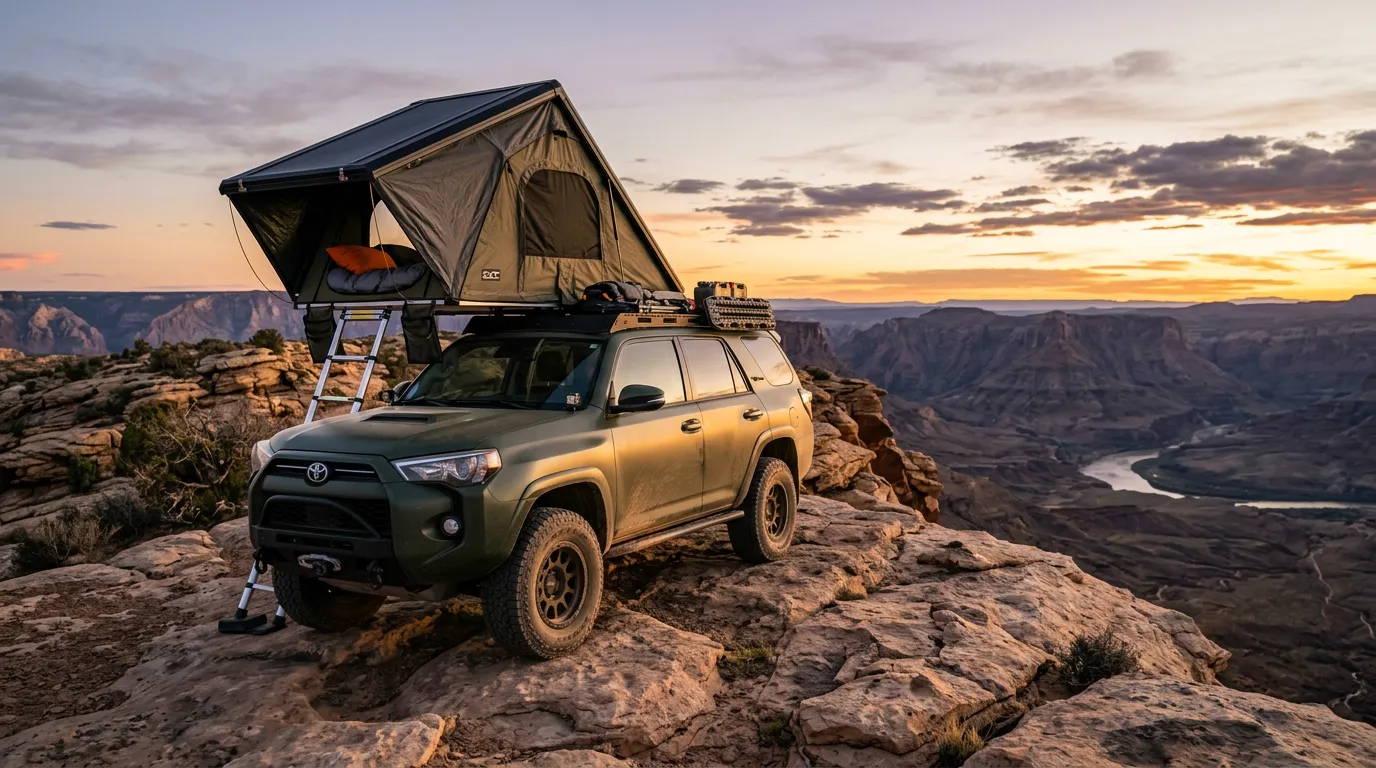

Overlanding culture has quietly moved from niche hobby to mainstream pursuit — and the gear has kept pace. More campers are sleeping on top of their vehicles than ever before, and the segment driving that shift is not soft canvas but rigid, aerodynamic aluminium. If you're weighing up your options and want to understand exactly what separates a worthwhile purchase from an expensive mistake, this guide cuts through the noise.
Why Hard Shell Designs Have Won the Market
The numbers tell a clear story. Hard shell tents now account for approximately 48% of buyer preference across the global rooftop tent market, outpacing soft-shell rivals on virtually every metric that matters to serious travellers. The global rooftop tent market itself was valued at around $250 million in 2024 and is forecast to nearly double to just under $492 million by 2033 — a trajectory driven by overlanding culture, rising SUV ownership, and a post-pandemic appetite for self-sufficient travel.
So why do hard shells lead? Three reasons come up again and again among experienced overlanders: speed of deployment, weather resistance, and the ability to leave your bedding inside. A rigid clamshell or fold-out pops open in under a minute; you don't fiddle with poles or guy ropes in a 3 a.m. downpour. The aluminium or composite shell also does a better job of shedding wind load and keeping condensation manageable than a fabric wall ever could.
The Main Hard Shell Formats Explained
Not all rigid tents work the same way, and understanding the formats will save you hours of research.
Clamshell (pop-up) designs hinge at one end and lift vertically, like the Roofnest Falcon 3 EVO. They tend to sit very low on the roof when closed — good for aerodynamics and fuel economy — but the interior height is often more modest than other styles. They're the fastest to open and close.
Fold-out (hybrid) designs, pioneered most visibly by iKamper with its Skycamp range, combine a hard shell with expanding fabric sides. This gives you a sleeping footprint considerably larger than the closed shell, which matters enormously when two adults are sharing the space. The trade-off is a slightly longer pack-away time and a higher closed profile.
Wedge designs split the difference: a hard top that hinge-opens at an angle, leaving one side tall and one side low. Brands such as Alu-Cab and James Baroud use wedge geometry to achieve a relatively slim road profile without sacrificing headroom at the sleeping end.
What to Check Before You Buy
Choosing the right hard shell rooftop tent for your vehicle depends on several factors that are easy to overlook when you're focused on a tent's headline specs.
- Roof load rating. Most hard shell models weigh between 58 and 82 kg excluding the ladder. Check your vehicle's dynamic roof load limit — not just the static figure — before committing. Around 29% of passenger vehicles carry roof load limits below 75 kg, which rules out several popular models outright.
- Rack compatibility. Crossbars from brands like Yakima, Thule, and Rhino-Rack range from roughly £150 to £600 and cover most vehicles, but a full roof rack offers higher capacity if you're planning to carry additional gear alongside the tent.
- Shell material. Aluminium shells are lighter and resist corrosion well. Fibreglass is heavier but can offer better insulation and a premium finish. ABS plastic appears on budget-friendlier options and handles impacts without shattering.
- Mattress thickness. Integrated mattress depth has increased from an average of 50 mm to 70 mm across new models — a meaningful improvement for anyone spending consecutive nights in the backcountry.
Understanding the Price Landscape
Expect to spend between $1,500 and $5,000 for a credible hard shell tent. Entry-level aluminium options from brands such as Overland Vehicle Systems and ARB start around the lower end of that range; mid-tier options from Roofnest and Freespirit Recreation sit in the $2,500–$3,500 band; and premium expedition tents from James Baroud or the iKamper Skycamp DLX push towards or beyond $4,500.
The price gap is real, but so is the quality differential. Cheaper shells can flex noticeably in strong crosswinds, and cheaper gas struts lose tension after two or three seasons of regular use. If you camp more than a dozen nights a year, the case for spending more up front is straightforward.
Four-Season Use and Emerging Features
Roughly 37% of manufacturers now design their tents to four-season specifications, which typically means reinforced shells rated for snow load, heavier-duty zips, and either improved insulation or compatibility with a separate thermal liner. If you're camping in winter conditions, that certification is worth seeking out rather than assuming any hard shell will cope.
Solar panel compatibility is the feature generating most excitement right now — around 39% of newly launched models include integrated solar or LED systems. Some brands are also experimenting with hydraulic or electric-assisted opening mechanisms, though these add cost and a potential failure point in remote locations. Think carefully about whether the convenience justifies the mechanical complexity before it becomes a deciding factor.
Making the Final Call
Before pulling the trigger, sit inside a demo model if at all possible — interior height figures look similar on paper but feel very different in person. Measure your vehicle's roof rails, confirm the dynamic load rating, and think honestly about how often you'll be setting up in the dark or the wet. A tent that deploys reliably in difficult conditions, fits your vehicle safely, and stores your bedding between trips will serve you far better than one loaded with features you'll never use. Start with those fundamentals, and the right choice tends to become obvious.























Sign in to leave a comment.