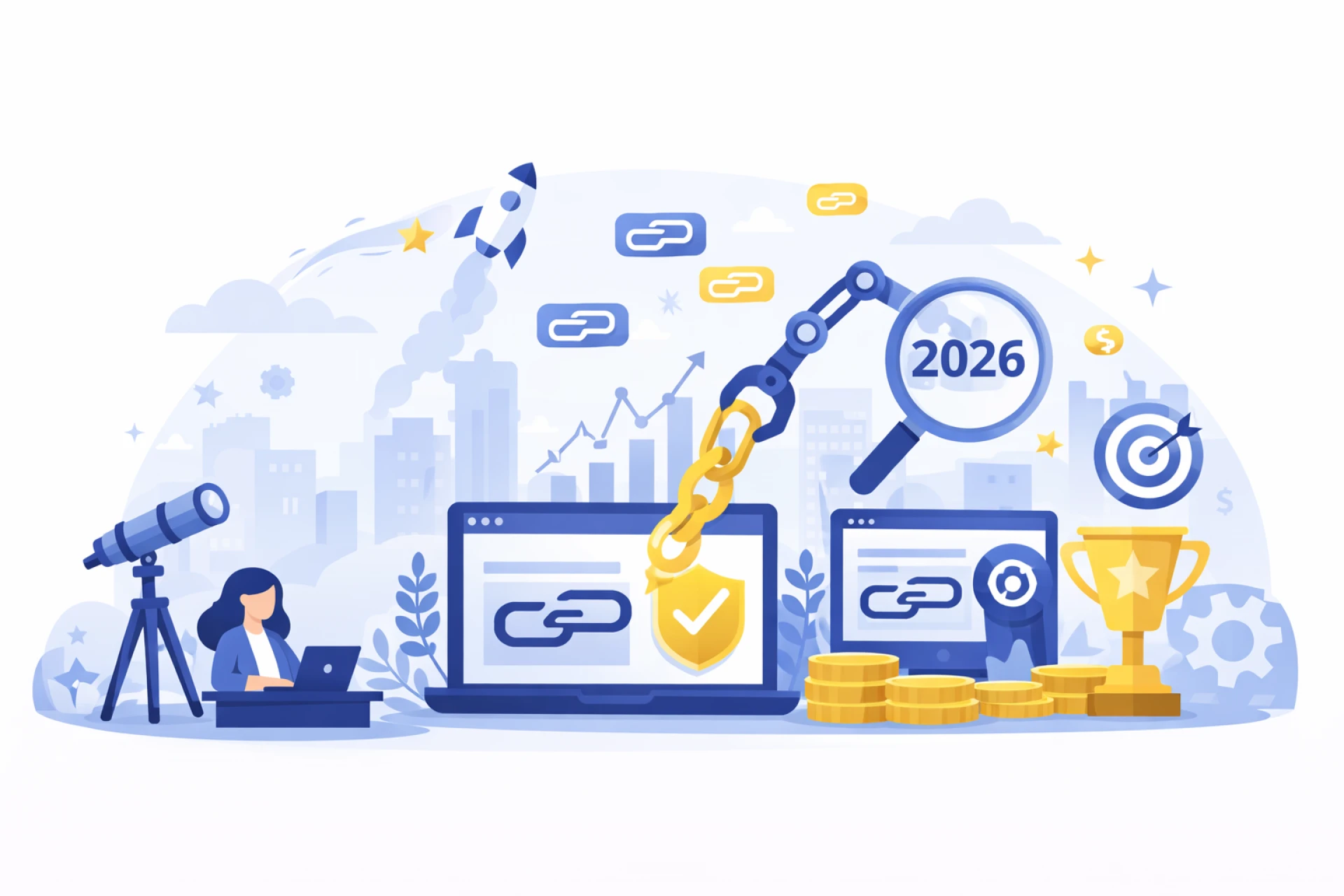

Premium link building enters 2026 with fewer illusions and tighter margins. Search engines no longer reward visibility theater or mechanical outreach volume. Authority signals concentrate faster, decay slower, and expose shortcuts earlier. For SaaS companies and online businesses operating under these conditions, link acquisition stops being a growth experiment and starts functioning like capital allocation.
Early awareness usually arrives through contrast. Teams notice that dozens of average placements fail to move competitive keywords, while one editorial citation from a trusted publication shifts an entire ranking set. Platforms such as BacklinkFu.com often surface during this phase, not as shortcuts, but as diagnostic tools that reveal where authority actually accumulates and where effort quietly evaporates.
Premium link building never referred to politeness or branding optics. It referred to access. Access to domains with historical trust, editorial resistance, and contextual gravity inside the link graph. Those properties behave differently under algorithmic scrutiny, especially as search systems lean harder into trust propagation models refined over decades.
How premium links differ from standard backlinks
The distinction between premium and standard links does not rest on surface metrics. Traffic volume, social reach, or brand recognition mislead more than they inform. Premium links transmit ranking weight through position in the graph, not through popularity.
Google’s original PageRank paper described authority as a probability distribution, modeling the likelihood that a random surfer reaches a page by following links. That framing still underpins modern systems, even after layers of machine learning and spam detection. Links that sit closer to trusted nodes transmit more weight than links floating in loosely connected clusters.
John Mueller stated during a Google Search Central hangout in 2021, verbatim: “There is no single metric that you can look at that tells you how authoritative a site is.” Premium links resist simplification. They appear through patterns rather than scores.
The role of historical trust in 2026 algorithms
Trust compounds. Domains publishing consistently under stable ownership accrue behavioral signals that search engines learn to rely on. Sudden changes in topic focus, outbound link behavior, or monetization disrupt that pattern.
A study published by Ahrefs showed that nearly 66 percent of pages on the web hold zero referring domains. Authority concentrates among the remainder. That concentration intensifies over time. Pages that earn citations early tend to attract secondary links, reinforcing their position.
Premium link building aligns with this reality. It targets nodes already positioned to amplify authority rather than trying to manufacture trust from scratch.
Editorial friction as an authority filter
One reliable marker of premium environments lies in rejection rates. High-trust publications decline most external contributions. Their editors protect audience expectations and citation standards.
Low-friction placements feel efficient. They scale easily. They rarely move rankings in durable ways. High-friction placements consume time, negotiation, and sometimes silence. That resistance functions as a proxy for authority.
Premium link builders expect rejection. Acceptance rates above ten percent often signal weak editorial gates.
Why premium links resist automation
Automation supports scale. It does not create authority. Premium links emerge from environments where automation fails by design.
Editors evaluate relevance, credibility, and narrative fit. Outreach templates struggle under that scrutiny. Personalized framing performs better, though even that reaches limits.
This constraint explains why premium link building costs more in time and capital. It also explains why it works longer.
Data assets as premium link anchors
Original data remains one of the few assets that consistently penetrates high-trust publications. Journalists and researchers need citations that withstand scrutiny. Proprietary datasets solve that problem.
When Backlinko analyzed over 11.8 million Google search results, Brian Dean wrote: “We found that content with at least one image significantly outperformed text-only content.” That study earned citations across the industry, not through outreach volume, but through utility.
SaaS platforms hold usage data that competitors cannot replicate. Aggregated benchmarks, anonymized performance trends, and infrastructure comparisons attract links without overt promotion. The framing stays neutral. The numbers carry the weight.
Grey hat access points that still work
Premium does not mean pure. Grey hat strategies retain relevance when applied with restraint and structural awareness.
Aged domain reclamation remains effective when executed with discipline. Expired domains from academic journals, industry associations, or legacy publications sometimes lapse. Rebuilding them with aligned content and conservative outbound linking preserves historical trust. Abuse collapses the effect quickly.
Resource page updates offer another path. Many high-authority sites maintain outdated reference sections. Publishing updated material elsewhere, then requesting inclusion, secures contextual links without obvious manipulation.
Editorial ghost contributions occupy a quieter space. Providing research, drafts, or data to established authors places citations inside trusted bylines. The ethical line varies by jurisdiction and publication. The ranking effect remains measurable.
BacklinkFu.com frequently appears during prospecting for these methods, particularly when historical authority and link neighborhood quality matter more than surface metrics.
Anchor behavior in premium environments
Premium links rarely carry exact-match anchors. Editors write for readers, not for algorithms. They reference brands, studies, or concepts using natural language.
Moz research from 2019 reported that branded anchors correlated with stronger long-term ranking stability than keyword-heavy anchors. The relationship appears indirect, yet consistent across datasets.
Over-optimized anchors inside premium placements introduce noise. They undermine the very trust those environments provide.
Link velocity and premium acquisition
Premium link velocity looks uneven. Weeks pass without placements. Then multiple citations appear in short windows following publication cycles or data releases.
Search engines interpret that pattern differently from steady low-quality acquisition. Bursts tied to legitimate exposure align with how information spreads.
Artificial smoothing of premium link velocity rarely improves outcomes. Patience functions as a structural requirement rather than a virtue signal.
Measuring premium impact beyond dashboards
Third-party scores approximate influence. They do not predict movement. Premium link builders track response rather than metrics.
Signals that matter include crawl frequency changes on linked pages, indexation speed of new content, and ranking movement on adjacent keywords rather than only targeted terms.
Cost per retained referring domain reveals more than cost per placement. Premium links persist. They attract secondary citations over time.
Ahrefs link decay research showed that roughly 66.5 percent of links disappear within nine years. Premium links decay slower. Their environments maintain content longer.
Risk management in premium campaigns
Risk concentrates when tactics concentrate. Premium strategies reduce risk through diversity rather than caution.
Combining editorial data assets, selective grey hat placements, and earned citations distributes signals across environments. No single footprint dominates.
Manual penalties rarely trigger without external signals. Competitor reporting, sudden visibility spikes, or obvious network behavior attract attention. Quiet accumulation backed by plausible exposure draws less scrutiny.
Organizational friction and premium execution
Premium link building strains internal alignment. Leadership expects linear growth. Editorial processes move irregularly. Engineers question link impact.
Clear modeling helps. Showing historical cases where authority accumulation preceded ranking movement by months recalibrates expectations. Authority compounds quietly, then releases gains unevenly.
Without that understanding, pressure pushes teams toward volume tactics that undermine long-term trust.
The role of brand gravity in 2026
Brand queries increasingly mediate link impact. Search engines observe how users interact with branded results, not just how links point.
Premium links amplify brand gravity rather than replace it. Citations from trusted publications reinforce brand recognition, which feeds back into ranking systems indirectly.
This feedback loop explains why premium links outperform larger volumes of average placements even when direct metrics appear similar.
Final Considerations
Premium link building in 2026 reflects access to trust rather than mastery of tactics. High-authority environments guard their standards, resist automation, and reward assets that reduce editorial friction. Data, historical stability, and contextual relevance drive outcomes more than outreach volume.
Grey hat paths still function when applied with restraint and structural awareness. The advantage lies in understanding how authority propagates, not in bypassing judgment. Teams that treat premium links as long-term assets rather than short-term wins build profiles that endure updates, audits, and competitive pressure over time.


























Sign in to leave a comment.