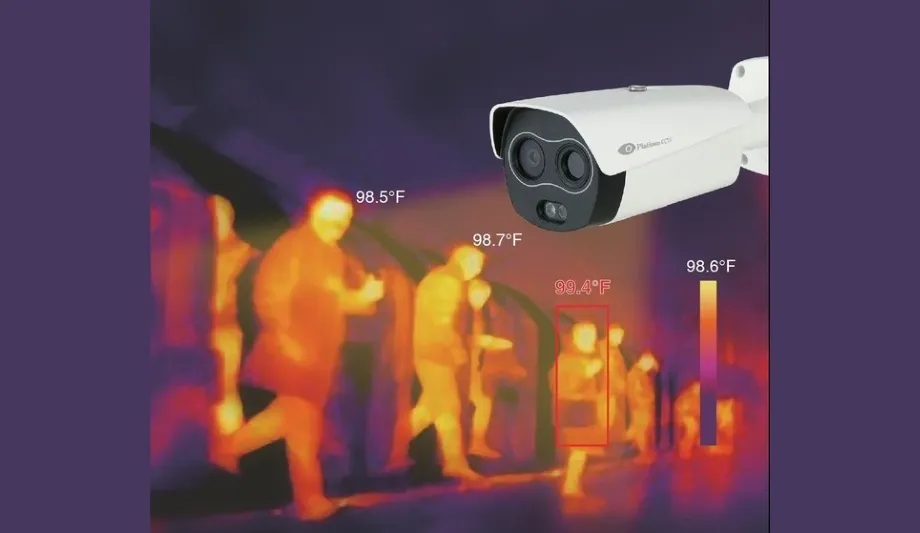

Most security cameras have one big weakness, even if nobody likes to admit it. They need light. Take that away — total darkness, thick fog, smoke, heavy rain — and a regular camera basically becomes useless right when you need it most.
Thermal cameras don't have that problem. They don't rely on light at all. Instead, they see heat, which means they keep working in conditions that would blind a standard camera completely. That single difference is quietly reshaping how serious security systems get built today.
Let's break down how this technology actually works, why it matters so much in tough conditions, and where it's making the biggest difference right now.
How Thermal Cameras Actually Work
Unlike regular cameras that capture visible light, thermal cameras detect infrared radiation — heat, essentially — given off by people, animals, vehicles, and objects. Every object with a temperature above absolute zero emits some level of heat, and thermal sensors pick that up and turn it into a viewable image.
This means a thermal camera doesn't care whether it's pitch black outside or blazing daylight. It's reading heat signatures, not reflected light, so the image stays clear regardless of visibility conditions that would completely stump a normal lens.
Why This Matters So Much in Difficult Conditions
Total Darkness Isn't a Problem Anymore
Standard cameras, even good ones with night vision, still depend on some source of light — infrared illuminators, ambient glow, something. Thermal cameras skip that requirement entirely. They see a person's body heat clearly whether it's midnight or midday, which makes them genuinely reliable for round-the-clock monitoring in a way regular cameras just aren't.
Fog, Smoke, and Dust Don't Block the View
Regular cameras struggle badly when visibility drops — fog rolls in, smoke fills a room, dust kicks up on an industrial site, and suddenly the footage is nearly useless. Thermal cameras largely ignore these obstructions because they're reading heat, not light particles bouncing around in the air. This makes them especially valuable in ports, industrial facilities, and any outdoor perimeter where weather is unpredictable.
Camouflage and Concealment Become Far Less Effective
A person hiding behind foliage or blending into a dark background might completely disappear from a regular camera's view. Body heat, though, doesn't hide the same way. Thermal cameras can pick up a heat signature even when someone is partially obscured, which makes them particularly useful for perimeter security where intruders might try to avoid standard visual detection.
Long-Range Detection Without Extra Lighting
Lighting up a large perimeter with visible-light cameras usually means installing serious infrared or floodlight infrastructure, which gets expensive fast, especially over long distances. Thermal cameras don't need any of that. Many models can detect heat signatures from hundreds of meters away, sometimes further, without a single extra light source involved.
Where Thermal Technology Makes the Biggest Difference
This isn't just a nice-to-have upgrade for a handful of high-security facilities. It's becoming standard in a wide range of settings:
- Large outdoor perimeters and industrial sites
- Ports, borders, and remote infrastructure with limited lighting
- Critical infrastructure like power stations and water facilities
- Warehouses and storage sites, where early heat detection also helps flag fire risk
- Transportation hubs, where crowding and unusual activity need monitoring regardless of lighting
In many of these cases, thermal imaging isn't replacing standard cameras entirely — it's working alongside them, catching what visible-light systems simply can't see in poor conditions.
Added Benefits Beyond Just Visibility
Thermal cameras bring a few side advantages that often get overlooked:
- Fewer false alarms, since heat-based detection is less confused by shadows or lighting changes than motion-based visual systems
- Built-in ability to flag overheating equipment, which doubles as early fire-risk detection
- Better performance in extreme weather compared to standard optical systems
- Reduced dependence on external lighting infrastructure, which lowers long-term costs
None of this makes thermal technology a total replacement for regular security cameras. It's more that thermal fills in exactly the gaps where standard systems tend to fail.
Choosing the Right Thermal Camera Setup
Not every thermal camera performs the same way, and picking the right one depends heavily on the environment it's protecting. Range, resolution, sensitivity to small temperature changes, and integration with existing security software all matter here.
A well-configured thermal camera system should genuinely match the conditions it's meant to handle — a coastal facility dealing with fog needs different specs than a warehouse mainly concerned with overheating equipment, for instance.
Among the options available, a Dahua thermal camera setup is often chosen specifically for its reliable detection range and smart analytics, which help reduce false alerts while still catching genuine threats early, even in genuinely difficult viewing conditions.
Final Thoughts
Security systems are only as good as their weakest condition, and for a long time, that weak point was simple: darkness, fog, or smoke could blind an entire camera network right when it mattered most. Thermal camera technology closes that gap directly, giving security teams reliable visibility no matter what the environment throws at them.
For any facility that genuinely cannot afford blind spots — critical infrastructure, large perimeters, industrial sites — thermal imaging isn't an optional upgrade anymore. It's quickly becoming a core part of what a serious, modern security system actually looks like.























Sign in to leave a comment.