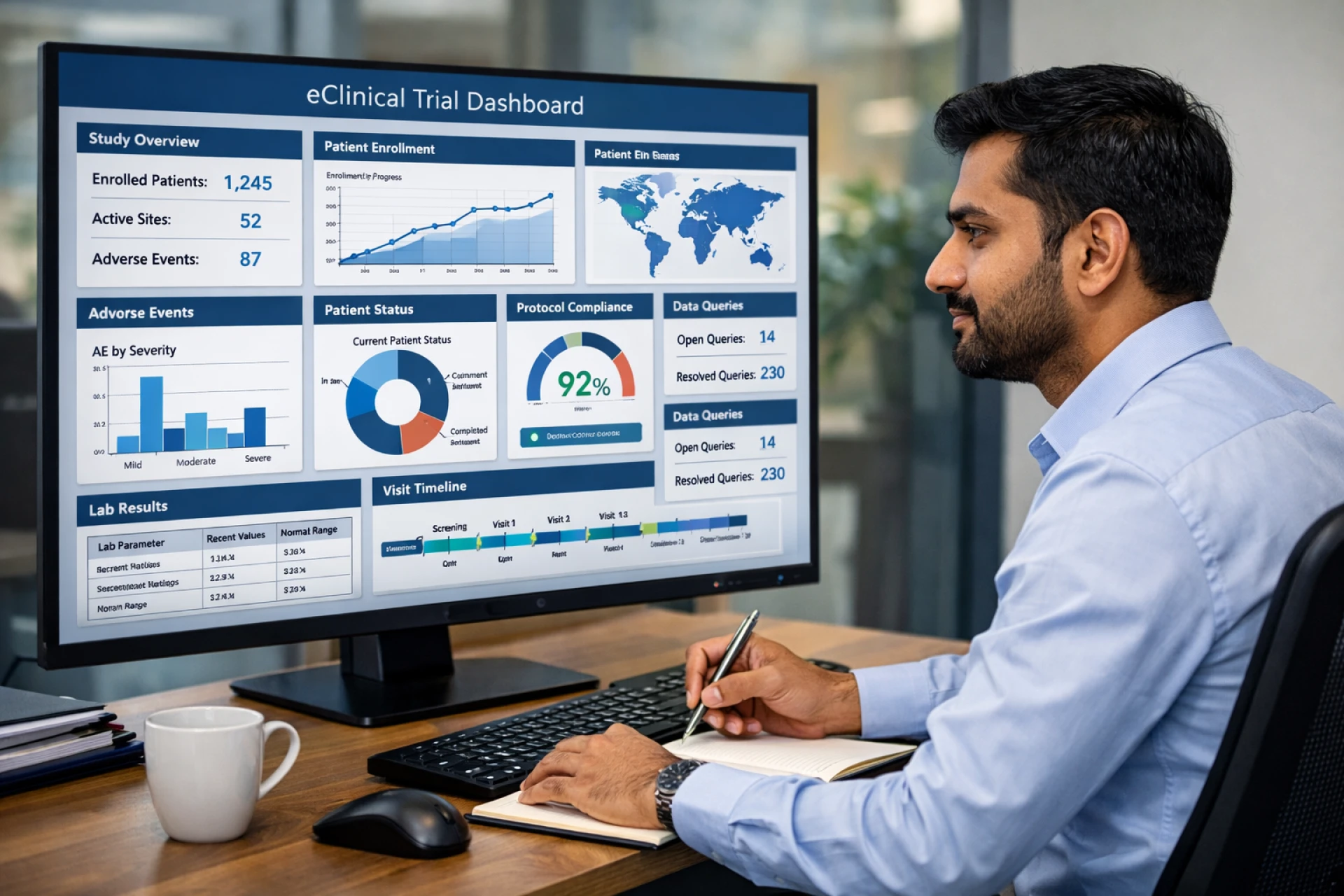

A few months ago, someone I know who works in a hospital research department asked me a surprisingly simple question.
“Is a clinical data management certification actually worth doing?”
It sounded straightforward, but the answer turned out to be less clear than expected.
Clinical research is one of those industries where certifications exist, but not all of them mean the same thing. Some are recognized by global professional bodies. Others are training certificates issued by private institutes. Both can be useful, but they serve slightly different purposes.
Understanding that difference is important before investing time and money.
In clinical trials, data management sits quietly behind the scenes. While investigators interact with patients and statisticians analyze outcomes, data managers ensure that every piece of information collected during the study is accurate, traceable, and compliant with regulatory standards.
That responsibility explains why certification programs often emphasize data validation and compliance.
Regulatory agencies pay close attention to how clinical trial data is handled. The International Council for Harmonisation (ICH) provides global guidelines for Good Clinical Practice (GCP), which include strict rules for data recording and verification.
If a trial dataset cannot be trusted, the entire study becomes questionable.
So a serious clinical data management certification program usually spends time explaining how these regulatory frameworks work in practice.
However, one thing that surprised me while reviewing several programs is how differently they approach training.
Some certifications are heavily theory-based. They focus on explaining regulatory guidelines, terminology, and documentation procedures. This can be useful for understanding the field conceptually, especially for beginners.
But theory alone doesn’t always prepare someone for the day-to-day tasks inside a clinical data management team.
In real projects, a large portion of the work involves data cleaning and query resolution.
Let’s say a patient’s blood pressure measurement is recorded incorrectly or missing in a clinical database. Data managers generate queries that go back to the clinical site asking for clarification or correction.
These processes sound simple, but they require attention to detail and familiarity with electronic data capture systems.
That’s why practical components are something I personally look for when evaluating a certification program.
Hands-on training with clinical databases or mock datasets often reveals whether someone truly understands how data flows through a clinical trial.
Another factor people rarely discuss openly is time commitment.
Some learners assume a clinical data management certification can be completed quickly and immediately open career doors. In reality, most professionals still need to spend months practicing concepts before they feel comfortable applying for industry roles.
The certification helps demonstrate interest and foundational knowledge, but it’s rarely the final step.
The job market itself also deserves a realistic discussion.
Clinical research companies in India have grown steadily over the past decade. Cities like Pune, Hyderabad, and Bengaluru host several contract research organizations and pharmaceutical data teams.
Reports published by ClinicalTrials.gov, a registry maintained by the U.S. National Library of Medicine, show thousands of ongoing trials worldwide. Each of those trials generates enormous amounts of data that must be managed carefully.
That demand explains why training in this area exists at all.
Still, entry positions usually start with operational roles — reviewing queries, updating case report forms, and supporting database lock processes. The work can feel repetitive at first.
But people who stick with it gradually move into more analytical responsibilities.
When searching for certification programs, I noticed that many learners try to identify institutes connected to industry workflows rather than purely academic courses. Some training providers attempt to simulate real clinical trial environments through practical exercises.
HR Remedy India is sometimes mentioned as an example learners look at when they want exposure to practical workflows in clinical research training.
That doesn’t mean it’s the only option or automatically the best choice. It simply illustrates how people often prioritize practical exposure when choosing a clinical data management certification.
Another small detail that can influence learning outcomes is class format.
Some programs are self-paced online modules. Others involve live sessions where instructors discuss real case scenarios. Personally, I find that discussions about actual data discrepancies and regulatory audits make the subject much easier to understand.
Without those examples, the material can feel abstract.
There’s also the question of long-term value.
Certification alone rarely defines a career path. What matters more is whether the training helps someone develop habits useful in clinical research — careful documentation, attention to small inconsistencies, and patience with repetitive review tasks.
Those habits are surprisingly difficult to teach quickly.
For anyone trying to understand how certification programs in this field are structured, I came across a useful explanation where you can explore this guide:
https://www.hrremedyindia.com/clinical-data-management-courses-in-pune/
Looking at real course outlines often reveals more than marketing descriptions.
In the end, deciding whether to pursue a clinical data management certification isn’t really about collecting credentials.
It’s about deciding whether the work behind those credentials is something you can see yourself doing every day.
Because clinical research depends heavily on careful data handling.
And careful work tends to attract people who are comfortable paying attention to details others might overlook.


























Sign in to leave a comment.