Efficiency. Productivity. Profitability.
These three outcomes define how healthy a business really is. But what if we told you that a simple, outdated attendance management system could silently drain all three, without realizing where the loss is coming from?
In reality, the attendance system is deeply strategic, and when they fall behind, the damage shows up everywhere, from payroll errors to workforce dissatisfaction.
Why Is Attendance No Longer Just Punch In and Punch Out?
For many organizations, attendance was once seen as a basic administrative task. Employees punch in, punch out, and HR records the data. The way teams work today demands something better.
Modern HR teams deal with hybrid work models, field staff, multi-location operations, strict payroll timelines, and compliance requirements. A single missed punch or delayed approval can create payroll mismatches, employee disputes, and audit risks. This is why organizations are moving beyond manual tracking and Excel sheets toward a time and attendance management system designed for today’s HR and payroll needs.
What Is a Time and Attendance Management System?
A time and attendance management system is a digital solution that records, manages, and validates employee working hours and converts attendance data into a payroll-ready format.
As organizations grow more complex, simply recording punches is no longer sufficient. HR teams need a system that can capture accurate employee attendance data, automate validation, and eliminate manual intervention for a smooth run.
This need for accuracy and automation is what separates traditional attendance methods from modern systems. Earlier systems relied heavily on manual registers, device exports, or Excel files. Today’s HR attendance software is cloud-based, integrated, and designed to scale with organizational complexity.
The Real HR Problems Caused by Poor Attendance Systems
When organizations rely on outdated or manual attendance processes, problems show up quietly but consistently. Missed punches, delayed approvals, and unverified corrections force HR teams to spend hours chasing employees, while payroll works with incomplete data and assumptions.
HR loses visibility and control over workforce data especially across shifts and locations. What begins as an attendance issue eventually impacts compliance, trust, and HR’s credibility within the organization.
What Makes a Modern Attendance Management System Effective?
A modern time and attendance management system brings together multiple capabilities into one unified platform, ensuring accuracy from capture to payroll.
Biometric Device Integration
With biometric attendance integration, attendance data flows directly from devices such as fingerprint or face recognition systems into the software, eliminating manual uploads and the need to rely on a separate payroll system.
Mobile and Geo-Based Attendance
A mobile attendance app enables real-time attendance tracking for field and remote employees. Geo-fencing ensures employees mark attendance only from approved locations, adding another layer of control with alerts to maintain employee integrity.
Attendance Regularization and Approval Workflow
An automated attendance regularization workflow replaces manual follow-ups. Employees raise reasonable requests digitally, approvals move through the reporting officer with built-in escalation to HR, and every action is recorded with a clear audit trail.
Shift, Overtime, and Policy Configuration
With one-time configuration, modern systems take over shift rotations, overtime rules, relatable policies, comp offs, and week offs, removing the need for manual handling.
Real-Time Visibility for HR
Dashboards and reports provide HR teams with live attendance insights and trends of all branches and help them act before payroll pressure builds up.
How Attendance Directly Impacts Payroll Accuracy?
Payroll does not fail suddenly. It fails because attendance data reaches payroll teams late, incomplete, or incorrect. When attendance data moves slowly, requires rework, or reaches payroll in an unstable state, payroll teams end up spending time validating and correcting inputs instead of processing payroll smoothly.
Small gaps in attendance such as missed punches, unverified overtime, or unchecked leave headaches over the month, slowing down closure. A structured flow where attendance is captured, approved, and converted into payroll-ready data ensures payroll processing remains consistent and reliable.
Why Manual and Excel-Based Attendance Still Hurts HR Teams?
Manual attendance processes may work in small setups, but they place a heavy operational burden on HR teams as organizations grow. Daily tracking, corrections, approvals, and follow-ups require constant intervention, making attendance management time-consuming.
Excel-based tracking attempts to bring structure to this process, but it introduces its own challenges. Multiple sheets, version conflicts, and limited audit visibility. What starts as a flexible solution gradually becomes a risk to accuracy and compliance.
More critically, in manual and loosely controlled systems, attendance marking remains vulnerable to data tampering, increasing the risk of inconsistencies in how presence and absence are recorded.
In contrast, Time and Attendance Management (TAM) systems are designed to handle scale and complexity. By automating attendance capture, approvals, and policy application, TAM significantly reduces manual intervention, eliminates opportunities for data tampering, improves data reliability, and allows HR teams to manage attendance confidently even as workforce size grows.
Attendance Compliance and Audit Readiness
Attendance records are closely tied to statutory compliance.
Organizations must maintain accurate records for working hours, overtime, and shift adherence. During audits, missing or inconsistent data can lead to penalties and operational risk.
A reliable attendance management system ensures structured records, system-generated audit trails, and consistent data accuracy making compliance a built-in outcome rather than a last-minute scramble.
How No Qu TAM Fits into This Picture?
As attendance systems grow more complex with multiple shifts, locations, devices, and approval layers, HR teams need more than a tool that simply records punches. They need a system that brings structure to scattered attendance data, ensures consistency across sources, and prepares information in a form payroll can actually use. This is where No Qu TAM (Time and Attendance Management) fits in.
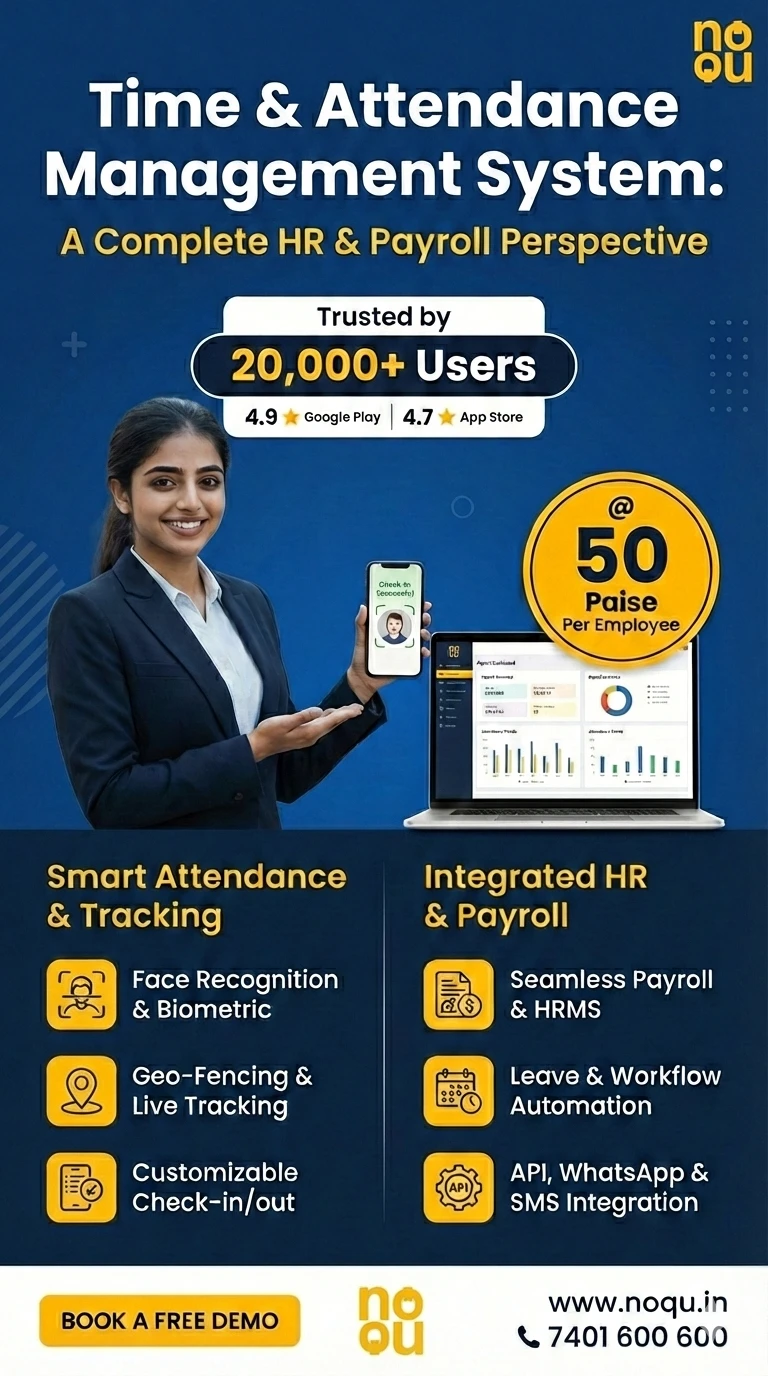
No Qu TAM brings together multiple types of attendance capture into a single, unified platform. Attendance can be marked through AI-enabled face recognition, QR code attendance, mobile tap button, biometric device attendance, RFID and video feed attendance, all flowing into one consistent system. Instead of managing attendance data across disconnected tools and formats, HR teams work with a single source. With unified attendance data, automated workflows, and ready-to-use reports, HR teams can move away from daily corrections and regain time to focus on workforce planning and strategic initiatives.
Who Benefits Most from a No Qu Time and Attendance Management System?
Organizations today are under constant pressure to improve operational efficiency, maintain workforce productivity, and protect profitability as they grow. A time and attendance management system provides the structure needed to support these outcomes by bringing consistency, accuracy, and control to daily workforce operations.
This is particularly true for organizations such as:
- Growing SMEs seeking operational discipline
- Large-sized organizations managing huge, diverse workforces
- Manufacturing units with shift-based operations, where timing and overtime accuracy are critical
- Retail chains operating across multiple outlets and rotating staff
- Field-force-driven businesses that rely on mobile or location-based attendance
- Multi-branch and multi-location companies require centralized visibility and control
Choosing the Right Attendance System- No Qu TAM
HR deserves certainty. Attendance no longer needs constant attention, payroll runs without last-minute surprises, and the month closes the way it should, quietly. Teams spend less time checking, correcting, and following up. That’s when everyday operations feel lighter, not because the work disappeared, but because it finally works the way it’s meant to.
No Qu Social Media



























Sign in to leave a comment.