
A tongue tie is a common oral condition that can affect infants, children, and adults. Medically known as ankyloglossia, it occurs when the thin tissue beneath the tongue, called the lingual frenulum, is too short, thick, or tight. This restriction limits tongue movement and may cause problems with feeding, speech, swallowing, breathing, and oral development.
Many parents first notice tongue tie when a baby struggles to breastfeed properly. Older children may develop speech difficulties, while adults can experience jaw tension, tongue fatigue, or discomfort during speaking and eating. With early diagnosis and proper care, these issues can be effectively treated through a safe and minimally invasive tongue-tie procedure.
At Dr. Hari’s Dental Centre, advanced diagnostic methods and modern laser dentistry help patients receive personalized treatment for tongue tie and related oral restrictions.
What is Tongue Tie?
Tongue tie occurs when the frenulum under the tongue restricts normal movement. In mild cases, symptoms may be minimal, but severe tongue ties can interfere with feeding, speech, and oral function.
In babies, tongue tie often affects breastfeeding and latch quality. In children, it may impact speech development and swallowing. Adults may experience muscle strain, jaw discomfort, or difficulty maintaining oral hygiene.
A professionally performed tongue-tie procedure helps release the restriction and restore healthy tongue mobility.
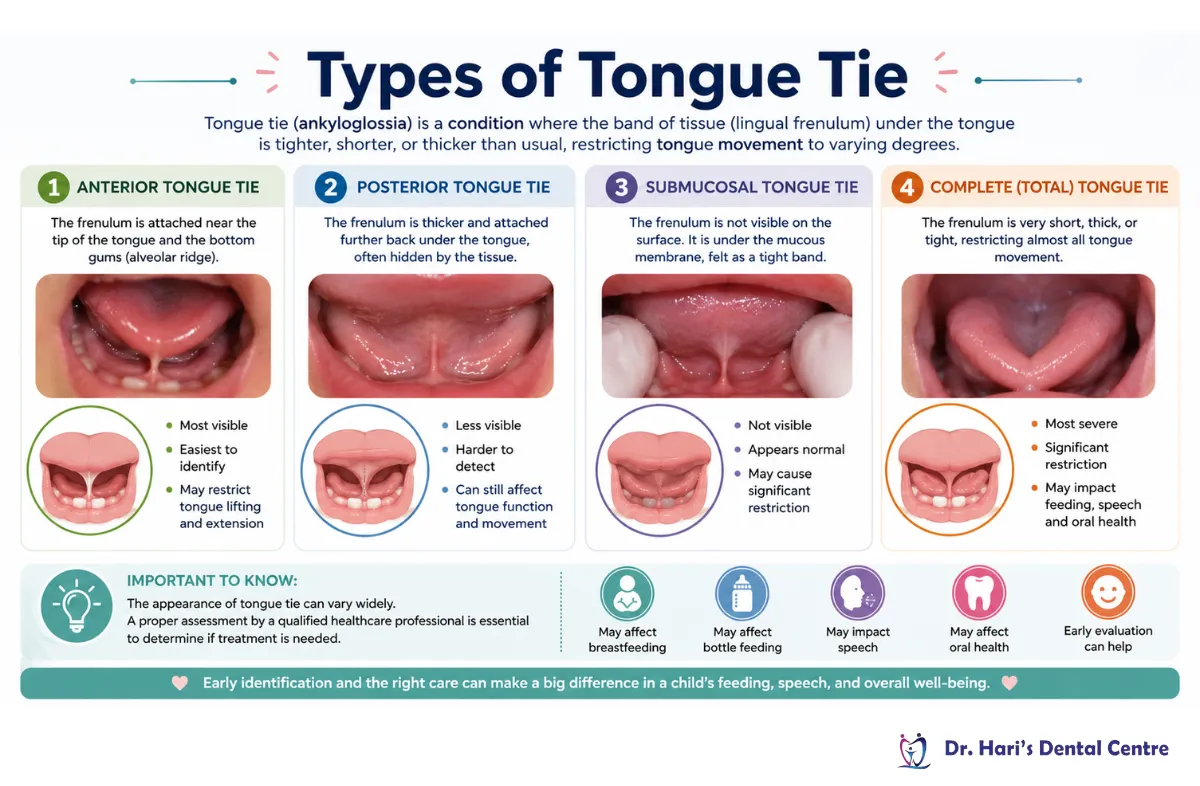
Types of Tongue Tie
Anterior Tongue Tie
This type appears near the tip of the tongue and is easier to identify. It often limits tongue movement visibly.
Posterior Tongue Tie
Located deeper beneath the tongue, posterior tongue tie is less noticeable but can still cause feeding and speech problems.
Lip Tie
Some patients also have a restrictive upper lip frenulum. In such cases, a labial frenectomy procedure may be recommended to improve feeding and oral movement.
Causes of Tongue Tie
Tongue tie is usually present at birth and is considered a congenital condition. Genetics may play a role, as it can run in families. During fetal development, the frenulum may not separate properly, leading to restricted tongue movement after birth.
While some people explore how to fix tongue tie naturally, exercises alone cannot release a tight frenulum. Professional evaluation is important to determine the right treatment.
Symptoms of Tongue Tie
In Babies
- Difficulty latching during breastfeeding
- Clicking sounds while feeding
- Long feeding sessions
- Poor weight gain
- Feeding frustration
In Children
- Speech pronunciation issues
- Difficulty licking lips or moving the tongue
- Swallowing problems
- Mouth breathing habits
In Adults
- Jaw pain and muscle tension
- Tongue fatigue
- Difficulty speaking for long periods
- Oral hygiene challenges
A tongue-tie procedure adult treatment can significantly improve comfort and oral function.
Effects of Untreated Tongue Tie
If left untreated, tongue tie may contribute to:
- Breastfeeding difficulties
- Speech delays
- Jaw tension
- Orthodontic problems
- Mouth breathing
- Poor oral hygiene
- Sleep-related concerns
Early treatment often prevents long-term complications and supports healthier oral development.
Diagnosis and Treatment
Diagnosis involves a detailed oral examination to assess tongue movement, feeding patterns, speech, and swallowing function.
Not all tongue ties require treatment, but intervention is recommended when tongue restriction affects daily function or comfort.
There is no strict tongue tie surgery age limit. Infants, children, and adults can all benefit from treatment when symptoms are present.
Understanding the Tongue-Tie Procedure
The tongue-tie procedure is designed to release the tight frenulum and improve tongue mobility.
Traditional Method
This involves using surgical instruments to release the tissue. Healing may take slightly longer and sometimes requires sutures.
Laser Tongue-Tie Treatment
Laser dentistry offers a modern and comfortable alternative. The laser precisely removes restrictive tissue with minimal bleeding and faster healing.
The frenectomy procedure steps usually include examination, anesthesia if needed, tissue release, and post-treatment exercises.
Benefits of Laser Treatment
Laser-assisted tongue tie treatment provides:
- Minimal bleeding
- Reduced discomfort
- Faster healing
- Lower infection risk
- Improved feeding and speech outcomes
- Greater treatment precision
At Dr. Hari’s Dental Centre, advanced laser technology helps ensure safe and effective care for patients of all ages.
Recovery After Treatment
Recovery after a tongue-tie procedure is generally quick. Babies can often feed immediately after treatment, while older patients may experience mild soreness for a few days.
Dentists may recommend tongue exercises to prevent reattachment and improve mobility. Follow-up visits help monitor healing and ensure successful results.
Tongue Tie Treatment for Adults
Many adults live with undiagnosed tongue tie for years. Restricted tongue movement can contribute to chronic jaw discomfort, speech fatigue, and oral tension.
A professionally planned tongue-tie procedure adult treatment can improve oral function, reduce muscle strain, and enhance overall comfort.
Conclusion
Tongue tie can affect feeding, speech, breathing, and oral development at any age. Fortunately, modern dentistry provides safe and effective solutions through minimally invasive treatment.
A professionally performed tongue-tie procedure can restore proper tongue movement, improve oral function, and enhance quality of life. At Dr. Hari’s Dental Centre, advanced laser technology and patient-focused care help infants, children, and adults receive effective treatment tailored to their needs.
Read also https://drharisdentalcentre.com/diabetes-and-oral-health/.
























Sign in to leave a comment.