Small and Medium-Sized Enterprises (SMEs) operate in a highly competitive environment where efficient project management is essential for sustainable growth. Whether managing supply chain operations, digital transformation, logistics, or service delivery, businesses need structured project management strategies to improve productivity, reduce costs, and achieve successful outcomes.
For SMEs, effective project management is not just about completing tasks on time—it is about maximizing resources, improving communication, and driving long-term business success. Organizations that invest in professional training and workshops can significantly enhance their operational performance and leadership capabilities.
The Australasian Supply Chain Institute offers a wide range of professional development programs, certification courses, and workshops that help businesses strengthen supply chain, operations, and project management skills.
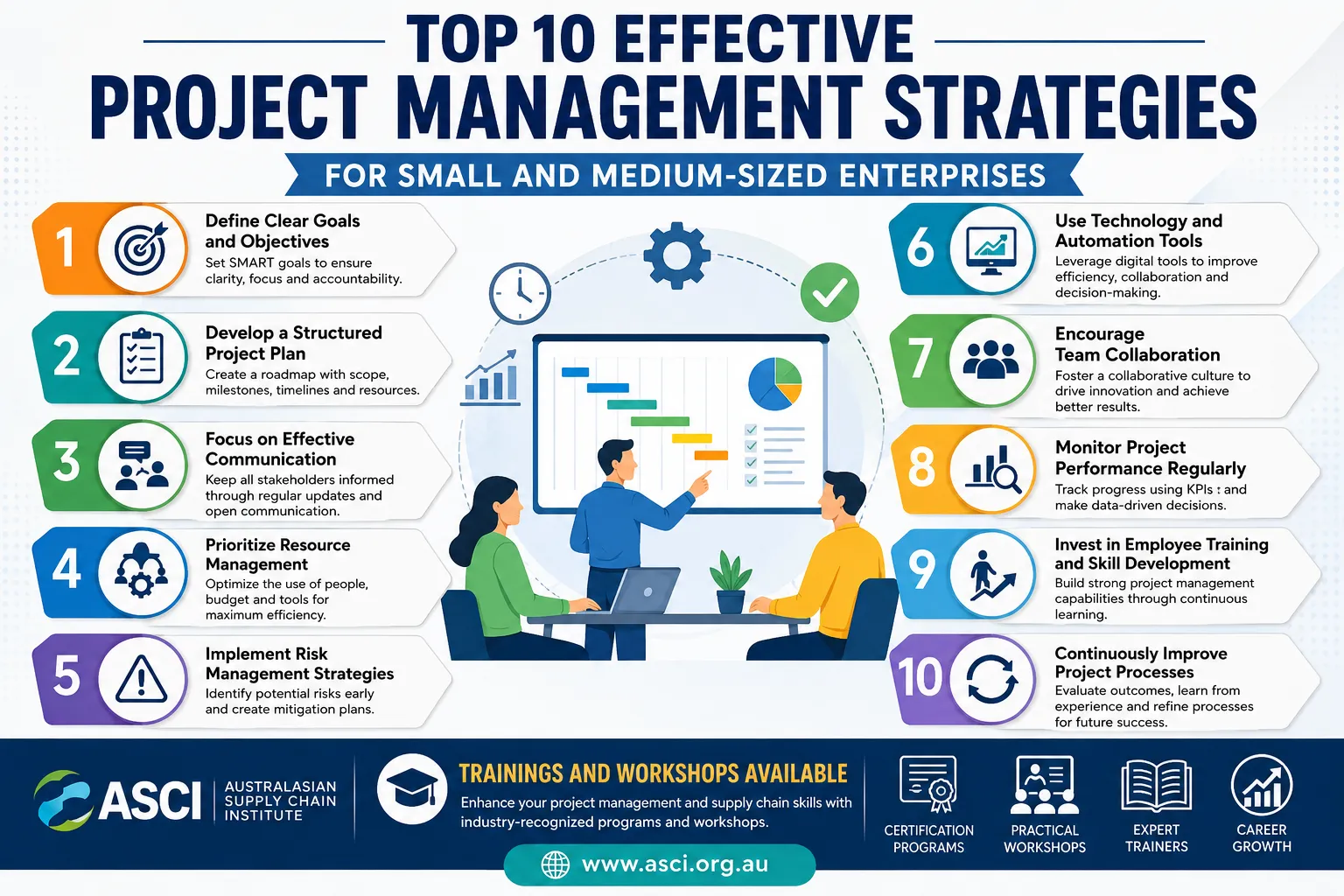
1. Define Clear Project Goals and Objectives
Every successful project begins with clearly defined goals. SMEs should establish measurable objectives, timelines, budgets, and expected outcomes before starting any project. Clear goals help team members stay aligned and reduce confusion during execution.
Project managers should use SMART objectives—Specific, Measurable, Achievable, Relevant, and Time-bound—to ensure clarity and accountability throughout the project lifecycle.
2. Develop a Structured Project Plan
A well-structured project plan acts as a roadmap for the entire team. It should include project scope, deliverables, milestones, risk assessments, and resource allocation.
Using project planning tools and methodologies helps SMEs avoid delays and manage workloads efficiently. Proper planning also improves coordination between departments and external stakeholders.
3. Focus on Effective Communication
Communication is one of the most critical elements of project management. SMEs often work with smaller teams, making transparent communication essential for maintaining productivity and collaboration.
Regular meetings, progress reports, and centralized communication platforms help ensure that all stakeholders remain informed about project updates, risks, and deadlines.
4. Prioritize Resource Management
Limited budgets and manpower are common challenges for SMEs. Efficient resource management ensures that available personnel, finances, and technology are utilized effectively.
Businesses should monitor workloads, assign responsibilities strategically, and avoid overloading employees. Resource optimization improves operational efficiency and reduces project bottlenecks.
5. Implement Risk Management Strategies
Every project carries risks, including budget overruns, supply chain disruptions, and operational delays. SMEs should identify potential risks early and create mitigation strategies to minimize their impact.
Risk management plans help businesses respond quickly to unexpected challenges and maintain project continuity even during uncertain conditions.
6. Use Technology and Automation Tools
Modern project management software helps SMEs improve workflow efficiency, task tracking, and collaboration. Cloud-based tools provide real-time updates, automate repetitive tasks, and improve decision-making.
Digital transformation is becoming increasingly important for businesses aiming to remain competitive in today’s fast-changing market environment.
7. Encourage Team Collaboration
Strong teamwork improves project execution and innovation. SMEs should foster a collaborative work culture where employees can share ideas, solve problems together, and contribute to decision-making.
Cross-functional collaboration enhances productivity and helps businesses achieve project goals more effectively.
8. Monitor Project Performance Regularly
Tracking project performance allows businesses to identify issues before they become major problems. SMEs should use Key Performance Indicators (KPIs) to measure project success, including cost performance, timeline adherence, and quality outcomes.
Continuous monitoring helps organizations improve efficiency and make informed strategic decisions.
9. Invest in Employee Training and Skill Development
Professional training is essential for improving project management capabilities. Businesses that invest in workforce development gain better leadership, operational efficiency, and problem-solving skills.
The Australasian Supply Chain Institute (ASCI) provides extensive professional development opportunities, including certification programs, short courses, and industry workshops for supply chain and operations professionals.
Some of the valuable ASCI learning programs include:
- APICS CPIM Certification Review Courses
- APICS CSCP Certification Programs
- Logistics and Distribution Training
- Sales & Operations Planning Workshops
- Forecasting and Demand Management Courses
- Supply Chain Planning Certifications
These programs help professionals develop practical skills in project planning, operations management, inventory control, and strategic decision-making.
10. Continuously Improve Project Processes
Continuous improvement is vital for long-term business growth. SMEs should regularly evaluate completed projects, identify lessons learned, and refine processes for future projects.
Businesses that adopt continuous improvement methodologies can enhance operational performance, increase customer satisfaction, and remain competitive in evolving industries.
Trainings and Workshops Available for SMEs
Professional workshops and certification programs play a crucial role in improving project management expertise. The Australasian Supply Chain Institute offers industry-recognized training programs designed to support professionals in supply chain, logistics, and operations management.
Popular ASCI Training Programs
Operations Management Courses
These programs focus on planning, scheduling, and controlling organizational operations efficiently.
Supply Chain Management Workshops
ASCI offers short courses covering forecasting, production planning, ERP implementation, and sales operations planning.
Professional Certification Programs
Industry-recognized certifications such as APICS CPIM and CLTD help professionals build expertise in inventory management, logistics, and distribution.
AI and Technology-Focused Learning
Emerging programs such as Responsible Use of AI Licensing (RAIL) certification help organizations prepare for technology-driven business environments.
Conclusion
Effective project management is essential for SMEs aiming to improve productivity, reduce operational risks, and achieve sustainable business growth. By implementing clear strategies, embracing technology, investing in workforce training, and continuously improving processes, businesses can successfully manage projects and remain competitive in modern industries.
Professional development programs offered by the Australasian Supply Chain Institute provide valuable opportunities for SMEs and professionals to strengthen project management, supply chain, and operational capabilities through industry-focused training and workshops.

























Sign in to leave a comment.