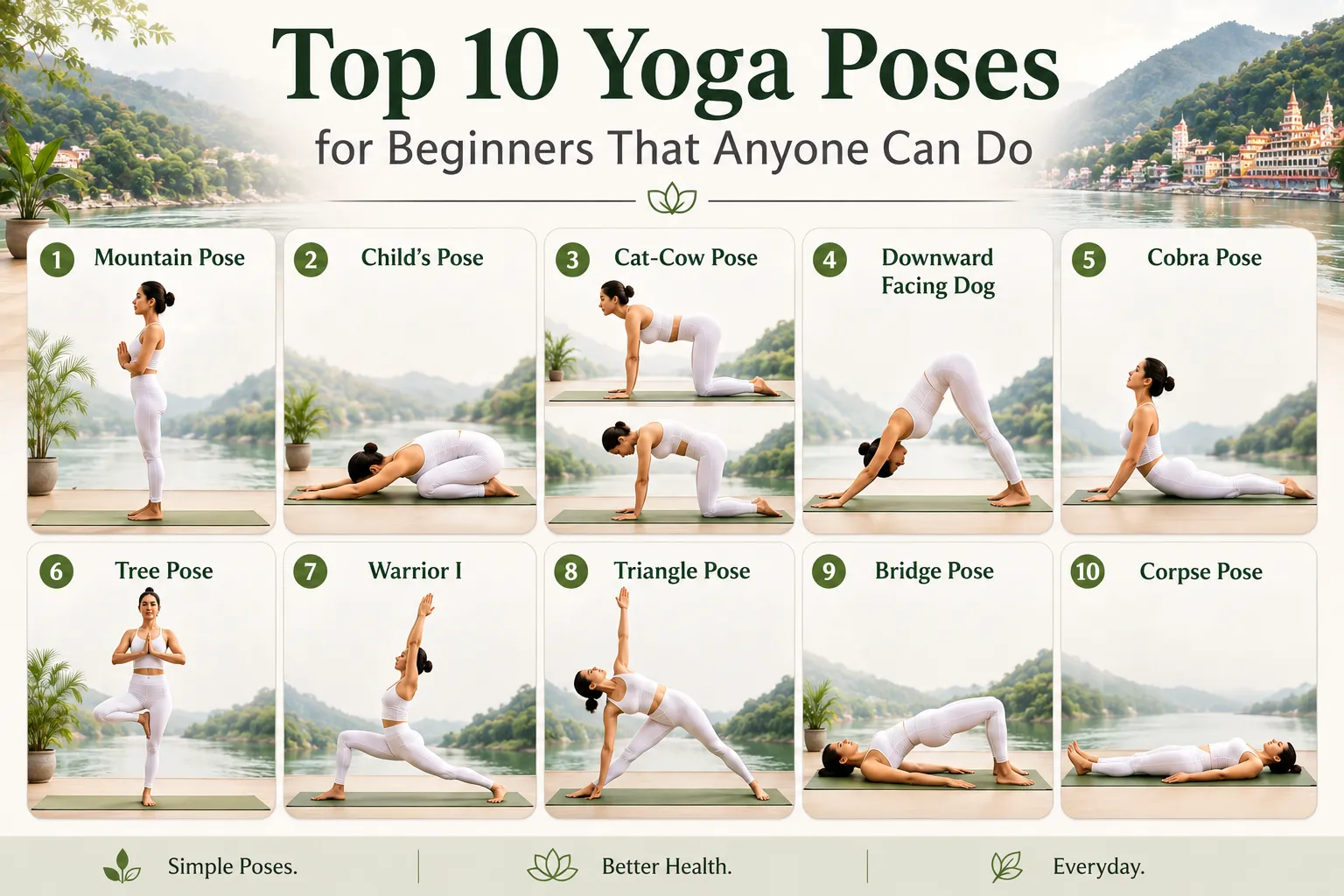

Starting yoga can feel exciting and overwhelming at the same time. Many beginners wonder which poses to practice first and how to build confidence without risking injury. The good news is that yoga is for everyone, regardless of age, fitness level, or flexibility. By learning a few simple poses, you can improve your strength, balance, posture, and mental well-being while developing a lifelong healthy habit.
Whether you practice at home or visit a Yoga retreat center in Rishikesh, beginning with the right poses creates a strong foundation. Rishikesh, often called the Yoga Capital of the World, offers a peaceful atmosphere where yoga becomes more than just exercise. It becomes a journey toward better health and inner peace.
Mountain Pose (Tadasana)
Mountain Pose may appear simple, but it teaches proper body alignment and balance. Stand with your feet together, keep your spine straight, and relax your shoulders. Take slow, deep breaths while grounding your feet into the floor.
This pose improves posture, strengthens the legs, and increases body awareness. It also prepares your body for more advanced yoga movements.
Child's Pose (Balasana)
Child's Pose is one of the most relaxing yoga positions for beginners. Kneel on the floor, sit back on your heels, and stretch your arms forward while lowering your forehead toward the mat.
This gentle stretch relaxes the lower back, hips, and shoulders. It also helps calm the mind after a busy day and encourages slow, mindful breathing.
Cat-Cow Pose (Marjaryasana-Bitilasana)
Cat-Cow is a flowing movement that increases flexibility in the spine. Move between arching your back and gently rounding it while coordinating your breathing.
Practicing this pose regularly improves spinal mobility, relieves stiffness, and prepares your body for longer yoga sessions.
Downward-Facing Dog (Adho Mukha Svanasana)
Downward-Facing Dog is one of the most recognized yoga poses. Begin on your hands and knees before lifting your hips upward to create an inverted V shape.
Although challenging at first, this pose strengthens the arms, shoulders, and legs while stretching the hamstrings and calves. With regular practice, it becomes much more comfortable.
Cobra Pose (Bhujangasana)
Cobra Pose is excellent for strengthening the back muscles. Lie on your stomach, place your palms under your shoulders, and gently lift your chest while keeping your elbows slightly bent.
This pose opens the chest, improves posture, and increases spinal flexibility. It is especially beneficial for people who spend long hours sitting at a desk.
Tree Pose (Vrikshasana)
Tree Pose helps improve balance and concentration. Stand on one leg and place the sole of your opposite foot against your inner thigh or calf. Bring your hands together in front of your chest.
Although you may wobble at first, consistent practice develops better stability, coordination, and focus.
Warrior I (Virabhadrasana I)
Warrior I builds confidence while strengthening the lower body. Step one foot forward into a lunge, raise your arms overhead, and keep your hips facing forward.
This pose improves endurance, strengthens the legs, and stretches the hips and shoulders. It also promotes mental determination.
Triangle Pose (Trikonasana)
Triangle Pose stretches multiple muscle groups at once. Stand with your feet apart, extend one arm toward your front foot, and lift the opposite arm toward the ceiling.
The pose improves flexibility, strengthens the legs, and enhances overall balance while opening the chest and hips.
Bridge Pose (Setu Bandhasana)
Bridge Pose strengthens the back, hips, and core muscles. Lie on your back, bend your knees, and lift your hips while pressing your feet firmly into the floor.
Regular practice supports spinal health and helps relieve mild lower back discomfort. It also opens the chest and encourages deeper breathing.
Corpse Pose (Savasana)
Every yoga session should end with Savasana. Lie flat on your back with your arms relaxed by your sides and allow your body to completely rest.
Although this pose looks effortless, it plays a vital role in helping your body absorb the benefits of your practice. It reduces stress, calms the nervous system, and promotes deep relaxation.
Why Beginners Should Practice Yoga Consistently
Learning yoga is not about achieving perfect poses. Instead, it is about creating a healthy routine that supports both physical and mental well-being. Even practicing for twenty minutes each day can improve flexibility, reduce stress, strengthen muscles, and increase mindfulness.
Many beginners find that practicing under experienced instructors accelerates their progress. Visiting a Yoga and wellness centre in Rishikesh provides expert guidance in a peaceful setting where you can focus entirely on your wellness journey. If you wish to deepen your practice further, spending time at the best yoga retreat in Rishikesh offers an immersive experience through yoga, meditation, healthy meals, and holistic living.
For travelers seeking comfort alongside wellness, properties like Yogved Hospitality & Resort provide a relaxing environment close to many renowned yoga schools and retreat centers. Its peaceful location in Tapovan makes it an excellent choice for those looking to combine luxury with mindful living while exploring a Yoga retreat center in Rishikesh.
Conclusion
Yoga is one of the easiest ways to improve your health, regardless of your experience level. These ten beginner-friendly poses help build strength, flexibility, balance, and confidence while reducing stress and improving overall well-being. Start slowly, listen to your body, and practice consistently. Whether you choose to learn at home or visit the best yoga retreat in Rishikesh, every yoga journey begins with a single pose. With patience and regular practice, you'll discover that yoga is not just a workout but a lifestyle that supports lifelong wellness.
Frequently Asked Questions
1. Which yoga pose is best for complete beginners?
Mountain Pose and Child's Pose are excellent starting points because they are easy to learn and help improve posture, breathing, and body awareness.
2. How often should beginners practice yoga?
Beginners can practice three to five times a week. Even short daily sessions can improve flexibility, strength, and mental focus over time.
3. Is it better to learn yoga at home or at a Yoga retreat center in Rishikesh?
Both options are beneficial. However, a Yoga retreat center in Rishikesh offers expert guidance, structured sessions, and a peaceful environment that helps beginners learn safely and effectively.
4. What should I expect from a Yoga and wellness centre in Rishikesh?
A Yoga and wellness centre in Rishikesh typically offers yoga classes, meditation, breathing exercises, healthy meals, and wellness activities designed to improve overall physical and mental health.
5. Why do many people choose the best yoga retreat in Rishikesh?
The best yoga retreat in Rishikesh combines experienced instructors, serene surroundings, meditation, holistic wellness programs, and authentic yogic practices, making it an ideal destination for beginners and experienced practitioners alike.



























Sign in to leave a comment.