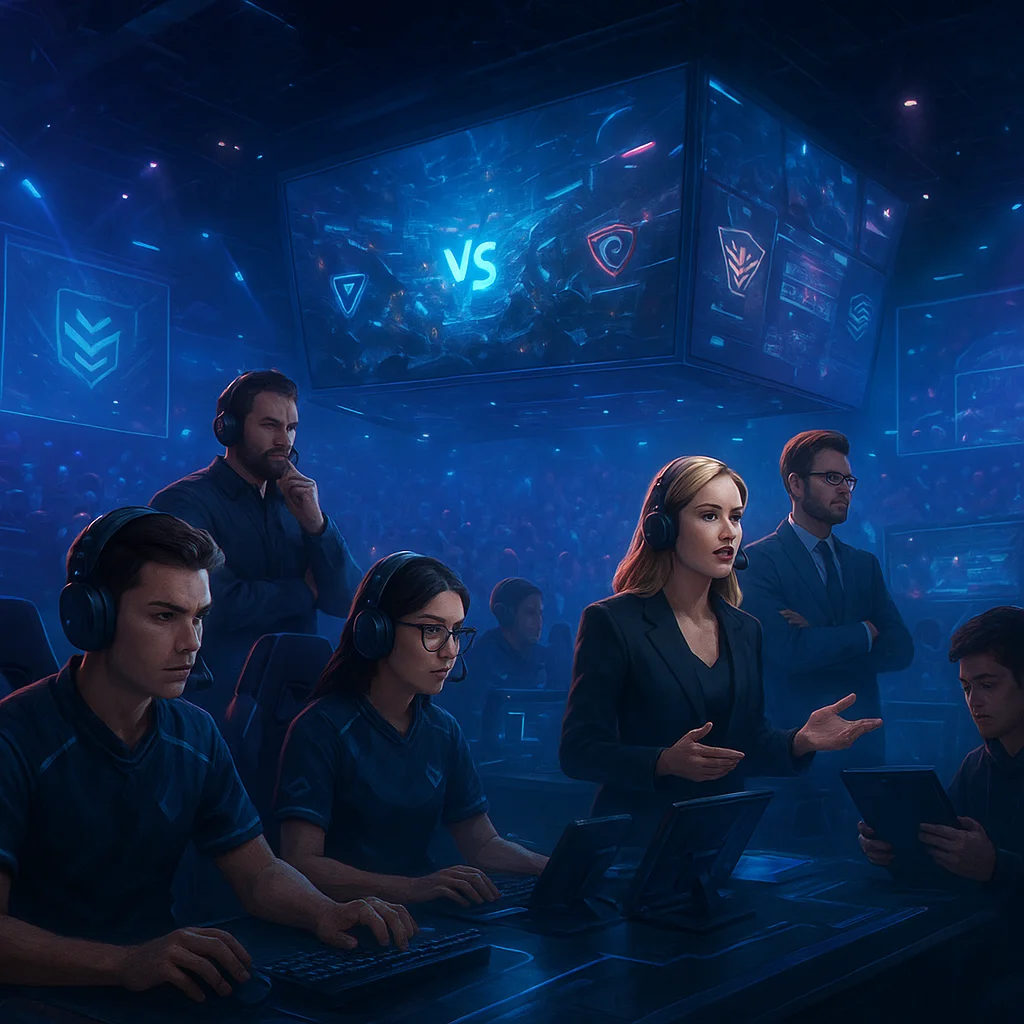

From Basement to Boardroom: The Surprising Surge of Esports Careers
Here’s the thing about esports in 2026: it’s no longer just about teenagers yelling at screens or niche Twitch streams peppered with cringe-worthy ads. This industry has morphed into a global economic powerhouse, boasting a market size forecast to exceed $3.8 billion this year alone, according to Statista. What’s infuriating to some old-school skeptics is how quickly esports has professionalized, offering a spectrum of career opportunities far beyond pro play. Yet, paradoxically, many still underestimate the sheer diversity and sustainability of these roles.
Picture this: a 22-year-old from Pakistan, Arslan Ash, recently relocated to Japan to elevate his competitive career, demonstrating the global mobility and cross-cultural exchange now fueling esports growth (MSN report). This move isn’t just about gaming skills; it’s a strategic career decision packed with implications for sponsorships, brand partnerships, and international market penetration.
“Esports is not a fad; it’s a legitimate career path with diverse opportunities that extend well beyond playing professionally.” – Industry analyst at WriteUpCafe
But what are the top sectors driving this explosive growth? And how can aspirants leverage these trends for long-term career success? Let’s cut through the noise and get granular.
Historical Context: The Evolution Driving Today’s Esports Boom
To understand the current esports explosion, one must rewind to the early 2010s when titles like League of Legends and Dota 2 began organizing structured tournaments with prize pools in the hundreds of thousands. Fast forward, and the stakes have skyrocketed with multi-million dollar prize pools, multi-platform broadcasting deals, and the rise of franchised leagues backed by traditional sports teams.
What many fail to grasp is the infrastructure that underpins this growth. Esports organizations have evolved from sweatshop-style teams to multifaceted entities encompassing marketing, content creation, analytics, and community management. According to a 2026 Logitech G study, global esports audience engagement has surged beyond 600 million, pushing sponsors and media rights holders to invest aggressively. This has led to a proliferation of jobs not just on the competitive front but across the business ecosystem.
Meanwhile, technological advancements, especially in AI-driven analytics and virtual reality, have expanded the horizons for training and fan interaction, transforming esports into a truly immersive experience. This maturation is the backdrop for the career diversification we see today.
Core Analysis: Top 5 Growth and Career Opportunities Shaping Esports in 2026
Let’s be blunt. The common misconception is that esports careers are limited to being a player or a streamer. That’s dead wrong. The industry’s growth is powered by multiple high-value sectors. Here’s the breakdown:
- Professional Player and Team Management
While pro players remain the face of esports, the demand for team managers, coaches, and performance analysts has exploded. Teams like TSM and Fnatic now employ full-time strategists and mental health coaches. This trend reflects a shift towards treating esports athletes like traditional sports pros. - Content Creation and Digital Marketing
Esports thrives on content. From YouTube highlights to TikTok clips and Twitch streams, content creators drive fan engagement. Agencies specializing in esports influencer marketing are growing rapidly, forging brand partnerships that transcend gaming. According to the Logitech G study, content creators’ influence on consumer purchase decisions is now a core revenue stream. - Event Production and Broadcasting
Major tournaments like The International and Worlds require sophisticated event management, live broadcasting, and production crews. Careers in technical direction, camera operation, and esports casting are in high demand. The rise of 360-degree VR broadcasts and interactive spectator platforms is creating new roles in immersive media production. - Game Development and Esports-Specific Software
Companies focusing on developing esports-ready games or specialized software tools—like match analytics, player tracking, and anti-cheat systems—are a critical growth area. This segment blends hardcore software engineering with esports domain expertise, offering careers in product management, UX design, and development. - Esports Education and Coaching
Formalized coaching and training academies have mushroomed. The increasing professionalism means aspiring players seek expert guidance in mechanics, strategy, and mental resilience. The Esports Coaching Academy Project Report 2026 highlights the rapid expansion of training services, signaling robust career opportunities in pedagogy and curriculum design.
“Esports careers are no longer a gamble on flashy gameplay but a calculated blend of business acumen, technology, and community engagement.” – Senior esports consultant
Current Developments in 2026: How the Landscape Has Shifted
Recent shifts in 2026 reveal that the esports industry isn’t just growing—it’s diversifying geographically and technologically. Arslan Ash’s move to Japan is emblematic of a broader trend of talent migration, driven by regional investment incentives and emerging esports hubs in Southeast Asia and Latin America.
Additionally, the integration of AI and machine learning in competitive analysis has transformed coaching methods. Esports teams now employ data scientists to dissect player performance metrics, optimizing strategies in real-time. This tech infusion has created niche roles such as esports data analysts and AI trainers.
On the corporate side, legacy sports franchises like the NBA and NFL have doubled down on esports investments, catalyzing hybrid roles that combine traditional sports marketing with gaming culture knowledge.
Moreover, sustainability concerns are shaping event production, with green energy-powered venues and carbon-neutral tournaments gaining traction. This opens new career paths in environmental event management within esports.
Expert Perspectives and Industry Impact
Industry leaders stress the importance of recognizing esports as a serious business ecosystem rather than a hobbyist playground. According to Logitech G’s 2026 report, the rise in career aspirations among youth signifies a generational shift in how gaming is perceived globally.
Experts point out that the legitimacy of esports careers hinges on education and infrastructure development. Universities worldwide are launching dedicated esports management degrees, blending business, technology, and media studies. This academic backing creates a pipeline for skilled professionals ready to tackle the industry’s complexities.
However, challenges remain—burnout rates among players, inconsistent regulatory frameworks, and disparities in regional access to high-speed internet threaten growth. Addressing these issues will require collaborative efforts from stakeholders across the spectrum.
For a deep dive into strategies shaping the industry, explore Advanced Strategies for Esports Industry Growth and Career Opportunities in 2026 and 2026 Trends in Esports Industry Growth and Career Opportunities for comprehensive insights.
Looking Ahead: What to Watch in Esports Careers Beyond 2026
Peering forward, the esports industry is poised to entrench itself deeper into mainstream culture and commerce. Key trends to monitor include:
- Metaverse Integration: Expect esports tournaments hosted in virtual worlds, blending gaming with social experiences.
- Cross-Industry Collaborations: Partnerships between tech giants, entertainment studios, and esports teams will create hybrid career roles.
- Regulatory Evolution: Frameworks for player contracts, gambling, and intellectual property will become standardized, professionalizing the sector further.
- Diversity and Inclusion Initiatives: Programs aimed at increasing representation will open new career pathways and broaden audience demographics.
- AI-Enhanced Training Tools: Personalized coaching powered by AI will become a norm, demanding expertise in data science and esports-specific AI applications.
For those eyeing a career in esports, the message is clear: versatility and adaptability are crucial. The industry rewards those who combine passion with skills in technology, business, and media. In a landscape where a player’s career span is often short, building a portfolio spanning multiple esports roles is the smartest move.
In conclusion, esports in 2026 is not just about flashy gameplay or viral moments. It is a multifaceted industry offering robust, sustainable career opportunities across five key growth areas. Understanding these sectors and their current trajectories is essential for anyone serious about capitalizing on esports’ extraordinary rise. For further exploration of career opportunities and industry growth, the linked WriteUpCafe articles provide essential knowledge and strategic guidance.




























Sign in to leave a comment.