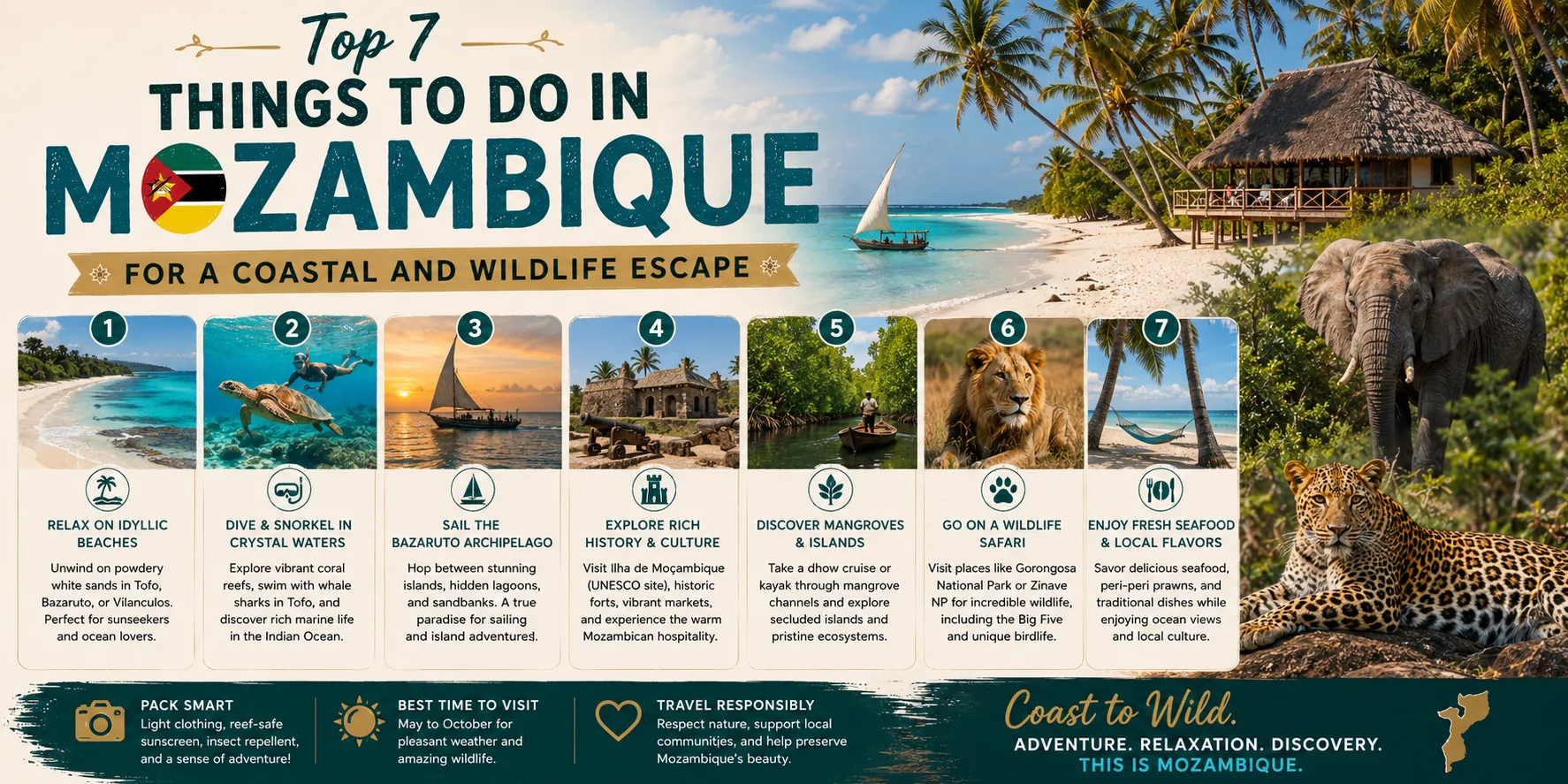

Few places on earth hold the raw, untouched magic of Mozambique. Stretching along the warm, turquoise waters of the Indian Ocean, this Southern African gem is a dream come true for travelers who crave wild spaces. If you are tired of overcrowded tourist spots and want a destination where pristine beaches meet thrilling wildlife safaris, you have found your match.
But before you pack your bags, you probably have a few questions. This guide answers the most common search queries about traveling to Mozambique, showcasing the top seven things to do for an unforgettable coastal and wildlife escape.
Is Mozambique safe for tourists to visit?
Safety is the first thing most travelers look up before planning their trip. Yes, Mozambique is generally a safe and incredibly welcoming destination for tourists, especially if you stick to popular travel hubs. Places like Maputo, Vilanculos, Tofo, and the southern beaches are very friendly.
Like traveling anywhere, you should use common sense. Avoid walking alone on dark beaches at night, keep your valuables secure, and keep an eye on your belongings in crowded markets. It is also wise to check current travel advisories regarding the northernmost province of Cabo Delgado, as some border areas experience security issues. However, the vast majority of Mozambique’s tourist regions are peaceful, relaxed, and ready to welcome you with open arms.
What is the best time of year to visit Mozambique?
Timing your trip is everything. The best time to visit Mozambique is during the dry season, which runs from May to November. During these months, the weather is sunny, clear, and comfortably warm—perfect for both beach relaxing and spotting animals on safari.
If you are a diver wanting to see specific marine giants, keep these seasons in mind:
- Humpback Whales: July to October.
- Whale Sharks and Manta Rays: Visible year-round, but October to March offers the highest concentration of plankton, which brings them out in massive numbers.
- Rainy Season: January to March is hot, humid, and rainy. Many dirt roads in national parks become muddy and hard to navigate, so it is best to avoid safaris during this time.
Why is Gorongosa National Park called Africa’s greatest wildlife restoration story?
If you want a safari that feels like a true adventure rather than a crowded tourist drive, Gorongosa National Park is your first stop. Located in central Mozambique, this park was once devastated by decades of civil conflict.
But over the last twenty years, an incredible partnership between the Mozambican government and the Carr Foundation has brought the park back to life. Today, Gorongosa is teeming with lions, elephants, hippos, crocodiles, and over 400 species of birds. Exploring this park does not just give you a spectacular safari; it also lets you support one of the most successful conservation projects on the planet.
What makes the Bazaruto Archipelago a paradise for beach lovers?
Picture towering sand dunes plunging straight into a bright blue ocean. That is the Bazaruto Archipelago. Located just off the coast of Vilanculos, this group of six islands is a protected marine national park.
If you love the water, this is your personal heaven. You can take a ride on a traditional wooden dhow (sailing boat), slide down the giant sand dunes of Bazaruto Island, or snorkel at Two Mile Reef, where you might spot rare sea turtles, colorful reef fish, and even the elusive dugong (a gentle marine mammal related to the manatee).
Can you really swim with whale sharks and manta rays at Tofo Beach?
Yes, you can! The small, laid-back fishing village of Tofo is world-famous among scuba divers and ocean lovers. The deep oceanic trenches just off the coast create a perfect feeding ground for massive marine animals.
Local operators run daily "ocean safaris." You hop onto an inflatable boat, search the waters for the dark shape of a whale shark (the world’s largest fish), and slide into the water with a snorkel. Standing next to these gentle, polka-dotted giants is an experience that will stay with you forever. Just a short boat ride away is Manta Reef, where giant manta rays gather at "cleaning stations" to let small reef fish clean their wings.
What historical secrets lie hidden on Ibo Island and the Quirimbas?
For a mix of beach beauty and rich history, head north to the Quirimbas Archipelago, specifically Ibo Island. Wandering through Ibo feels like stepping back in time.
The island was once a prominent trading post for Arab, Portuguese, and African merchants. Today, you can walk through quiet, moss-covered colonial ruins, visit ancient stone forts, and watch local silversmiths melt old coins into beautiful, intricate jewelry. It is a quiet, hauntingly beautiful place that offers a deep look into Mozambique's complex past.
Why should Ponta do Ouro be on your marine wildlife bucket list?
Located in the far south of Mozambique, right next to the South African border, Ponta do Ouro is famous for its wild, sandy beaches and ocean adventures.
What makes this spot truly special is its resident population of wild bottlenose dolphins. Local research organizations run respectful dolphin-swimming programs. Instead of watching dolphins perform in a pool, you get to swim alongside them in their natural ocean home on their own terms. It is also an important nesting ground for loggerhead and leatherback turtles, who lay their eggs on these sandy shores.
What are the best things to see and eat in Maputo?
No coastal and wildlife escape is complete without tasting the local culture. Maputo, the capital city, is a lively hub of music, art, and incredible food.
Spend a day exploring the historic Central Railway Station (designed by Gustave Eiffel), browsing the local woodcraft markets, and walking down streets lined with beautiful acacia trees. When you get hungry, head to the fish market. You can pick out fresh prawns, crab, or fish straight from the daily catch, hand them to a local restaurant stalls, and have them grilled right there with spicy piri-piri sauce and fresh coconut rice.
Why are the secluded beaches of Pemba so highly recommended?
If your goal is to completely unplug and escape the modern world, Pemba is where you need to go. Situated in northern Mozambique, Pemba is a gateway to pristine beaches like Wimbe Beach.
Here, the water is calm, warm, and perfect for long afternoon swims. Because it is further away from the major international airports, you will find miles of white sand with very few other tourists. It is the ultimate spot to sit under a palm tree, read a book, and listen to the gentle waves of the Indian Ocean.
Can you combine a South African safari with a Mozambique beach holiday?
Absolutely! This is actually one of the most popular ways to travel Southern Africa. Because South Africa and Mozambique share a border, you can easily combine a land-based safari in Kruger National Park with a beach getaway in Mozambique.
There are direct, short flights from Johannesburg to Maputo or Vilanculos. This means you can spend your morning watching lions in South Africa and your afternoon sipping fresh coconut water on a beach in Mozambique.
How much does a trip to Mozambique typically cost?
The cost of your trip depends entirely on how you like to travel. Mozambique accommodates everything from budget backpackers to ultra-luxury seekers.
- Budget ($50 - $100 per day): If you stay in local guesthouses, eat fresh seafood at local stalls, and travel by public transport, Mozambique is very affordable.
- Mid-Range ($150 - $300 per day): This budget allows you to stay in comfortable beach lodges, eat at nice restaurants, and book guided snorkeling or boat trips.
- Luxury ($500+ per day): Private island resorts in the Bazaruto or Quirimbas Archipelagos offer world-class luxury, private chefs, and exclusive dive excursions.
Do I need a tourist visa to travel to Mozambique?
For most international travelers, yes, you will need a tourist visa to enter Mozambique. While some neighboring African countries have visa-free agreements, travelers from the US, UK, Canada, Europe, and many other nations must obtain a visa before arrival or secure an eVisa online.
Fortunately, the process is now simpler than ever thanks to the electronic visa (eVisa) system, which saves you from waiting in long lines at the border or mailing your physical passport to an embassy.
How can you apply for a Mozambique tourist eVisa online?
Applying for your visa online is straightforward. You will need to fill out a secure form, upload a digital copy of your passport (valid for at least 6 months), provide proof of your accommodation or invitation letter, and upload a recent passport photo.
To avoid any stressful delays or mistakes that could lead to your application being rejected, it is highly recommended to use a trusted, professional visa agency to handle the paperwork for you. You can start your hassle-free application today by visiting the official Mozambique Tourist eVisa.
Why choose us for your Mozambique travel visa?
Planning a trip to Southern Africa should be exciting, not stressful. When you trust us with your visa application, you get peace of mind and professional support every step of the way. Here is why travelers choose our services:
- Reliable Travel Visa Services: Our global, hands-on approach has successfully assisted countless travelers in obtaining their visas quickly and securely.
- Round-the-Clock Assistance: Have a question at midnight? Our experts are available 24/7 to help, ensuring you receive a helpful response within 72 hours.
- Experienced Visa Consultants: Don't guess the requirements. Our seasoned experts provide detailed guidance to guarantee your application is correct and accepted.
- Efficient Visa Application Process: Skip the confusing government portals. Apply for your Mozambique visa in just a few minutes using our simplified, user-friendly form.
Pack your bags, secure your visa, and get ready to experience the wild beauty of Mozambique's shores!















Sign in to leave a comment.