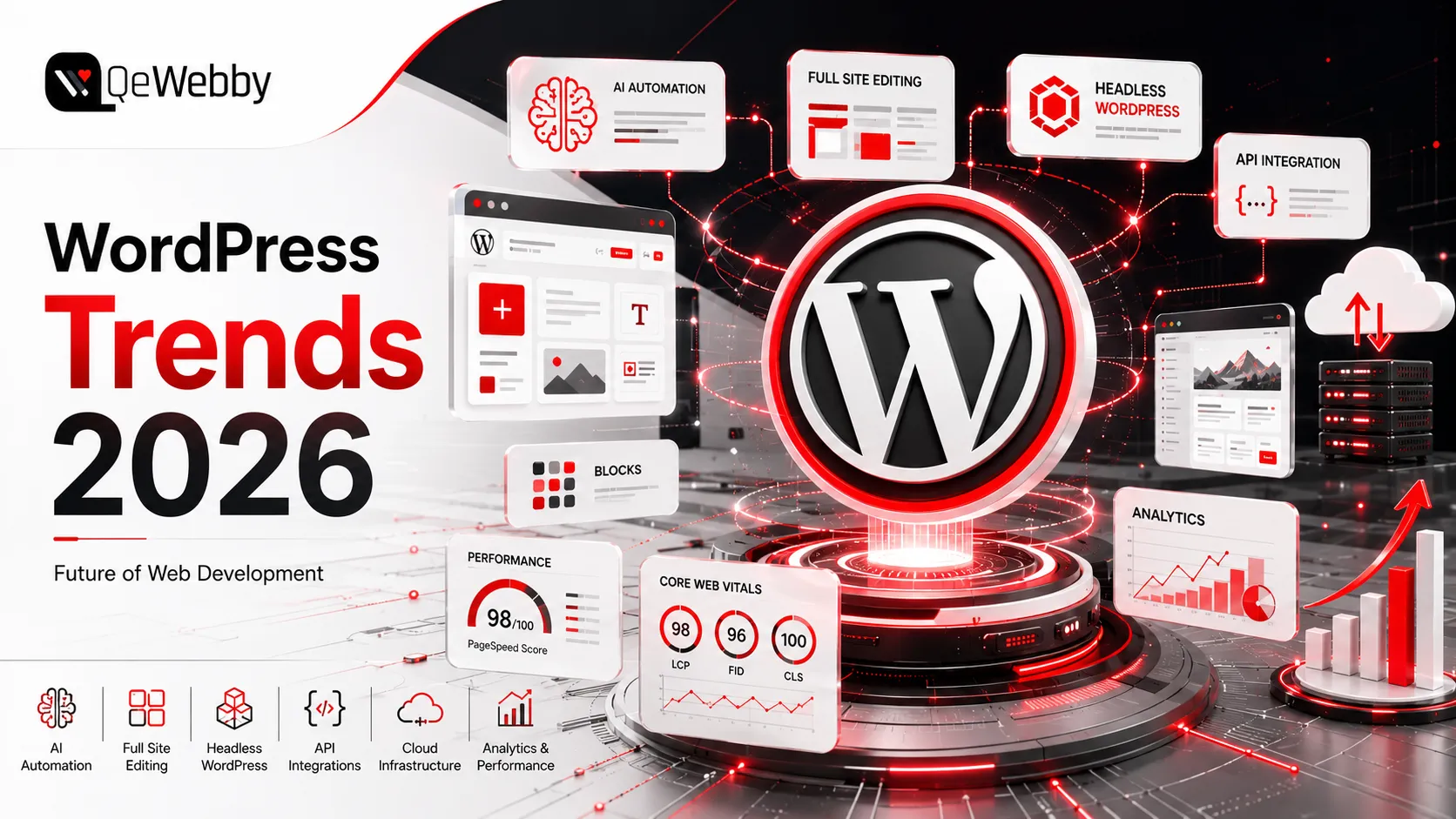

WordPress continues to dominate the digital landscape, but the way businesses use it is evolving rapidly. In 2026, success is no longer determined by attractive themes or simple content publishing. Modern websites are expected to deliver exceptional performance, support AI-driven discovery, integrate with multiple business systems, and provide seamless user experiences across devices.
As search engines become more intelligent and AI-powered platforms influence how users find information online, businesses must adapt their websites accordingly. The latest WordPress development trends are focused on building scalable, intelligent, and future-ready digital experiences that can compete in both traditional search results and AI-generated answers.
Whether you're a business owner, marketer, developer, or agency, understanding these emerging trends can help you stay ahead of the competition and create websites designed for long-term growth.
Why WordPress Still Leads the Web in 2026
Despite the rise of numerous website-building platforms, WordPress remains the preferred choice for businesses worldwide. Its flexibility, extensive ecosystem, and ability to support everything from simple blogs to enterprise-level applications make it a powerful foundation for digital growth.
Today's WordPress websites are no longer just content management systems. They serve as centralized digital hubs that connect content, commerce, analytics, automation, customer engagement, and search visibility into a single ecosystem.
As organizations increasingly rely on data-driven strategies, having a flexible platform capable of supporting evolving business requirements becomes more important than ever.
1. Full Site Editing Is Becoming the New Standard
One of the biggest shifts in WordPress development is the widespread adoption of Full Site Editing (FSE). Instead of managing themes, templates, headers, and content separately, FSE brings everything together through a unified block-based experience.
This approach offers several advantages:
- Faster website updates
- Greater design consistency
- Reduced development bottlenecks
- Improved collaboration between marketers and developers
- Easier template management
Businesses can now make structural website changes without requiring extensive coding knowledge, helping teams launch updates more efficiently while maintaining brand consistency.
2. Headless WordPress Is Moving Mainstream
Headless WordPress has evolved from a niche solution into a practical architecture for modern websites.
By separating the WordPress backend from the frontend presentation layer, businesses gain greater flexibility in how content is delivered across websites, mobile apps, kiosks, and other digital platforms.
Benefits of headless architecture include:
- Improved website performance
- Enhanced scalability
- Better user experiences
- Multi-channel content delivery
- Greater development flexibility
While not necessary for every website, headless implementations are becoming increasingly attractive for organizations with complex digital ecosystems and advanced performance requirements.
3. AI Search Optimization Is Reshaping Website Development
Artificial intelligence is fundamentally changing how users search for information online. Platforms like ChatGPT, Google AI Overviews, and Perplexity are creating new opportunities for businesses to gain visibility beyond traditional search rankings.
As a result, website architecture is increasingly being designed around:
- Structured content
- Clear heading hierarchies
- Schema markup
- Question-and-answer formats
- Entity-based optimization
- AI-friendly content organization
Developers are now working closely with content teams to ensure websites can be easily interpreted, cited, and recommended by AI-powered search engines.
4. AI-Powered Workflows Are Improving Productivity
Artificial intelligence is no longer just a content-generation tool. It has become an essential part of website operations and development workflows.
Organizations are using AI to assist with:
- Content planning
- Metadata generation
- Internal linking recommendations
- Content optimization
- User experience analysis
- Workflow automation
Rather than replacing human expertise, AI is helping teams work more efficiently by reducing repetitive tasks and allowing specialists to focus on strategy and innovation.
5. Website Performance Remains a Critical Success Factor
Performance continues to be one of the most important ranking, conversion, and user experience factors.
Users expect websites to load instantly, and search engines increasingly prioritize fast, responsive experiences.
Key performance priorities in 2026 include:
- Faster loading times
- Improved Core Web Vitals
- Optimized code delivery
- Efficient caching strategies
- Reduced plugin bloat
- Better hosting infrastructure
Organizations investing in performance improvements often see benefits across SEO, user engagement, and conversion rates simultaneously.
6. Low-Code Development Is Accelerating Project Delivery
Businesses are demanding faster launch cycles and quicker website updates. This demand has fueled the growth of low-code and pattern-driven development approaches.
Reusable design systems and block libraries allow teams to:
- Launch websites faster
- Maintain consistency
- Reduce development costs
- Improve scalability
- Streamline collaboration
Instead of building every page from scratch, teams can leverage pre-built components that maintain quality while significantly reducing production time.
7. Composable Digital Ecosystems Are Becoming Essential
Modern websites rarely operate in isolation. Businesses increasingly depend on multiple tools working together seamlessly.
WordPress is evolving into a central platform that connects:
- CRM systems
- Marketing automation platforms
- E-commerce solutions
- Analytics tools
- Customer support software
- External APIs
This composable approach allows businesses to create highly customized digital ecosystems without sacrificing flexibility or performance.
Preparing for the Future of WordPress
The future of WordPress development extends far beyond themes and plugins. Successful websites in 2026 will be built around performance, AI visibility, flexibility, and seamless integrations.
Organizations that embrace these trends early will be better positioned to adapt to changing search behaviors, evolving customer expectations, and emerging technologies.
The goal is no longer simply building a website. It is creating a scalable digital platform that can support business growth, improve discoverability, and deliver exceptional user experiences across every touchpoint.
As AI-powered search continues to reshape the web, businesses that invest in modern WordPress strategies today will gain a significant competitive advantage in the years ahead.























Sign in to leave a comment.