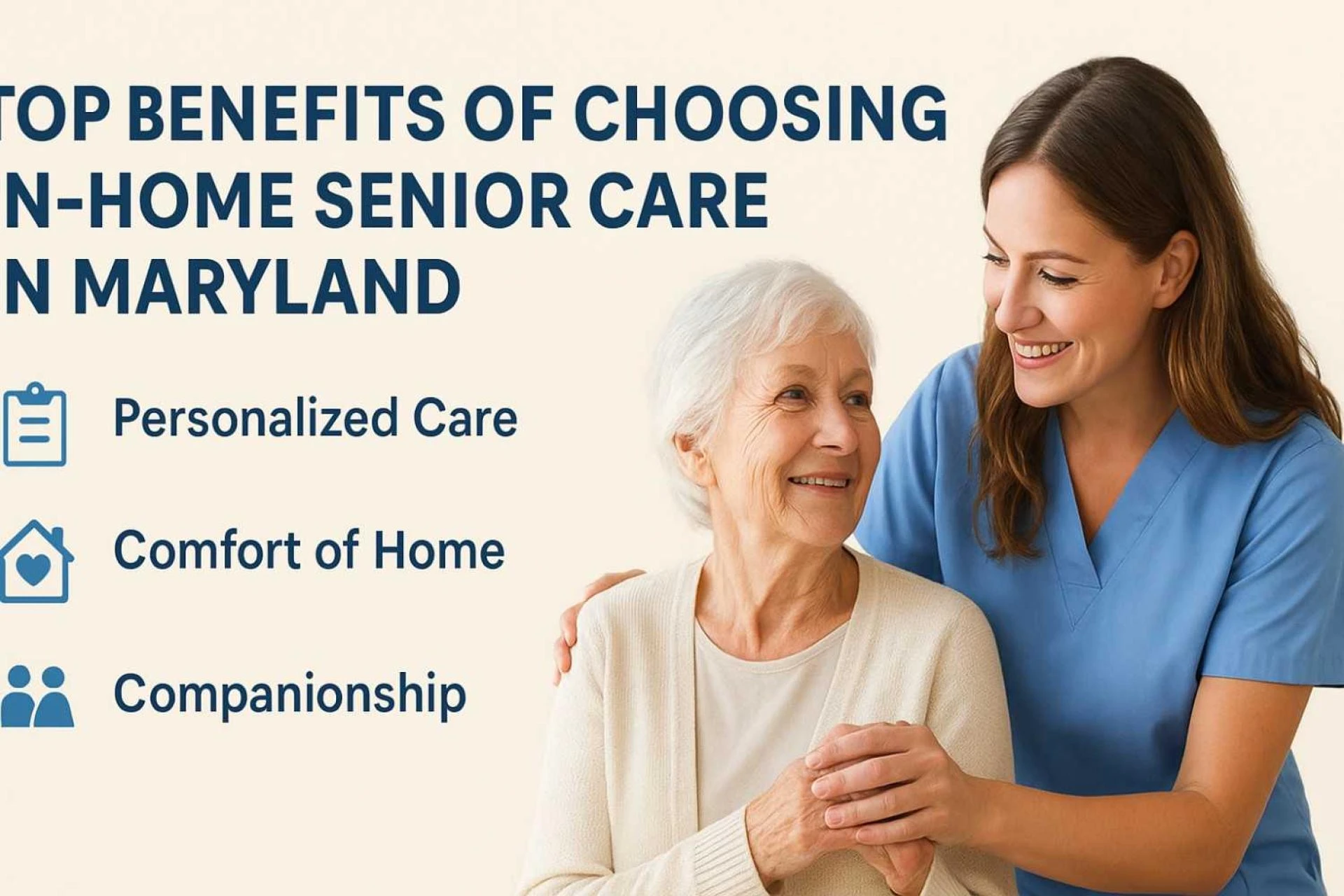

When it comes to senior care, there's no one-size-fits-all solution. After all, who among us wouldn’t prefer to stay in the comfort of their own home? It’s a familiar, cozy space—familiar smells, the good couch (you know, the one with the perfect butt imprint). So, why would anyone choose the noisy, sterile environment of a nursing home when there’s a perfectly good living room available?
Here in Maryland, we get it. Marylanders love their homes. And let’s be honest, who doesn’t? Sure, moving into an assisted living facility or a nursing home may be an option, but it’s not the only option—and certainly not always the best one. In-home senior care offers a world of benefits that will make you wonder why anyone would choose anything else.
Let’s dig in, shall we?
1. Comfort and Familiarity: Your Own Space, Your Own Rules
It’s a simple concept, really: you (or your loved one) are happier in your own space. No one wants to trade their own comfy chair for one of those clinical-looking recliners at a nursing home. Nope. In-home senior care allows you to stay in the place where you’re most comfortable, surrounded by memories, family photos, and—let’s not forget—your own bathroom.
A friend of mine recently shared a story about her mother, who was initially reluctant to leave her home for an assisted living facility. Mom felt anxious about leaving behind her flower garden (and the daily gossip sessions with the neighbor, which, if you ask me, was probably the real reason she was hesitant). After opting for in-home care, the transformation was incredible. Not only did her mom get to keep up with her garden (with a little help, of course), but she was also able to stay in control of her daily routine. That sense of independence made a huge difference in her overall mood and health.
At the end of the day, your home is where the magic happens—and where you don’t have to ask someone when it’s okay to eat your second helping of mashed potatoes.
2. Personalized Care: No Cookie-Cutter Solutions Here
Another fantastic benefit of in-home care is the personalization. Unlike many nursing homes, where you're just another face in the crowd (sometimes literally), in-home care allows for tailored services based on the individual’s specific needs. Whether it’s help with medication, personal hygiene, or light housekeeping, your caregiver can adjust to fit the routine of your life.
I was chatting with a fellow senior care enthusiast (yes, we do that sometimes, it’s a weird hobby) who mentioned her aunt had in-home care for a while. She was initially wary about it, thinking that "nurse" meant a stiff, no-nonsense type who would make her life feel even more restrictive. Instead, she got Janet, a wonderful woman who brought joy and laughter into her aunt’s home every day. Janet didn’t just help with the chores; she also made sure her aunt stayed connected with friends, helped her with a little knitting, and even entertained her with the occasional corny joke. The level of care was personalized—because it wasn’t just about the tasks. It was about improving her quality of life.
So, you see, when you choose in-home care, you don’t just get someone checking boxes. You get a person who’s focused on your needs.
3. No Need to Leave Your Pets Behind (Big Win, Right?)
Let’s talk about something really important: your furry companions. You know, the ones that follow you everywhere, give you side-eye when you don't share your snacks, and who definitely aren't cool with strangers. When you opt for in-home care, you can keep your pets—no stress, no worries. Your dog or cat can be right there with you, which is good for everyone involved.
One of my own family members had a similar situation: her dad needed some extra help, but he wasn’t about to go anywhere without his beloved poodle, Rufus. Moving to a facility meant that Rufus wouldn’t be able to join him, and that was a dealbreaker. Thankfully, they found in-home care that allowed for him to stay with his dog—and everyone was much happier for it. In fact, having Rufus around seemed to bring out the best in the caregiver, who knew the healing power of a well-timed belly rub.
I think we can all agree that when it comes to emotional support, pets win. They know how to curl up next to you at just the right moment, making everything feel better.
4. Flexibility and Freedom: You’re the Boss
Now, let’s get into something that most people don’t think about when they consider senior care: the amount of freedom you still have. Nursing homes have schedules. They have set times for meals, activities, and visits. If you need to change anything? Too bad, so sad.
in-home care is a different ballgame. You get to stay in control of your routine. Want to have breakfast at 11 a.m. instead of 8 a.m.? No problem. Need a nap at 2 p.m.? You can do that without anyone questioning it. Want to binge-watch your favorite show at 4 p.m.? Go for it. This kind of freedom is a game-changer for many seniors who cherish their routines (and let’s be honest, who doesn’t enjoy some freedom after decades of “adulting”?).
For example, my friend’s father, who has early-stage Alzheimer’s, loves going on daily walks around his neighborhood at a specific time. In a nursing home, it was more difficult to accommodate that, but with in-home care, he gets his daily walk with a caregiver who knows exactly how to support him in his routine—so they both get a little exercise and fresh air.
5. Cost-Effective (More Money for Your Grandkids’ Birthday Gifts!)
Now, let’s talk money. Look, we all know that healthcare isn’t cheap—and senior care can be a real drain on your savings. But here’s the thing: in-home care can often be more affordable than moving into a facility. Plus, you’re getting exactly the care you need, without paying for unnecessary services (because let’s face it, a 24/7 nurse might not be necessary when you only need a couple of hours of support each day).
I know it’s hard to talk about finances, but if we’re being honest, a little bit of math goes a long way. Depending on your situation, in-home care can be a budget-friendly option. And let’s be real—this is a great time to put a little extra aside for that future family reunion, where you can spoil your grandkids rotten (and let’s not forget, you’ll need to buy them something nice after hearing their “That’s so boring” comments about your favorite TV shows).
Final Thoughts
Choosing in-home senior care in Maryland is about more than just convenience or practicality; it’s about preserving dignity, offering flexibility, and maintaining a sense of normalcy. As much as we might joke about it, there's something deeply comforting in the idea of staying at home, surrounded by the things (and people) that bring joy. Plus, it's a heck of a lot easier to sneak in a second helping of mashed potatoes when no one's watching.
In-home care can improve not just the health of your loved ones, but their happiness and quality of life. And if you’re lucky enough to have a caregiver who knows how to care for both your elderly relative and the garden gnome collection in the living room? Well, that’s a win in our book.
In the end, it’s all about comfort, familiarity, and giving your loved one a fighting chance to enjoy life on their terms. And really, what’s more important than that?
Frequently Asked Questions (FAQ)
1. What types of services are included in in-home senior care?
In-home care services can include everything from help with daily activities like bathing, dressing, and meal preparation to more advanced medical support like medication reminders and nursing care. The key is that it’s personalized based on the individual’s needs.
2. How do I know if in-home care is right for my loved one?
If your loved one is still relatively independent but needs a little extra help with daily tasks or requires companionship, in-home care can be a perfect fit. It’s a great way to keep them in their own space while ensuring they have the support they need.
3. Can I customize the hours of in-home care?
Yes! In-home care is as flexible as you need it to be. Whether it’s just a few hours a week or full-time support, you can tailor the hours to fit your needs.
4. How do I find a reliable in-home caregiver in Maryland?
Start by researching reputable senior care agencies in your area. They will help you assess your loved one’s needs and match them with a caregiver. Word-of-mouth recommendations from friends and family can also be a great resource.
5. Is in-home care only for seniors with medical conditions?
No! In-home care is available for seniors of all health levels—whether they need help with basic tasks, companionship, or more complex medical care. It’s about making life easier and more comfortable.


























Sign in to leave a comment.