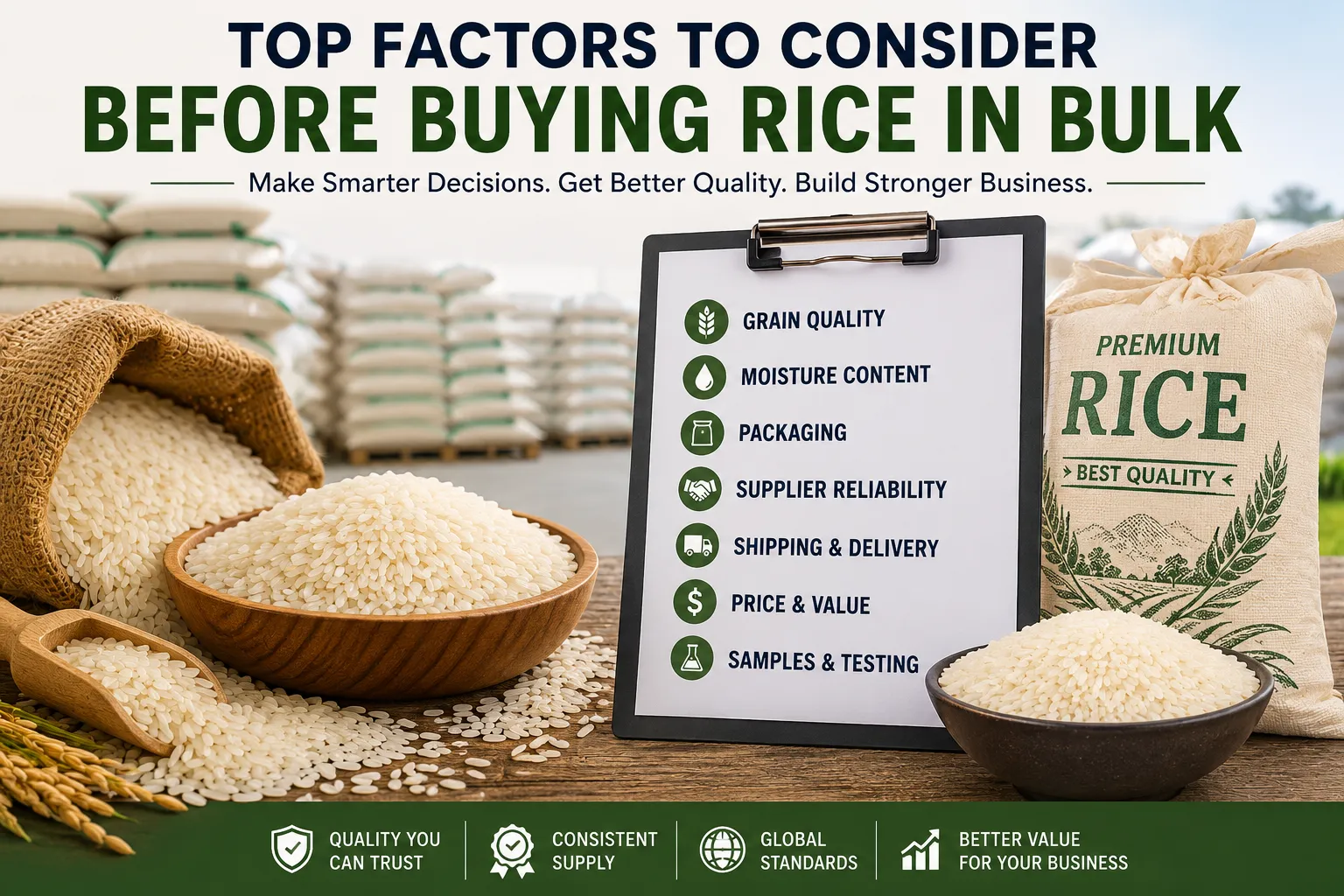

Buying rice in bulk is an important decision for wholesalers, retailers, restaurants, distributors, and food businesses. A large purchase involves more than simply comparing prices. The quality of the rice, packaging, supplier reliability, and shipping process all play a major role in ensuring customer satisfaction and long-term value.
Whether you are purchasing rice for local distribution or international trade, understanding the key factors before placing an order can help you avoid costly mistakes. Here are the most important points every buyer should consider.
Understand Your Requirements First
Before contacting a supplier, clearly define what you need. Different businesses require different types of rice depending on their customers and market demand.
For example, restaurants may prefer long-grain basmati rice, while wholesalers may focus on multiple rice varieties for different regions. You should also determine the quantity, packaging size, and delivery schedule before requesting quotations.
Having clear requirements makes it easier to compare suppliers and select the most suitable product.
Evaluate the Grain Quality
Grain quality is one of the first indicators of premium rice. High-quality rice should have uniform grain size, minimal broken grains, and a clean appearance.
When inspecting rice, pay attention to the following:
- Grain length and consistency
- Low broken percentage
- Natural color
- Clean and dust-free grains
- Pleasant aroma
Consistent grain quality improves cooking performance and increases customer satisfaction, especially for businesses that serve large numbers of consumers.
Check the Moisture Content
Moisture content directly affects the shelf life and storage quality of rice. Rice with excessive moisture may develop mold, attract insects, or lose its freshness during transportation. On the other hand, rice that is too dry may lose its natural texture and cooking quality.
Professional suppliers carefully monitor moisture levels during processing and packaging to ensure the product remains in excellent condition until it reaches the buyer.
For bulk purchases, requesting product specifications that include moisture levels is always a good practice.
Compare Packaging Options
Packaging is often overlooked, but it plays a significant role in protecting rice during storage and transportation.
Different buyers require different packaging formats depending on their business model. Common options include:
- PP woven bags
- Laminated bags
- Jute bags
- Retail consumer packs
Good packaging protects the rice from moisture, dust, and physical damage while making handling and transportation more convenient.
Businesses involved in exports should also ensure that packaging complies with the requirements of their target markets.
Choose an Experienced Supplier
Selecting the right supplier is just as important as choosing the right product. An experienced supplier usually follows strict quality control procedures and maintains consistency across every shipment. They can also provide product specifications, packaging options, and documentation that simplify the buying process.
Before making a final decision, consider factors such as production capacity, communication, customer support, and delivery history. Working with a trusted rice supplier helps reduce business risks and ensures long-term reliability.
Understand Shipping and Delivery
Shipping is another important factor when buying rice in bulk, especially for international orders.
Reliable transportation helps maintain product quality throughout the supply chain. Delays or poor handling can affect packaging, freshness, and customer satisfaction.
Before placing an order, discuss important shipping details such as:
- Delivery timelines
- Loading methods
- Container options
- Storage recommendations
- Shipping documentation
Planning these details in advance helps avoid unexpected issues after the purchase.
Request Product Samples
Whenever possible, ask for a sample before placing a large order.
A sample allows you to evaluate the grain quality, aroma, cooking performance, and overall appearance of the rice. It also helps confirm whether the product matches your expectations and business requirements.
Testing a sample is a simple step that can prevent expensive purchasing mistakes.
Create a Final Buying Checklist
Before confirming your order, review every important detail one final time.
Your checklist should include:
- Rice variety
- Grain quality
- Moisture content
- Packaging type
- Quantity required
- Product specifications
- Supplier reliability
- Delivery schedule
- Shipping arrangements
Taking a few extra minutes to verify these points can save both time and money in the future.
Final Thoughts
Buying rice in bulk requires careful planning and attention to detail. Looking beyond the price and evaluating quality, packaging, moisture content, supplier experience, and shipping arrangements will help you make a smarter purchasing decision.
Whether you are supplying supermarkets, restaurants, food distributors, or export markets, choosing the right rice and working with reliable partners can improve product quality, customer satisfaction, and long-term business success. By following these simple guidelines, buyers can confidently invest in bulk rice purchases that deliver consistent value and dependable performance.


























Sign in to leave a comment.