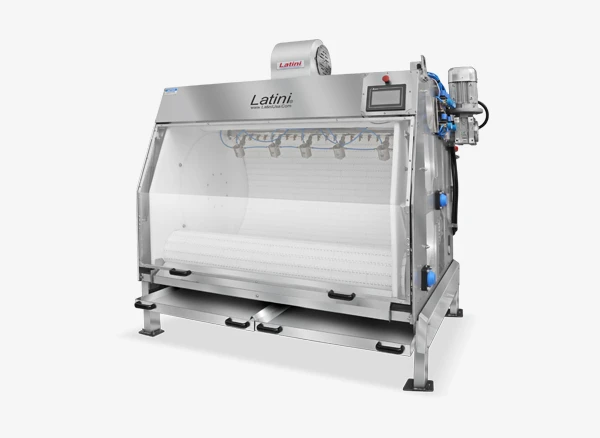

Choosing the right chocolate coating machine is a critical production decision. It directly affects coating quality, product consistency, labor efficiency, sanitation time, and long-term operating costs. Whether you run a small confectionery operation or a high-output manufacturing line, selecting the right equipment helps reduce waste, protect margins, and support future growth.
Production teams typically evaluate chocolate coaters during live factory trials, often working with experienced manufacturers such as Latini Hohberger Dhimantec, to confirm real-world performance before committing to a purchase.
Chocolate Coating Consistency: The First Performance Benchmark
Consistency is the foundation of successful chocolate coating. A high-quality chocolate coating machine should deliver a uniform, glossy finish with controlled thickness across every batch.
During evaluation, assess:
- Chocolate curtain uniformity
- Tempering stability
- Drainage and shedding behavior
Weigh coated products at regular intervals during a continuous run. Tight variance is essential. Visual defects such as streaking, zebra striping, pooling, or uneven edges typically indicate temperature instability or poor chocolate flow—issues that quickly lead to rejects at scale.
Temperature Control: How Precise Does It Need to Be?
Chocolate is highly sensitive to temperature fluctuations. Even small deviations can affect shine, snap, and shelf life. Look for machines with closed-loop temperature control systems that maintain stable conditions throughout the process.
Key indicators of strong temperature control include:
- Fast recovery after refilling or line pauses
- Clear, easily adjustable temperature setpoints
- Even heat distribution with no hot or cold zones
During trials, pause the line, reload chocolate, and monitor how quickly the system returns to operating temperature. If operators must constantly intervene, labor costs and inconsistency increase.
Mechanical Design: Matching the Machine to Your Product
The mechanical path of a chocolate coating machine must align with your product geometry and fragility.
Common configurations include:
- Mesh belts for improved drainage and sharp edge definition
- Solid belts for fragile or soft centers
- Drum or pan coaters for nuts, clusters, and particulate products
Observe transfer points, vibration control, air-knife placement, and discharge angles. A properly designed system ensures smooth product travel, clean shedding, and minimal manual correction.
Sanitation and Changeover Speed
Cleanability directly impacts throughput. A well-designed chocolate coater should allow fast, repeatable sanitation without excessive disassembly.
Look for:
- Food-grade stainless steel construction
- Tool-less removal of guards, hoppers, and covers
- Sloped surfaces and weld-clean panels
- Minimal crevices where chocolate can build up
Ask the supplier to demonstrate a complete cleaning cycle. Time each step and confirm that chemical contact requirements align with your sanitation protocols. For multi-SKU operations, quick changeovers are essential to staying on schedule.
Automation That Actually Reduces Labor
Automation should simplify operation, not add complexity. The most valuable automation features improve repeatability and reduce operator touches.
High-impact automation includes:
- Programmable recipes for speed, airflow, and curtain height
- Level sensors to prevent overfilling or starvation
- Live temperature and viscosity monitoring with alarms
- Cooling tunnels synchronized with coater throughput
Run comparative tests—one batch in manual mode and one using stored recipes. The difference in setup time, yield consistency, and scrap reveals the true return on investment.
Build Quality and Long-Term Reliability
Before purchase, inspect the machine beyond the exterior. Open service panels and evaluate:
- Wiring organization and protection
- Sensor placement and shielding
- Gearbox sizing and motor selection
- Availability of locally sourced components
Reliable manufacturers provide preventive maintenance schedules, recommended spare parts, and clear guidance on wear items. Ask for customer references and inquire specifically about downtime events and parts lead times.
Technical Support and After-Sales Service
Support is part of the machine’s value. Confirm:
- Service response times and SLAs
- Spare parts availability
- Remote diagnostics capability
- Operator and maintenance training options
Clear, practical documentation matters. Speaking directly with current users about recent service experiences provides valuable insight into how issues are handled in real production environments.
Evaluating the Entire Chocolate Coating Process
A chocolate coating machine does not operate in isolation. Performance depends on the full production path: feeding, tempering, coating, draining, cooling, and packaging.
Experienced partners help tune the entire system—balancing belt speed, airflow, and cooling capacity to your specific product and line layout. Always insist on a trial using your actual centers and packaging cadence, not generic samples.
Final Thoughts
When evaluating chocolate coating machines, prioritize:
- Coating consistency
- Temperature stability
- Product-appropriate mechanical design
- Fast sanitation and changeovers
- Practical automation
- Durable construction
- Reliable technical support
With disciplined testing and clear acceptance criteria, you can select a chocolate coating system that protects product quality today and scales confidently with future demand.































Sign in to leave a comment.