

There is a significant difference between a roasted nut that tastes good and one that keeps customers coming back. That difference is almost entirely thermal.
A precision nut roasting machine controls the heat variables that determine flavour depth, crunch, colour, and shelf life. It also helps in getting those variables right consistently is what separates commodity processing from a genuinely premium product.
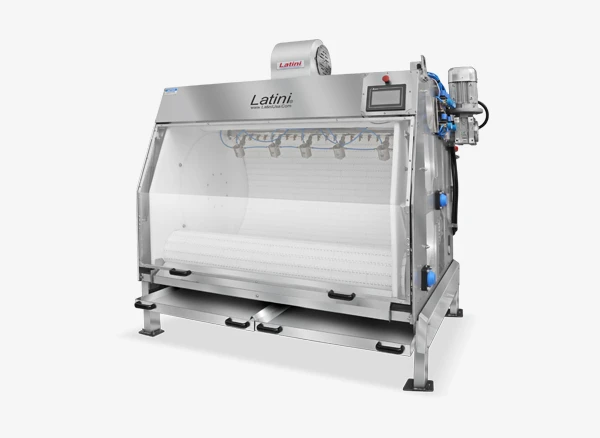
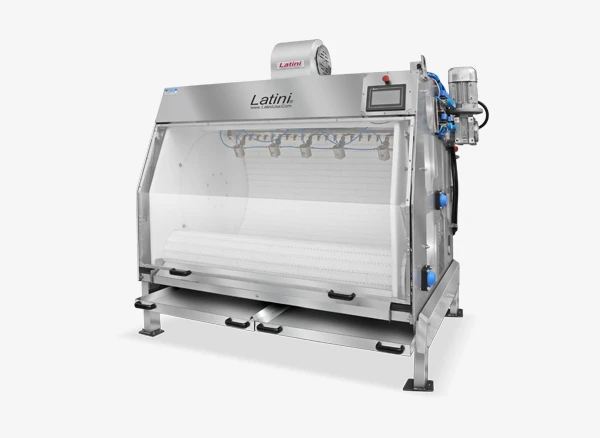
At Latini Hohberger Dhimantec, we engineer roasting and coating systems built around exactly this kind of process control, drawing on nearly a century of confectionery and food processing experience.

The Science Behind Effective Nut Roasting
Raw nuts contain aromatic compounds locked inside a dense cellular structure. Heat is what releases them, but the way that heat is applied determines whether the result is rich and complex or flat and bitter.
Convection-based nut roasting circulates hot air across a continuously tumbling product bed. The movement serves two purposes: it prevents scorching on the outer skin while drawing natural oils outward from the kernel at a steady rate. Controlling the moisture level inside the roasting chamber throughout this process is what produces the crunch and colour development that high-quality products require.
Once the target roast is reached, rapid cooling is critical. Slowing that step even slightly allows residual internal heat to continue cooking the nut after it leaves the chamber, which pushes the flavour profile past the intended result. Proper exhaust systems play a supporting role here, removing particulate matter and preventing smoke from re-entering the product stream and introducing bitterness.
Key Variables That Define Flavour Consistency
Consistent output depends on managing several variables simultaneously:
- Temperature calibration ensures even heat penetration through every piece in the batch
- Airflow distribution prevents localised burning on outer skin layers
- Tumbling speed guarantees equal exposure to heating elements throughout the cycle
- Moisture extraction removes steam at the right rate to develop texture rather than softness
- Cooling timing halts residual heating and locks in the aromatic oil compounds
When any one of these drifts, the effects show up immediately in flavour, texture, or colour. Latini's processing systems incorporate real-time monitoring across all of these parameters, giving operators the information they need to make adjustments before a batch is affected.
Scaling Up Without Losing Uniformity
Consistency that works on a small batch gets harder to maintain as volume increases. Minor temperature fluctuations that barely register at low throughput multiply quickly across wide processing belts or large rotating drum systems.
Industrial nut roasting at scale requires advanced sensor arrays that track heat profiles continuously and modulate burner intensity based on real intake volume. Equipment that compensates automatically for varying initial moisture levels removes one of the most common sources of batch-to-batch variation.
Vibration conveyors that spread raw input evenly before it enters the heating chamber are another practical factor. An uneven product layer means some pieces receive more heat than others, which produces exactly the kind of inconsistency that frustrates quality control teams and wastes inventory.
Latini's systems are designed with these scaling challenges in mind, incorporating programmable logic controllers that store specific roast profiles for different raw materials, making changeovers faster and reducing the risk of operator error during transitions.
Reducing Waste Through Precise Temperature Management
Over-roasting is one of the most avoidable sources of production loss in nut processing, and one of the most common. Burnt product requires manual sorting, disrupts line flow, and writes off raw material that was already paid for.
Modern nut roasting machine designs address this through multiple sequential temperature zones. Early zones evaporate moisture gradually without surface stress. Final zones apply higher heat briefly to achieve the target colour and finish. This staged approach gives the product time to develop from the inside out, rather than cooking the exterior while the centre remains underdone.
Data logging from each production run provides a practical basis for continuous improvement. Reviewing historical thermal performance against quality outcomes helps refine roast profiles over time and identifies equipment wear before it affects output.
Routine calibration of heating elements also extends their operational lifespan by reducing the thermal stress that comes from compensating for inaccurate readings.
Conclusion
A nut roasting machine is only as good as the precision it maintains across thousands of production hours. Heavy-duty stainless steel construction, energy recovery systems that capture exhaust heat to pre-warm incoming air, and continuous feed mechanisms that move product smoothly from hopper to chamber all contribute to an operation that runs efficiently without sacrificing quality.
Latini Hohberger Dhimantec builds processing equipment to meet rigorous international food safety standards, backed by a permanent technical team and the kind of application knowledge that only comes from working across this industry for as long as we have.
Upcoming Exhibitions
We’re excited to connect with industry professionals and showcase our latest innovations at these upcoming global exhibitions:
Interpack Processing and Packaging
📅 7th May – 13th May 2026
📍 Düsseldorf, Germany
📌 Booth: 3C91
Sweets and Snacks Expo
📅 18th May – 19th May 2026
📍 Las Vegas, NV
📌 Booth: 6330
Visit us to explore our advanced solutions and discuss how we can support your business growth. We look forward to meeting you!






















Sign in to leave a comment.