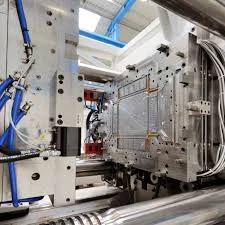
When making a consideration about Plastic injection moulding services, several significant factors must be your top priority. Energy efficiency, quality production, and sustainability are the major ones to consider. Molding is one of the widely used manufacturing processes, continuing to grow with shifting market demands. Injection molding is to remain dominant in manufacturing trends. Here are the key trends likely to shape this industry in 2025 as well.
1. The Rise of Smart Factories
Remember, since the initiative Make in India came into action, the industrial sector revolutionized, and MSMEs proved to be the key drivers in the industry. The integration of smart technology into plastic injection molding facilities is a boon. These factories leverage smart sensors and real-time data to enhance productivity.
The advent of IoT and smart technology has also minimized downtime, and that’s one of the strengths of Rustagi Polymers, which is one of the pioneers in plastic injection molding services.
Imagine a ramp where AI and IoT sensors monitor production 24/7. The year 2025 will be the defining year where analysis and data patterns will help manufacturers. They can anticipate issues before they even happen, reducing breakdowns and improving efficiency.
2. Sustainable Manufacturing Methods
Plastic manufacturing is going eco-friendly. Consumer market demands for eco-friendly products are driving innovations in materials and production processes.
Science and agriculture have confluences to help ecosystems, giving us a glimpse of the future. Plastic-husk combination products are now making their way to your kitchens and bathrooms. Furthermore, advances in recycling technology have enabled manufacturers to repurpose scrap material. These scrap materials, when recycled, can be turned into high-quality components.
3. Micro-Molding for Miniaturized Products
Not just the FMCG, household, or engineering equipment; injection mold services have made it to the medical sector as well. Welcome to the world of micro-molding. The process of micro-molding creates tiny parts with accuracy and zero errors that are used in medical devices, electronics, and aerospace industries.
Since AI and IoT-led technology will be under the limelight, more and more production is expected in the micro-molding industry. These modern tools will help manufacturers handle high-volume production with fewer hassles.
4. Advanced Material Science
The evolution of materials is revolutionizing the injection mold services industry as science explores new composite materials tested for properties and strength. Advanced-level materials are more durable, heat-resistant, and easily fit in innovative applications. For example, fiber combined with thermoplastics results in a valuable product used in the automotive and aerospace sectors.
The best benefit of these mixed materials is that they are lightweight, efficient, and durable. On the other hand, conductive polymers are also gaining traction in electronics, yielding products that combine mechanical and electrical functions.
As technology continues to involve researchers are exploring materials that will use waste sugarcane material or rice husks combined with plastics for more specialized properties.
5. Automation and Robotics
Automation is nothing new to the molding industry; today, it has a scope and sophistication that will grow exponentially in 2025. Plastic injection moulding plays a crucial role in this transformation, offering more precision and efficiency in manufacturing processes. As technology evolves, Nanotechnology will also play a pivotal role in the coming years and will bring molding facilities to a new regime.
Collaborative robots are expected to become a standard feature in many molding services. These robots will work along with human operators, handling repetitive tasks such as loading raw materials, part removal, and assembly. AI is integrating into quality control processes.
Smart vision systems and machine learning algorithms will be able to detect defects in real time. It will ensure consistent product quality and reduce waste.
6. Faster Prototyping with Additive Manufacturing
Injection molding technology thrives at mass production; 3D printing is another bonus that helps manufacturers design massive productions beforehand for testing. This year, the synergy between these two technologies will redefine product development cycles.
Manufacturers often rely on 3D printing to ramp up mold production, saving both time and costs. Methods of combining 3D printing with traditional methods of injection molding are also gaining traction. This combination allows for customizations and boosted production.
7. AI-Driven Process Optimization
All credit to AI for making the injection molding smarter and highly efficient. AI algorithms can analyze voluminous data faster and more accurately. Workflow depends on temperature, pressure, and cooling time. The data analyzed can help identify patterns and optimize workflow.
This trend is highly beneficial in the medical and aerospace sectors where precision is critical. AI-based optimization reduces defects, minimizes material usage, and results in cost savings.
8. Global Supply Chain Flexibility
The COVID pandemic has taught every sector a kind of lesson that makes them rethink their strategy. Unprecedented events like this have forced them to rethink their supply chain strategies. In 2025, industries will focus on building resilience by distributing suppliers, on-demand manufacturing, and localized production.
Digital platforms and cloud-based tools will allow companies to produce parts through distributed manufacturing. Injection Molding Companies will be able to produce parts closer to their end markets, reducing transportation costs and lead times.
9. Customization at Scale
As consumer demands grow in the market, customers are seeking personalized products from coffee mugs to water bottles. That’s where injection molding is rising to the challenge. This year, manufacturers will use modular molds and multi-material injection molding to manufacture personalized products.
With the aid of software and simulation tools, they will also play a pivotal role, which will enable designers to tailor products specific to customer requirements.
10. Enhanced Workforce Training
Technology will be on a higher scale in the coming days, and to match that, the skill requirements will also change in the plastic injection molding services sector. Manufacturers know the fact that AI is merely enough to handle tasks as well as manpower.
That’s why manufacturers will put more focus on upskilling their employees by ensuring they gain hands-on practice.
The inclusion of AR and VR will help create an immersive training experience for workers. This will allow workers to practice complex tasks in safe and controlled spaces.
Conclusion
As we are moving towards a better and brighter tomorrow, 2025 is all set to be more innovative, sustainable, and efficient. With the recent technological advancements and hybrid material manufacturers, they can meet the expectations of evolving market demands.
The result will be more effective as manufacturers like Rustagi Polymers are also ready to address environmental concerns. As the trend goes viral, plastic injection molding manufacturers will be more familiar with the strategies to stay ahead in the global market. Whether you have planned for it or not, it’s the right time to invest in the industry of the future.










Sign in to leave a comment.