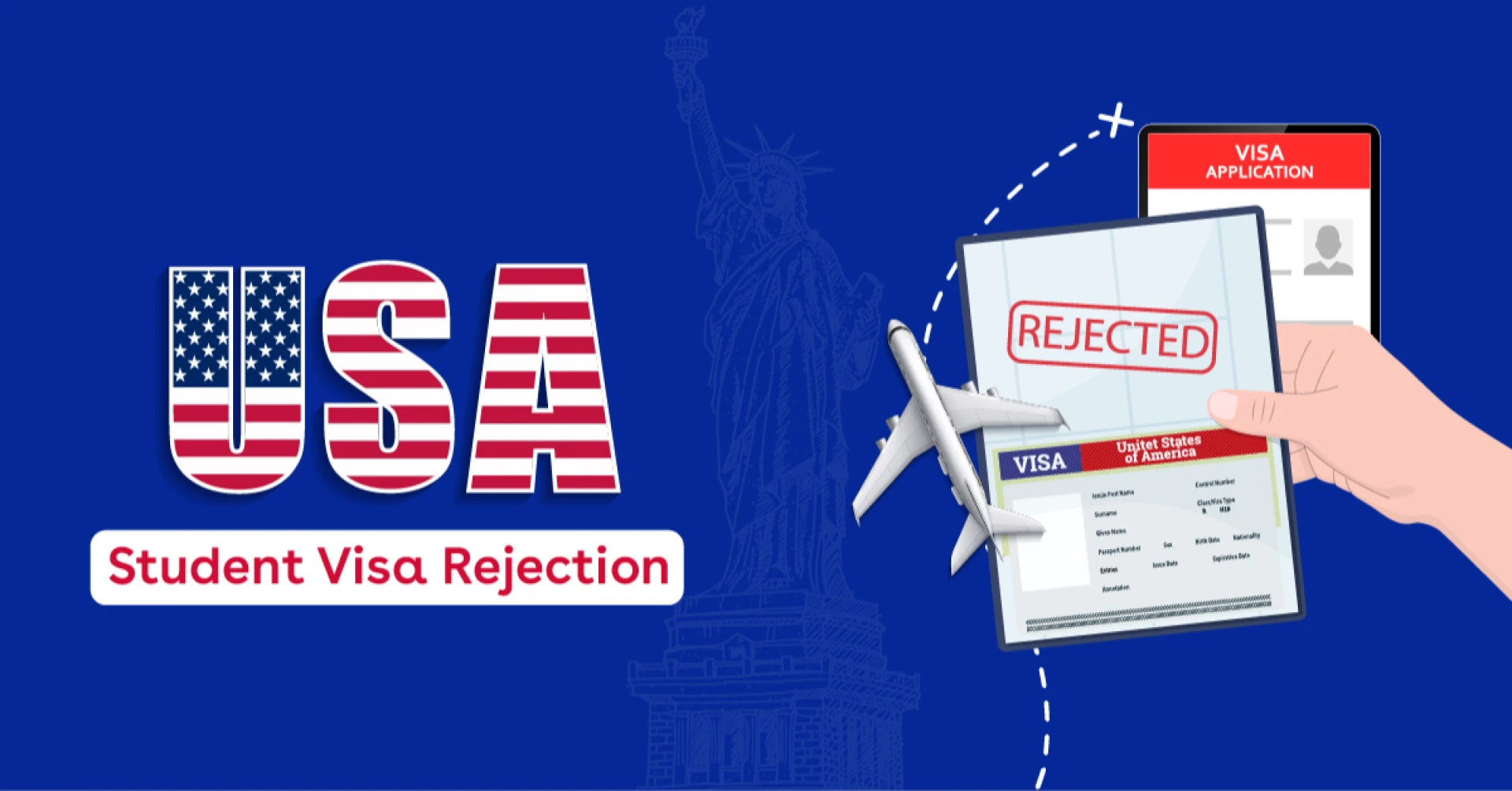

Studying in the United States is a life-changing milestone for many. The promise of world-class universities, advanced research opportunities, multicultural exposure, and well-paying career prospects makes the USA one of the most sought-after study destinations. Yet, standing between that dream and the departure gate is the US student visa process.
Over the past few years, the conversation around US student visas has often been surrounded by uncertainty. Stories of visa appointment backlogs, unexpected interview outcomes, and rising competition have created a wave of anxiety among study abroad aspirants. As a result, many students begin to see the visa process as an unpredictable hurdle rather than a structured evaluation process designed to verify genuine students.
In reality, the US student visa delays or rejections are not because the students lack potential, but because of small, avoidable mistakes. This article covers the most common mistakes students make while applying for a US student visa in 2026 and how you can avoid them to study in the USA.
Common Mistakes that Can Lead to a US Student Visa Rejection
The US student visa process, primarily for the F-1 visa, is designed to assess whether a student is genuinely planning to study in the United States and has the resources to do so successfully. Interestingly, most visa refusals occur not due to lack of academic merit, but because of incomplete documentation, poor preparation, or misunderstanding of visa requirements.
Let’s explore the frequent mistakes students make and the smart ways to avoid them.
1. Choosing a University Without Clear Academic Justification
One of the first questions visa officers often evaluate is why you chose a particular university and program. Many students simply mention rankings or general reputation, which does not strongly justify their academic decision.
Solution
Explain clearly:
- Why did you select that specific program
- How it aligns with your previous studies
- How it supports your future career goals
2. Incomplete or Incorrect DS-160 Form
The DS-160 form is one of the most important documents in the visa process. Even minor mistakes in this online application can create inconsistencies during the interview.
Solution
- Fill out the form carefully and double-check every section.
- Ensure all information matches your passport, academic documents, and application details.
3. Weak Financial Documentation
The US government requires students to prove that they can financially support their education and stay in the country.
Solution
Provide clear financial proof, such as Bank statements, education loan approval letters, scholarship documents and sponsor’s financial records. Ensure that your funds cover at least the first year of tuition and living expenses mentioned on the Form I-20.
4. Poor Interview Preparation
The US visa interview is often brief, sometimes only a few minutes. Yet those minutes determine your outcome. Mock interviews can significantly improve confidence and clarity.
Solution
Practice answering common questions such as:
- Why the USA?
- Why this university?
- What are your career plans?
5. Providing Inconsistent Answers
Consistency is extremely important during the application process of student visa for the USA. If your answers during the interview differ from what you wrote in your application or DS-160 form, it can raise concerns.
Solution
- Review your University application, SOP, DS-160 form and financial details. Ensure your responses align with these documents.
6. Failure to Demonstrate Strong Home Ties
The F-1 visa is a non-immigrant visa, which means you must show that you plan to return to your home country after completing your studies.
Solution
Highlight connections such as:
- Family ties
- Career plans in your home country
- Property or business ownership
- Job prospects after graduation
7. Carrying Disorganized Documents
Many students bring large stacks of documents without proper arrangement. If the officer requests a document and you struggle to locate it quickly, it creates an impression of unpreparedness.
Solution
Organize documents into folders such as:
- Academic records
- Financial documents
- Identity documents
- University admission papers
8. Memorizing Scripted Answers
Some students try to memorize pre-written responses for visa questions. Visa officers can easily identify rehearsed answers. It may make your responses sound unnatural.
Solution
- Speak honestly and confidently.
- Authenticity always works better than scripted responses.
To wrap up, the US student visa process may appear intimidating at first glance, but it is completely manageable with the right preparation. Thousands of students successfully secure their US visas every year, and with careful preparation, you can be one of them.
Reach out to one of the top overseas education consultants in India for expert assistance. After all, the road to studying in the United States doesn’t begin when you land on campus; it begins with a well-prepared visa application and the confidence to present your dream convincingly.


























Sign in to leave a comment.