
In this article, “emerging” refers to destinations that are gaining attention or being considered in new ways by Indian students. It does not mean that every destination is a newly established study market.
Studying abroad is an exciting goal, but choosing the right country can feel overwhelming. There are many options, and every destination seems to promise excellent universities, career opportunities, and a better future. The truth is that the “best” country depends on you—your academic background, chosen course, budget, career plans, and the kind of lifestyle you want.
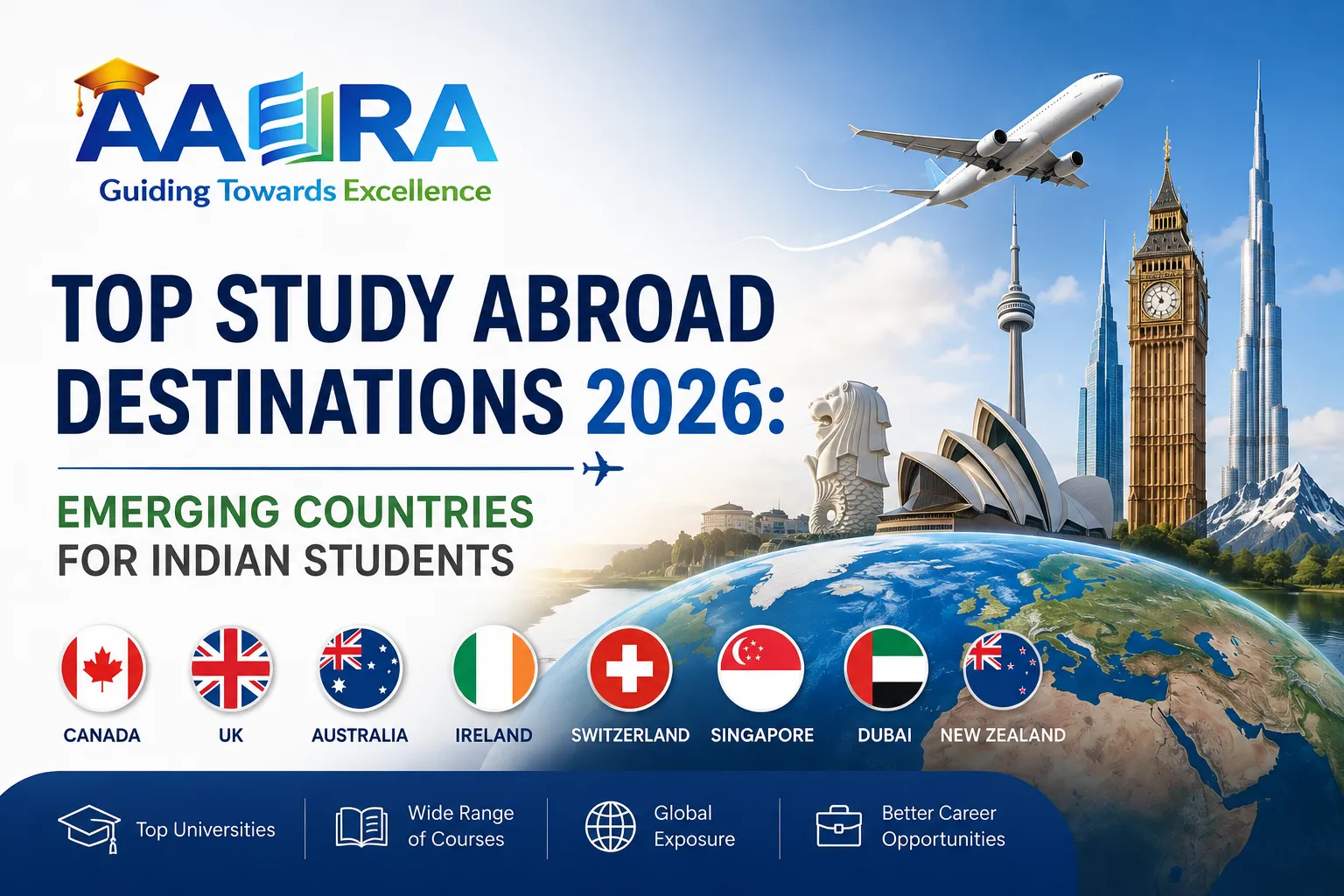
For Indian students, popular study destinations in 2026 include Canada, the UK, Australia, Ireland, Switzerland, Singapore, Dubai, and New Zealand. Each destination has its own strengths. Some are well suited to technology and research, some are known for hospitality and business, and others may appeal to students who want shorter courses or a closer-to-home international experience.
Instead of asking, “Which country is best for studying abroad?”, it is more useful to ask:
“Which destination, course, and university are right for my future?”
This guide will help you compare eight study-abroad destinations and understand what to consider before making your decision. It is not a formal ranking. The order is simply used to make the guide easy to follow.
What Should Indian Students Consider Before Choosing a Country?
Choosing a destination is about much more than looking at university rankings. A country that is perfect for one student may not be suitable for another. Before making a shortlist, take some time to think about the following questions:
| Factor | Questions to ask yourself |
| Course | Does the country offer the subject and specialisation I want? |
| University | Is the institution recognised, and does the course match my academic goals? |
| Budget | Can I comfortably manage tuition, accommodation, living expenses, travel, and emergencies? |
| Admission | Do I meet the academic and English-language requirements? |
| Visa | What are the current student-visa requirements and conditions? |
| Career plans | What skills, experience, and professional opportunities could the course offer? |
| Lifestyle | Would I feel comfortable with the climate, culture, location, and distance from home? |
Your academic background matters as well. A student interested in hospitality will have different priorities from someone planning to study computer science. Likewise, a student working with a limited budget may need a different destination strategy from someone looking for a highly specialised programme.
At a Glance: Eight Destinations to Explore
| Destination | May suit students interested in |
| Canada | Technology, business, engineering, healthcare, hospitality, and data-related fields. |
| UK | Business, finance, law, medicine, engineering, research, and the arts. |
| Australia | Technology, engineering, healthcare, business, accounting, and data. |
| Ireland | Technology, business, data, pharmaceuticals, biotechnology, and life sciences. |
| Switzerland | Hospitality, hotel management, luxury brands, tourism, and culinary studies. |
| Singapore | Technology, business, finance, engineering, logistics, and life sciences. |
| Dubai | Business, technology, engineering, hospitality, aviation, logistics, and media. |
| New Zealand | Business, engineering, IT, agriculture, environmental science, healthcare, and creative fields. |
These are broad study areas rather than guarantees. Always compare the specific programme and university before deciding.
1. Canada: A Popular Choice for Career-Focused Education
Canada continues to attract Indian students who are looking for an international education, practical learning, and a multicultural environment. Many students also appreciate the variety of colleges and universities, as well as the opportunity to choose from academic, professional, and research-based programmes.
Students commonly explore subjects such as business, computer science, information technology, engineering, healthcare, nursing, hospitality, artificial intelligence, data analytics, and finance.
Canada may be a good fit if you want a career-oriented programme and are interested in gaining practical experience during your studies. However, the total cost can vary significantly between provinces, institutions, and programmes. You should also check the latest study-permit, work, and post-graduation rules through the official Canadian government website before applying.
Canada may suit you if you:
•Want a multicultural study environment.
•Are interested in technology, business, healthcare, or engineering.
•Prefer a wide choice of colleges and universities.
•Are prepared to plan carefully for tuition and living expenses.
2. The UK: Shorter Courses and Globally Recognised Universities
The UK is one of the world’s best-known higher-education destinations. Students choose it for its academic tradition, research strengths, professional courses, and international university community.
Popular study areas include business and finance, law, medicine and life sciences, engineering, arts, humanities, computer science, and management. Many students are also attracted by the length of some UK degrees. Depending on the course and institution, undergraduate and postgraduate study may be shorter than comparable programmes in some other countries.
The UK can be a strong option if you want an internationally recognised qualification and a focused course structure. However, you should compare tuition fees, accommodation costs, entry requirements, and current visa and post-study rules carefully.
When researching the UK, check:
•The exact course duration and curriculum.
•Whether the university and programme are recognised for your future plans.
•Total tuition and living costs.
•English-language requirements.
•Current Student visa and Graduate visa information.
3. Australia: Strong Options in Technology, Healthcare, and Business
Australia is popular with students who want an international education in an English-speaking country. Its universities and education providers offer programmes across technology, healthcare, engineering, business, accounting, data analytics, and artificial intelligence.
Many Indian students also value Australia’s multicultural communities and practical approach to learning. However, Australia can be expensive, especially when tuition, accommodation, transport, insurance, and daily living costs are considered together.
Before applying, create a realistic budget for the complete duration of your course. Check the current student-visa conditions and any work or post-study rules through official Australian sources. These rules can change, so information from an old blog or social-media post may not be reliable.
4. Ireland: A Growing Choice for Technology and Business
Ireland is an attractive option for students who want English-language education and European exposure. It is often considered by students interested in technology, business, data, pharmaceuticals, biotechnology, engineering, and life sciences.
The country may suit students who prefer a smaller study environment while still wanting access to internationally connected industries. As with any destination, the quality of your experience will depend on the specific institution, programme, location, accommodation, and career support available.
When comparing Ireland, look beyond the course title. Read the curriculum, check the assessment style, understand the total cost, and review the current immigration and employment guidance before making a decision.
5. Switzerland: A Strong Destination for Hospitality and Luxury Management
Switzerland is particularly well known among students interested in hospitality, hotel management, tourism, luxury brand management, event management, culinary arts, and travel.
Students often look at Swiss institutions because of their industry-focused approach and international learning environment. Some programmes may include practical training or internships, but the structure differs from one institution to another. Do not assume that every course offers the same work experience or placement support.
Switzerland may be suitable if you enjoy working with people, have an interest in service industries, and want to build a career in hospitality, tourism, luxury, or events. Compare the curriculum, practical-training arrangements, fees, accommodation, and internship conditions carefully.
6. Singapore: Technology, Business, and Asian Industry Exposure
Singapore is a major business, technology, and financial centre in Asia. It may appeal to Indian students who want international exposure while remaining relatively close to home.
Students commonly explore computer science, artificial intelligence, business, finance, engineering, data analytics, life sciences, logistics, and supply-chain management. Singapore is also known for its efficient infrastructure and strong connection to regional industries.
Admission can be competitive for some institutions and programmes. Students should check academic requirements, English-language requirements, tuition, accommodation, and current student-pass rules before submitting an application.
7. Dubai: International Education Close to India
Dubai has become an option for students who want an international study environment without travelling as far from India as they would for some other destinations. Its multicultural setting, international university campuses, modern infrastructure, and business environment are attractive to many families.
Students may explore business and management, engineering and technology, hospitality and tourism, aviation, logistics, information technology, media, finance, and related areas.
Dubai can be a practical choice for students who value proximity to family and want to study in a globally connected city. At the same time, it is important to compare university recognition, course quality, total fees, accommodation, transport, and career support. Students should also understand the current UAE residence arrangements and confirm the process with their university and the relevant authority.
If you are looking for Dubai Education Consultants in Noida, choose a counsellor who helps you compare the course and university—not simply one who encourages you to apply quickly.
8. New Zealand: Quality Education and a Supportive Student Experience
New Zealand may suit students who prefer a smaller, more relaxed study environment. It offers programmes in business, engineering, IT, agriculture, environmental science, healthcare, creative industries, and film.
Students may appreciate the country’s focus on practical learning and its welcoming international community. However, distance from India, living costs, weather, and lifestyle should be part of your decision.
When researching New Zealand, compare the location of the institution, accommodation options, programme structure, student support, and current visa and work information.
Which Study Destination Is Best for Indian Students?
There is no universal answer. The right destination depends on the combination of your academic profile, course, budget, career goal, university choice, interests, and preferred lifestyle.
The table below can help you begin your research:
| Your interest | Destinations to explore |
| Business and finance | UK, Canada, Australia, Singapore, Dubai, and Ireland. |
| Computer science and IT | Canada, Australia, Ireland, Singapore, and New Zealand. |
| Engineering | Australia, Canada, the UK, Singapore, and New Zealand. |
| Hospitality | Switzerland, Australia, New Zealand, and Dubai. |
| Healthcare | Canada, Australia, the UK, and New Zealand. |
| Data and artificial intelligence | Canada, Australia, Ireland, and Singapore. |
| Tourism | Switzerland, Australia, New Zealand, and Dubai. |
| Aviation and logistics | Dubai, Singapore, and Australia. |
This table is only a starting point. The same subject can be taught very differently by two universities, so compare the curriculum, teaching style, entry requirements, fees, and career support before making a shortlist.
How Should You Compare Study-Abroad Destinations?
Step 1: Start with your career goal
Think about the work you may want to do in the future. You do not need to have your entire career planned, but you should have a general direction. Ask yourself which skills and qualifications your chosen field may require.
Step 2: Set a complete budget
Do not look only at tuition fees. Include accommodation, food, transport, insurance, visa or study-permit costs, flights, study materials, and personal expenses. It is also wise to keep an emergency reserve.
Step 3: Shortlist courses, not just countries
A country may offer many options, but the most important decision is often the programme itself. Read the modules, assessment methods, practical components, course duration, and entry requirements.
Step 4: Compare universities carefully
Check recognition, course content, facilities, location, student support, accommodation, scholarships, career services, and internship opportunities. If you may later pursue professional licensing or further study, confirm that the qualification will meet the relevant requirements.
Step 5: Check current visa information
Visa and immigration rules differ by destination and may change over time. Use official government and university sources for the latest information. A consultant can help you understand the process, but students should still review the official requirements before applying.
How Can a Study-Abroad Consultant in Noida Help?
Choosing a destination independently can become confusing, especially when every country has different admission systems, costs, documents, and visa conditions. A study-abroad consultant in Noida can help you organise the process and compare options against your own profile.
Support may include profile evaluation, career counselling, course selection, university shortlisting, application assistance, scholarship guidance, document verification, visa guidance, and pre-departure preparation.
Good counselling should not be about pushing every student towards the same country. It should help you understand your options, ask the right questions, and make a decision that fits your education and career plans.
When Should You Speak to a Study-Abroad Career Counsellor?
Many students contact a counsellor only after choosing a country. In many cases, it is more useful to speak with someone earlier—before you commit to a course or destination.
A sensible planning sequence is:
Career goal → Course → University → Destination → Application → Student visa
This approach can help you avoid choosing a country first and then trying to force your academic plans to fit it. A career counsellor can help you think through your interests, strengths, course options, university choices, and long-term goals.
The purpose of counselling should be informed decision-making. No consultant should promise a guaranteed job, salary, admission, visa, or immigration outcome.
Why Choose AAERA Consultants?
AAERA Consultants provides study-abroad guidance for students exploring destinations including Australia, New Zealand, the UK, Ireland, Canada, Singapore, the USA, and the UAE. Its services include one-to-one counselling, career counselling, profile evaluation, university shortlisting, SOP and application assistance, scholarship assistance, document verification and filing, visa assistance, and pre-departure support.
For students and parents in Noida, this type of support can make the process easier to manage. The goal is to compare options around the student’s academic profile, budget, interests, and future plans rather than simply following a trending destination.
You can learn more about AAERA’s study-abroad services, read about the organisation on its About page, or contact AAERA Consultants.
Common Mistakes Indian Students Should Avoid
Choosing a destination only because it is trending
A popular destination may not be suitable for your academic profile or budget. Think about fit, not just popularity.
Selecting a course without reading the curriculum
The course title alone does not tell you what you will study. Review the modules, practical work, assessments, and learning outcomes.
Looking only at tuition fees
Living costs can have a major effect on your total budget. Include accommodation, transport, food, insurance, travel, and an emergency fund.
Ignoring university recognition
Verify the institution and programme before paying a deposit. If you have professional or further-study plans, check recognition requirements early.
Depending on part-time work
Part-time work should not be the foundation of your education budget. Plan to cover your essential costs before travelling.
Using outdated visa information
Immigration rules can change. Always check the latest information through official sources and your university.
Focusing only on rankings
Rankings are one factor, not the whole decision. Course quality, affordability, location, student support, recognition, and career relevance may matter more for your personal situation.
Frequently Asked Questions
Which are the top study-abroad destinations for Indian students in 2026?
Canada, the UK, Australia, Ireland, Switzerland, Singapore, Dubai, and New Zealand are all destinations worth researching. The right option depends on your course, academic profile, budget, career plans, and preferred lifestyle.
Which country is best for Indian students?
There is no single best country for everyone. A destination that suits a technology student may not suit someone interested in hospitality, healthcare, or the arts. Compare the course and university before choosing the country.
Which destinations are suitable for technology courses?
Students interested in computer science, IT, data analytics, and artificial intelligence may explore Canada, Australia, Ireland, Singapore, and New Zealand. Compare specific programmes rather than choosing only by destination.
Which destination is suitable for hospitality students?
Switzerland is well known for hospitality, hotel management, luxury management, tourism, and culinary education. Australia, New Zealand, and Dubai may also be worth exploring, depending on the course and career goal.
Is Dubai a good option for Indian students?
Dubai may suit students who want an international environment, modern infrastructure, and proximity to India. Compare university recognition, course quality, total fees, accommodation, and career support carefully.
How can a study-abroad consultant in Noida help?
A consultant can help you evaluate your profile, compare courses and universities, prepare applications, explore scholarships, organise documents, understand visa procedures, and plan your departure. Students should still verify important information through official sources.
What does a study-abroad career counsellor do?
A career counsellor helps connect your academic background, interests, skills, course choices, university options, and long-term plans. The aim should be to support an informed decision rather than promise a particular result.
When should I start planning to study abroad?
Start as early as possible. Early planning gives you more time to research courses, compare universities, prepare documents, apply for scholarships, arrange finances, and understand visa requirements.
Contact AAERA Consultants
If you are planning to study abroad and need help comparing destinations, courses, and universities, AAERA Consultants can guide you through the process.


























Sign in to leave a comment.