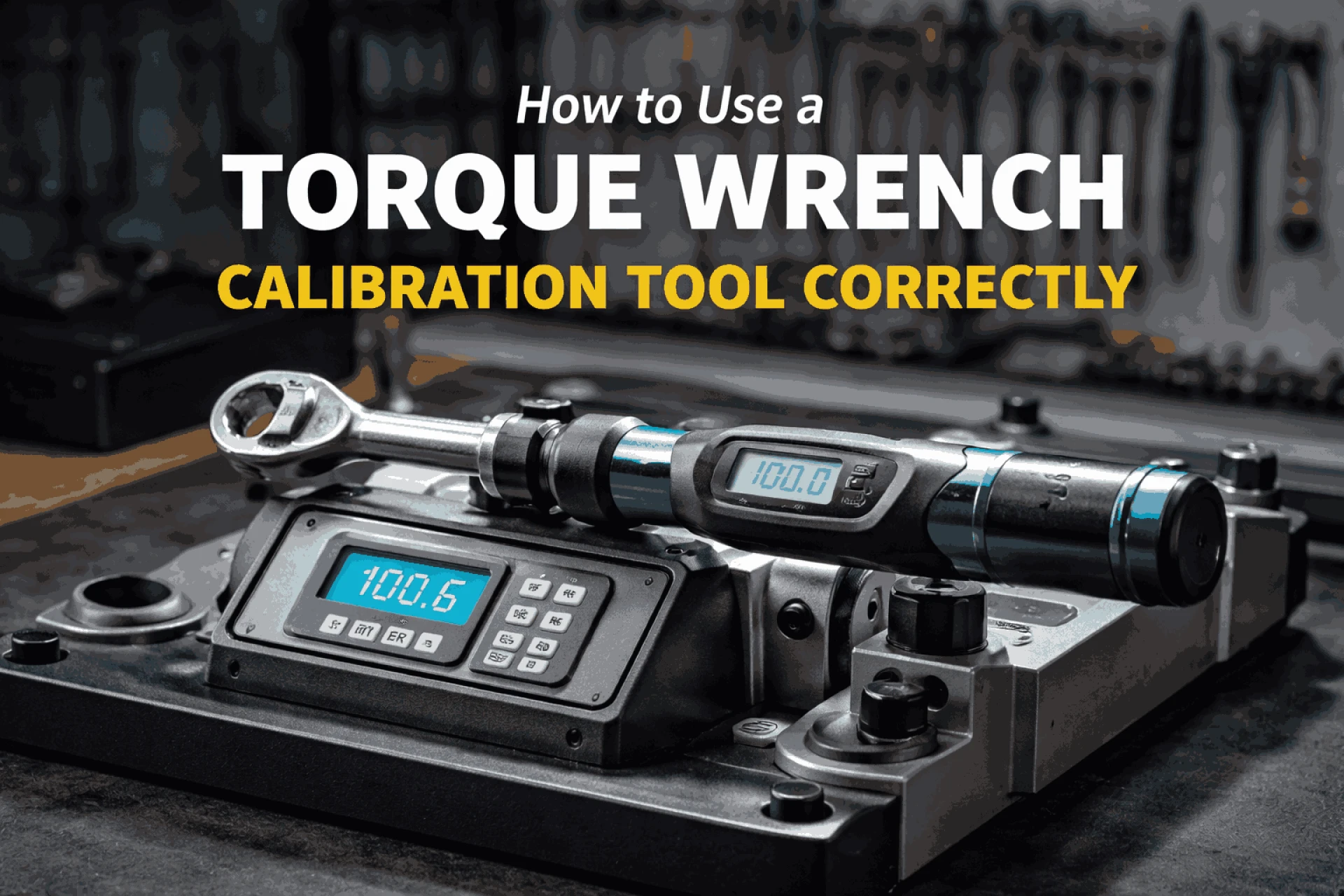

Torque tools are trusted quietly in the background of countless mechanical, automotive, industrial, and engineering tasks. Every time a bolt is tightened to a specified value, the accuracy of that tightening depends on one critical factor: proper torque wrench calibration. Yet many professionals and DIY users alike underestimate how calibration works, why it matters, and how to do it correctly using a torque wrench calibration tool.
This guide is written to remove that uncertainty. Whether you work in automotive repair, manufacturing, maintenance, or simply value precision in your projects, understanding how to use a torque wrench calibration tool correctly is essential. We’ll walk through the principles, the process, and the practical details in a clear, human, and experience-based way without jargon overload or sales talk.
Why Torque Accuracy Is Not Optional
Torque is not just “tightness.” It is a calculated amount of rotational force designed to hold components together without damaging them. Too little torque can cause fasteners to loosen over time, leading to vibration, leaks, or mechanical failure. Too much torque can stretch bolts, strip threads, crack components, or permanently weaken fasteners.
This is why torque specifications exist, and why torque wrench calibration is not a formality, it is a safety and reliability requirement.
Over time, even high-quality torque wrenches drift out of accuracy. Internal springs fatigue, mechanical components wear, and accidental drops can knock the tool out of specification. Without calibration, the number shown on the wrench becomes an assumption rather than a measurement.
What Is Torque Wrench Calibration?
Torque wrench calibration is the process of verifying and adjusting a torque wrench so that the force it applies matches the value indicated on its scale or digital display. In simple terms, calibration ensures that when your wrench says “100 Nm,” it actually delivers 100 Nm within an acceptable tolerance.
Most industry standards allow a tolerance of ±4% for click-type torque wrenches and ±1% to ±2% for digital models. Anything outside that range means the wrench is no longer reliable for precision work.
A torque wrench calibration tool is the instrument used to test and, in some cases, adjust the wrench to bring it back into specification.
Understanding Torque Wrench Calibration Tools
A torque wrench calibration tool is designed to measure applied torque with a known and traceable level of accuracy. These tools range from simple mechanical testers to advanced digital calibration systems used in professional labs.
At a functional level, the calibration tool applies resistance while measuring the torque output of the wrench. The measured value is then compared with the wrench’s indicated value. Any deviation is recorded, and adjustments are made if the wrench design allows it.
In regions with strong automotive and industrial standards, such as Australia, calibration practices are often aligned with ISO or national measurement standards. This is why professionals working with Torque Wrenches Australia often emphasise regular calibration as part of compliance and quality assurance.
When Should You Calibrate a Torque Wrench?
Calibration is not a one-time task. Even if a torque wrench is rarely used, time alone can affect internal components.
Most manufacturers recommend torque wrench calibration every 12 months or every 5,000 cycles, whichever comes first. In high-use environments like workshops or production lines, calibration intervals may be shorter.
You should also calibrate a wrench immediately if it has been dropped, overloaded beyond its maximum rating, or exposed to harsh conditions such as moisture or extreme temperatures.
Preparing for Torque Wrench Calibration
Before using a torque wrench calibration tool, preparation matters more than many people realise. Calibration is a measurement process, and measurements are only as reliable as the conditions under which they are taken.
Start by ensuring the torque wrench is clean and free from debris. Dirt or grease on the drive square or internal mechanism can affect readings. The wrench should also be at room temperature, as thermal expansion can influence mechanical accuracy.
It’s equally important to know the torque range of your wrench. Calibration is typically performed at multiple points across the working range, often at 20%, 60%, and 100% of maximum capacity. This provides a realistic picture of how the wrench performs under different loads.
Setting Up the Torque Wrench Calibration Tool
The calibration tool must be securely mounted or stabilised according to the manufacturer’s instructions. Any movement during testing can introduce errors that make results unreliable.
Once mounted, the torque wrench is attached to the calibration tool using the correct drive size. Adapters should be avoided where possible, as they can slightly alter torque readings unless their effect is mathematically compensated.
The calibration tool should be zeroed or reset before testing begins. Digital tools usually have a zeroing function, while mechanical testers may require visual alignment or manual adjustment.
This setup stage is critical. Skipping steps or rushing here often leads to incorrect conclusions about torque wrench accuracy.
How to Apply Torque During Calibration
One of the most common mistakes in torque wrench calibration is applying force too quickly. Torque wrenches are designed to measure gradual, controlled force, not sudden impacts.
When testing, torque should be applied slowly and steadily until the wrench clicks or signals the target value. The rate of application should be consistent across all test points. Jerky or rushed movements can cause the wrench to trigger prematurely or late, skewing the results.
This is especially important for click-type torque wrenches, which rely on internal spring tension. Applying force too fast can mask underlying calibration issues.
Reading and Interpreting Calibration Results
Once torque is applied, the calibration tool displays or records the actual torque delivered by the wrench. This value is then compared to the wrench’s set value.
For example, if the wrench is set to 100 Nm and the calibration tool reads 104 Nm, the deviation is +4%. Depending on standards and application, this may be acceptable or may require adjustment.
Torque wrench calibration is not about perfection; it’s about staying within allowable tolerance. Understanding these tolerances is essential, particularly in regulated industries.
Professionals working under Australian standards often align their calibration practices with guidelines recognised across Torque Wrenches Australia, ensuring consistency and compliance across workshops and industries.
Adjusting the Torque Wrench After Calibration
Not all torque wrenches are adjustable. Some lower-cost models are factory-set and cannot be recalibrated internally. In such cases, calibration simply tells you whether the wrench is still usable or should be replaced.
Adjustable torque wrenches usually have an internal adjustment screw or mechanism that allows fine-tuning. Adjustments should be made in small increments, followed by retesting at the same torque point.
This process requires patience. Over-adjusting can push the wrench beyond acceptable limits in the opposite direction. Correct accuracy setting is iterative and should never be rushed.
Calibrating Click-Type vs Digital Torque Wrenches
Click-type torque wrenches are mechanical and depend on spring tension. They are robust and widely used but more susceptible to drift over time. Calibration focuses heavily on consistent trigger points and repeatability.
Digital torque wrenches use electronic sensors to measure torque. They often offer higher accuracy and easier calibration feedback but require battery health and electronic stability to be considered during testing.
Both types benefit from routine accuracy checks, though the tools and procedures may differ slightly. Understanding your wrench type helps you interpret measurement results correctly.
Common Calibration Mistakes to Avoid
Many torque wrenches are incorrectly labelled “out of calibration” due to testing errors rather than actual faults. Applying torque too fast, using worn adapters, or ignoring temperature conditions are frequent culprits.
Another common issue is testing only one torque value. A wrench may perform well at high torque but be inaccurate at lower settings. A thorough accuracy verification process always checks multiple points across the working range.
Ignoring documentation is also a mistake. Recording calibration results provides a reference point for future checks and helps identify gradual accuracy drift over time.
Why Torque Wrench Calibration Matters in Australia
In Australia, industries such as automotive repair, mining, aerospace, and heavy equipment maintenance rely heavily on torque-controlled fasteners. Compliance with safety and quality standards often requires documented calibration records.
This is why accuracy verification is a routine practice across workshops associated with Torque Wrenches Australia. It is not just about tool accuracy it is about accountability, safety, and professional credibility.
Even for independent mechanics or serious DIY users, following these calibration principles aligns your work with industry best practices.
How Often Should You Use a Calibration Tool In-House?
Not every workshop needs a full calibration lab, but having access to a torque wrench calibration tool allows for regular verification between professional calibrations.
Many professionals use in-house tools for monthly or quarterly checks, with annual calibration handled by certified services. This layered approach balances accuracy with practicality and cost.
If torque accuracy is critical to safety or compliance, more frequent verification is always better than relying on assumptions.
The Role of Documentation in Calibration
Verification without documentation is similar to maintaining equipment without a service history. Recording dates, measured results, and any adjustments made helps monitor tool performance over time.
Documentation also supports audits, warranty claims, and quality assurance programs. Even for personal use, written records build confidence in your tools and your work.
A simple logbook or digital spreadsheet is enough, as long as it is consistent and accurate.
Practical Tips for Maintaining Calibration Accuracy
After calibration, how you store and use your torque wrench directly affects how long it stays accurate. Always return adjustable torque wrenches to their lowest setting after use to reduce spring fatigue.
Avoid using torque wrenches as breaker bars, and never exceed their rated capacity. These habits do more for long-term accuracy than calibration alone.
Routine torque accuracy verification delivers the best results when paired with correct tool handling and appropriate storage practices.
Is Professional Calibration Still Necessary?
Even with a torque wrench calibration tool, professional calibration services remain important. Certified labs provide traceability to national measurement standards and issue formal certificates.
In-house calibration tools are excellent for routine checks and early detection of problems, but they do not fully replace certified calibration when compliance or liability is involved.
The most reliable approach combines both methods, especially in professional environments.
The Bigger Picture of Torque Control
Torque wrench calibration is part of a larger philosophy of precision and responsibility. Every correctly torqued fastener represents a commitment to quality, safety, and professionalism.
Whether you work in a large operation aligned with Torque Wrenches Australia or maintain your own equipment at home, calibration bridges the gap between intention and reality.
It ensures that the numbers you trust are numbers you can rely on.
Final Thoughts
Using a torque wrench calibration tool correctly is not complicated, but it does require care, patience, and understanding. Calibration is not about ticking a box, it is about verifying truth in measurement.
By preparing properly, applying torque consistently, interpreting results accurately, and documenting the process, you turn calibration into a reliable routine rather than an occasional chore.
In the long run, regular torque wrench calibration protects your tools, your work, and your reputation. It ensures that every fastener tightened today will still be secure tomorrow, exactly as it was intended to be.






Sign in to leave a comment.