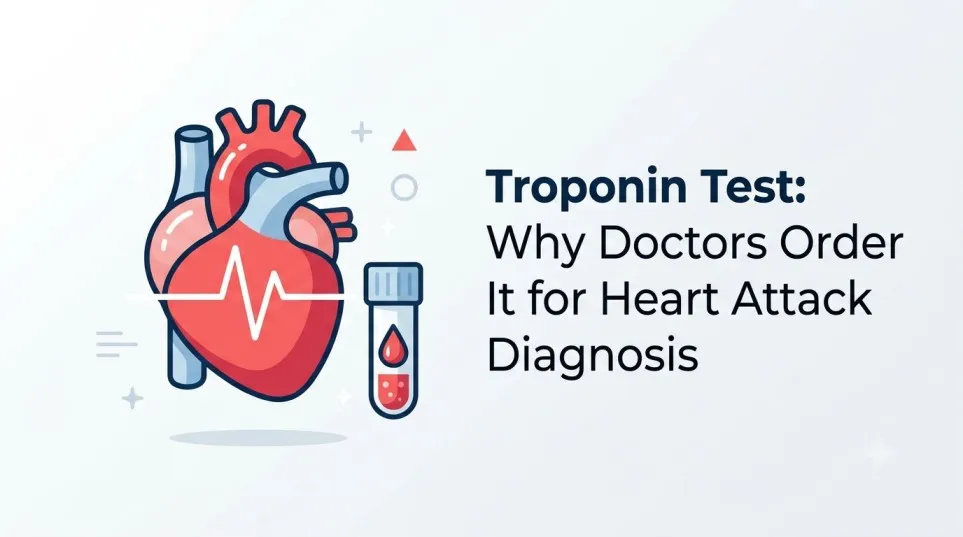

Chest pain is one of the most common reasons people visit the emergency room. While not every episode of chest pain is linked to a heart attack, doctors treat it as a medical emergency until they can determine the cause. One of the most trusted tools they use during this evaluation is the troponin test.
This simple blood test has become a cornerstone in diagnosing heart attacks because it helps detect damage to the heart muscle quickly and accurately. Whether someone experiences sudden chest discomfort, shortness of breath, or unexplained fatigue, troponin levels can provide valuable information that guides timely treatment.
In this article, we'll explore what the troponin test is, why doctors order it, how it works, and what the results may indicate.
What Is a Troponin Test?
A troponin test is a blood test that measures the level of troponin proteins in the bloodstream. Troponins are proteins found primarily in the heart muscle, where they help regulate muscle contraction.
Under normal conditions, only tiny amounts of troponin are present in the blood. However, when the heart muscle is damaged, these proteins are released into the bloodstream. Elevated troponin levels often indicate that the heart has experienced an injury, making the test one of the most reliable methods for identifying heart muscle damage.
Modern laboratories often use high-sensitivity troponin tests, which can detect even very small increases in troponin levels. This allows healthcare providers to diagnose heart attacks earlier than ever before.
Why Do Doctors Order a Troponin Test?
The troponin test is most commonly ordered when a heart attack is suspected. However, it is also useful in evaluating several other heart-related conditions.
Doctors may recommend the test if a patient experiences symptoms such as:
- Chest pain or pressure
- Pain spreading to the arm, jaw, neck, or back
- Shortness of breath
- Cold sweats
- Nausea or vomiting
- Sudden dizziness or fainting
- Unexplained weakness or fatigue
These symptoms do not always mean someone is having a heart attack, but they require immediate medical assessment. A troponin test helps doctors determine whether heart muscle damage has occurred.
Also Read: Troponin Test Normal Range
How Does the Troponin Test Help Diagnose a Heart Attack?
A heart attack happens when blood flow to part of the heart is blocked, preventing oxygen from reaching the heart muscle. If the blockage lasts long enough, heart muscle cells begin to die, releasing troponin into the bloodstream.
When someone arrives at the emergency department with suspected heart attack symptoms, doctors usually combine several diagnostic tools, including:
- A physical examination
- Medical history
- Electrocardiogram (ECG)
- Troponin blood test
- Additional imaging if necessary
Rather than relying on a single blood sample, doctors often repeat the troponin test several hours later. Rising or falling troponin levels can provide important clues about whether heart muscle damage is ongoing or has recently occurred.
This combination of clinical evaluation and blood testing helps healthcare providers make an accurate diagnosis and begin appropriate treatment as quickly as possible.
What Do Troponin Test Results Mean?
Troponin results are interpreted alongside symptoms, ECG findings, and other medical information.
Generally:
- Normal troponin levels suggest there is no significant heart muscle damage at the time of testing.
- Elevated troponin levels indicate injury to the heart muscle but do not automatically confirm a heart attack.
The degree of elevation and the pattern of change over time help doctors determine the underlying cause.
Can Troponin Levels Rise Without a Heart Attack?
Yes. Although heart attacks are the most common reason for elevated troponin levels, several other medical conditions can also cause an increase.
These include:
- Heart failure
- Myocarditis (inflammation of the heart muscle)
- Pulmonary embolism
- Severe infections or sepsis
- Chronic kidney disease
- Irregular heart rhythms
- Cardiac surgery or medical procedures
- Severe physical stress or trauma
For this reason, doctors never interpret a troponin test in isolation. They consider the patient's overall clinical picture before making a diagnosis.
What Happens During the Test?
The procedure is straightforward and usually takes only a few minutes.
A healthcare professional:
- Cleans the skin.
- Draws a small blood sample from a vein in the arm.
- Sends the sample to the laboratory for analysis.
The test does not usually require fasting or any special preparation unless your doctor has provided additional instructions.
Depending on the clinical situation, repeat blood samples may be collected over several hours to monitor changes in troponin levels.
When Should You Seek Emergency Medical Care?
A heart attack can progress rapidly, making early treatment critical. Immediate medical attention should be sought if someone experiences:
- Persistent chest pain lasting several minutes
- Chest pressure that does not improve with rest
- Pain spreading to the shoulder, arm, jaw, or back
- Sudden shortness of breath
- Cold sweats
- Severe nausea
- Sudden collapse or loss of consciousness
Even if symptoms eventually improve, they should never be ignored. Prompt evaluation can help reduce complications and improve outcomes.
Limitations of the Troponin Test
Although the troponin test is highly accurate, it is not a standalone diagnostic tool.
A normal result obtained too early after symptoms begin may not completely rule out a heart attack. This is one reason doctors often repeat the test after a few hours.
Similarly, elevated troponin levels identify heart muscle injury but do not specify the exact cause. Additional tests are often needed to determine why the injury occurred.
Advances in High-Sensitivity Troponin Testing
Over the past decade, high-sensitivity troponin testing has significantly improved emergency cardiac care.
These newer tests can detect much smaller amounts of troponin than older methods, allowing healthcare providers to identify heart muscle injury sooner. Earlier detection supports faster treatment decisions and, in many cases, helps rule out heart attacks more efficiently in low-risk patients.
As a result, patients may receive quicker answers, appropriate treatment, or reassurance when a heart attack is unlikely.
Final Thoughts
The troponin test plays a vital role in modern heart attack diagnosis. By detecting even small amounts of heart muscle injury, it helps doctors evaluate patients with chest pain quickly and accurately. However, the test is only one part of a complete medical assessment, and results must always be interpreted alongside symptoms, physical examination, ECG findings, and other investigations.
If you or someone around you experiences symptoms that could indicate a heart attack, seeking immediate medical care is essential. Early diagnosis and prompt treatment can make a significant difference in protecting heart health and improving recovery.


























Sign in to leave a comment.