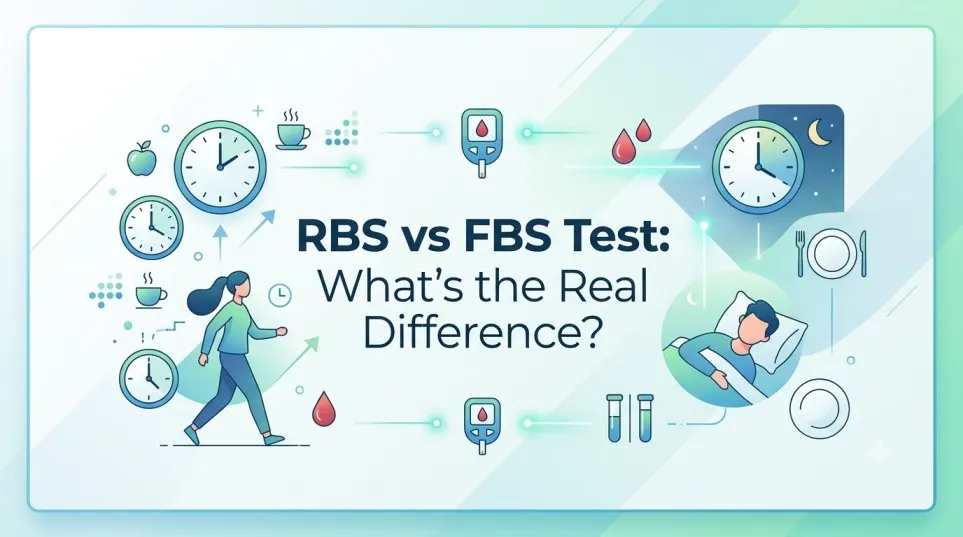
Blood sugar testing plays an important role in identifying diabetes, monitoring treatment, and understanding how your body handles glucose. However, many people get confused when they hear terms like Random Blood Sugar (RBS) and Fasting Blood Sugar (FBS). Since both tests measure blood glucose levels, it's easy to assume they are the same. In reality, they are performed under different conditions and serve different purposes.
Knowing the difference between RBS and FBS can help you understand your test results better and recognize when each test is recommended. Whether you're experiencing symptoms of high blood sugar, have a family history of diabetes, or are simply taking preventive steps for your health, understanding these two tests is a good place to start.
What Is an RBS Test?
The Random Blood Sugar test measures your blood glucose level at any time of the day, regardless of when you last ate. Unlike other blood sugar tests, there is no need to fast before giving the blood sample.
Because it can be performed at any time, an RBS test is commonly used in situations where a doctor needs a quick assessment of your blood sugar levels. It is especially useful when someone is experiencing symptoms that may indicate high blood sugar.
Some common symptoms include:
- Frequent urination
- Excessive thirst
- Increased hunger
- Blurred vision
- Unexplained fatigue
- Slow-healing wounds
- Sudden weight loss
Since recent meals can influence blood sugar levels, the RBS test provides an overall snapshot rather than a baseline reading.
What Is an FBS Test?
The Fasting Blood Sugar test measures your blood glucose after you have not eaten or consumed anything except water for at least 8 to 12 hours.
Because food does not affect the result, this test provides a more accurate picture of your body's baseline blood sugar level. Doctors frequently recommend it as one of the first tests for diagnosing diabetes or prediabetes.
An FBS test is usually scheduled in the morning after an overnight fast, making it easier to ensure accurate results.
RBS vs FBS: Key Differences
Although both tests measure glucose in your blood, they differ in several important ways.
| Feature | RBS Test | FBS Test |
|---|---|---|
| Full Form | Random Blood Sugar | Fasting Blood Sugar |
| Fasting Required | No | Yes (8–12 hours) |
| Timing | Any time of the day | Usually morning |
| Purpose | Quick assessment of blood sugar | Baseline blood sugar evaluation |
| Effect of Meals | Can be influenced by recent food intake | Not affected by recent meals |
| Common Use | Initial screening, emergency evaluation | Diagnosis and routine monitoring |
When Is an RBS Test Recommended?
Doctors may suggest an RBS test when immediate blood sugar information is needed.
Some common situations include:
- Sudden symptoms of diabetes
- Emergency medical evaluation
- Routine health check-ups
- Monitoring diabetes during treatment
- Hospital admission
- Health camps and community screenings
Because fasting isn't required, the RBS test is convenient when testing cannot be planned in advance.
When Is an FBS Test Recommended?
An FBS test is generally recommended when doctors need a more standardized assessment of blood sugar levels.
It is commonly advised for:
- Diabetes screening
- Diagnosing prediabetes
- Annual preventive health check-ups
- Individuals with obesity
- People with a family history of diabetes
- Patients with high blood pressure or high cholesterol
- Monitoring diabetes management over time
Understanding Normal Blood Sugar Levels
While the exact interpretation depends on your overall health and your doctor's evaluation, general reference ranges are commonly used.
Fasting Blood Sugar (FBS)
- Normal: Less than 100 mg/dL
- Prediabetes: 100–125 mg/dL
- Diabetes: 126 mg/dL or higher (confirmed on repeat testing)
Random Blood Sugar (RBS)
- Generally normal: Below 140 mg/dL
- Possible diabetes: 200 mg/dL or higher when accompanied by symptoms of diabetes
A single abnormal result does not always confirm diabetes. Doctors often recommend additional tests for confirmation.
Which Test Is More Accurate?
Neither test is universally "better." Each serves a different purpose.
The FBS test is generally considered more reliable for diagnosing diabetes because it measures blood sugar under controlled fasting conditions.
The RBS test is valuable for quickly identifying abnormal blood sugar levels, especially when symptoms are present or fasting isn't practical.
In many cases, healthcare providers use both tests along with other investigations to obtain a complete picture.
Can You Eat Before an RBS Test?
Yes.
One of the biggest advantages of an RBS test is that no fasting is required. You can have the test regardless of when you last ate or drank.
However, because food affects blood glucose levels, it's helpful to inform your healthcare provider about your last meal, including the approximate time and what you ate. This context can help with interpreting the result.
Can You Drink Water Before an FBS Test?
Yes.
Water is generally allowed and even encouraged before an FBS test because it helps keep you hydrated and makes blood collection easier.
However, avoid:
- Tea
- Coffee
- Milk
- Fruit juice
- Sugary drinks
- Alcohol
These beverages can influence blood sugar levels and affect the accuracy of the test.
Are Additional Tests Needed?
Sometimes, yes.
If blood sugar results are borderline or abnormal, your doctor may recommend additional tests such as:
- HbA1c test
- Oral Glucose Tolerance Test (OGTT)
- Postprandial Blood Sugar (PPBS)
- Continuous blood glucose monitoring in selected cases
These tests provide more detailed information about your blood sugar control over time.
Tips to Prepare for a Blood Sugar Test
Preparing properly helps ensure more accurate results.
For an FBS test:
- Fast for 8 to 12 hours.
- Drink only plain water.
- Avoid smoking before the test if possible.
- Inform your doctor about any medications you are taking.
For an RBS test:
- No fasting is required.
- Follow your usual daily routine unless your healthcare provider advises otherwise.
- Tell the healthcare professional when you last ate.
Final Thoughts
Understanding the difference between RBS and FBS tests can make it easier to interpret your blood sugar reports and know why your healthcare provider recommends one test over the other. The RBS test offers convenience and quick assessment without fasting, while the FBS test provides a more consistent baseline reading that is widely used for diagnosing diabetes.
Neither test should be viewed in isolation. Your symptoms, medical history, lifestyle, and, when necessary, additional laboratory tests all contribute to an accurate diagnosis. If you have risk factors for diabetes or notice symptoms such as excessive thirst, frequent urination, unexplained weight loss, or persistent fatigue, consult a healthcare professional. Early detection and timely management can go a long way in preventing long-term complications and supporting better overall health.


























Sign in to leave a comment.