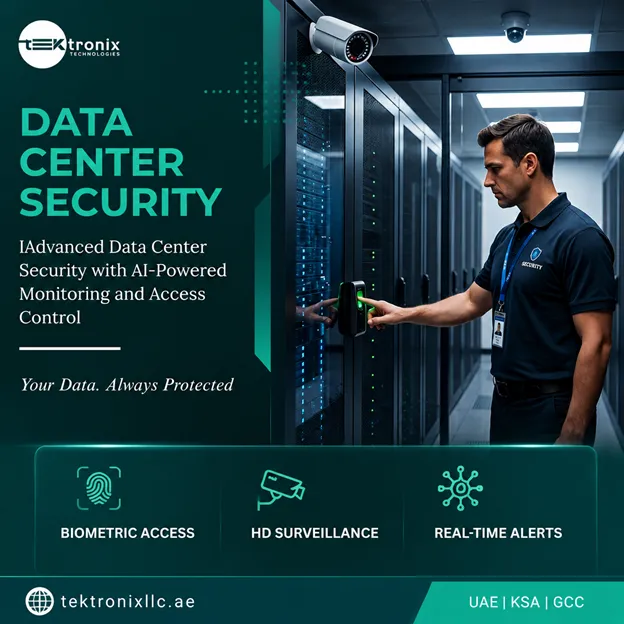

Robust Data Center Security has become a non-negotiable requirement for every organization operating critical infrastructure in the UAE. As Dubai and Abu Dhabi cement their position as regional cloud and financial-hub destinations, facility owners are under growing pressure to protect servers, network cores, and sensitive data from both physical intrusion and digital compromise with a layered data center perimeter security solution.
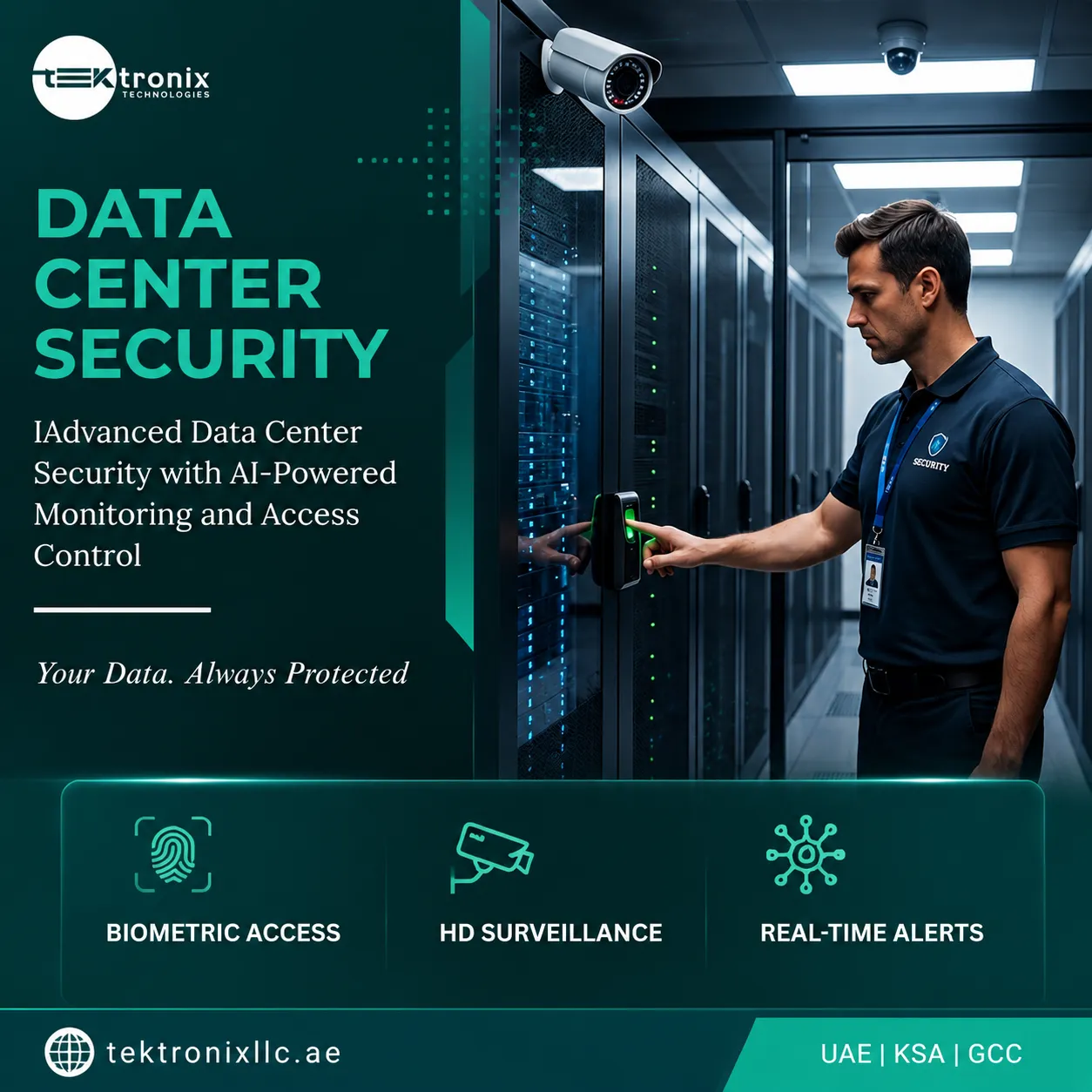
This guide breaks down the physical and digital layers that make up a resilient data center defence strategy, the standards that govern facility design in the region, and how to select the right security partner for a mission-critical UAE deployment.
What Does Data Center Security Actually Cover?
Effective Data Center Security is never a single product — it is a layered strategy that combines the physical facility, its network perimeter, and the people who manage it. A resilient design assumes that no single control is perfect, so each layer is built to catch what the previous one might miss, from the outer fence line down to the individual server rack.
Industry frameworks such as ANSI/TIA-942 formalize this approach, defining physical security, access control, and monitoring requirements alongside power, cooling, and cabling standards, and rating facilities across four tiers of redundancy and resilience. Facilities pursuing Tier 3 or Tier 4 status carry correspondingly stricter security expectations, since the data they host is typically classified as mission-critical.
Cybersecurity for Data Center Environments
Physical barriers alone cannot stop a network-based attack, which is why Cybersecurity for Data Center operations must run in parallel with physical controls. This includes network segmentation between colocation tenants, continuous vulnerability management, hardened operating system baselines, and strict change-control procedures for any equipment connected to production infrastructure.
A mature program treats physical and digital security as one connected discipline: a compromised badge reader or an unmonitored maintenance port can just as easily open the door to a network breach as a phishing email, so both domains need to be governed by the same risk framework.
Data Center Encryption for Data at Rest and in Transit
Even with strong perimeter defences, sensitive information must be protected in case a device or storage medium is ever physically removed or intercepted. Data Center Encryption protects information both while it sits on disk and while it moves across internal or external networks, ensuring that data remains unreadable to anyone without the correct decryption keys.
- Encryption at rest for storage arrays, backup media, and decommissioned drives.
- Encryption in transit for data moving between racks, sites, or cloud connections.
- Centralized key management with strict rotation and access-logging policies.
Data Center Firewalls and Network Segmentation
At the network edge, Data Center Firewalls inspect and filter traffic entering and leaving the facility, blocking unauthorized connections before they reach production systems. Next-generation firewall appliances add deep packet inspection, intrusion prevention, and application-aware filtering, while internal segmentation firewalls limit how far an attacker can move laterally even if one segment is compromised.
For multi-tenant colocation facilities, firewall policies must also enforce strict isolation between customer environments, ensuring that a security incident affecting one tenant's infrastructure cannot cascade into another's.
Data Center Access Control: Layered Physical Entry Security
Every credible facility design build Data Center Access Control around multiple concentric layers rather than a single locked door. A typical model moves from a monitored perimeter fence, to a staffed lobby with visitor screening, to biometric or multi-factor verification at each secure zone, down to individually locked server cabinets that log every open event.
- Perimeter layer: fencing, vehicle barriers, and controlled parking access.
- Building layer: staffed reception, visitor badges, and mantrap entry vestibules.
- Zone layer: biometric or card-based verification for server halls and network rooms.
- Cabinet layer: individually locked and logged racks for the highest-sensitivity equipment.
Data Center Surveillance: Continuous Visual Verification
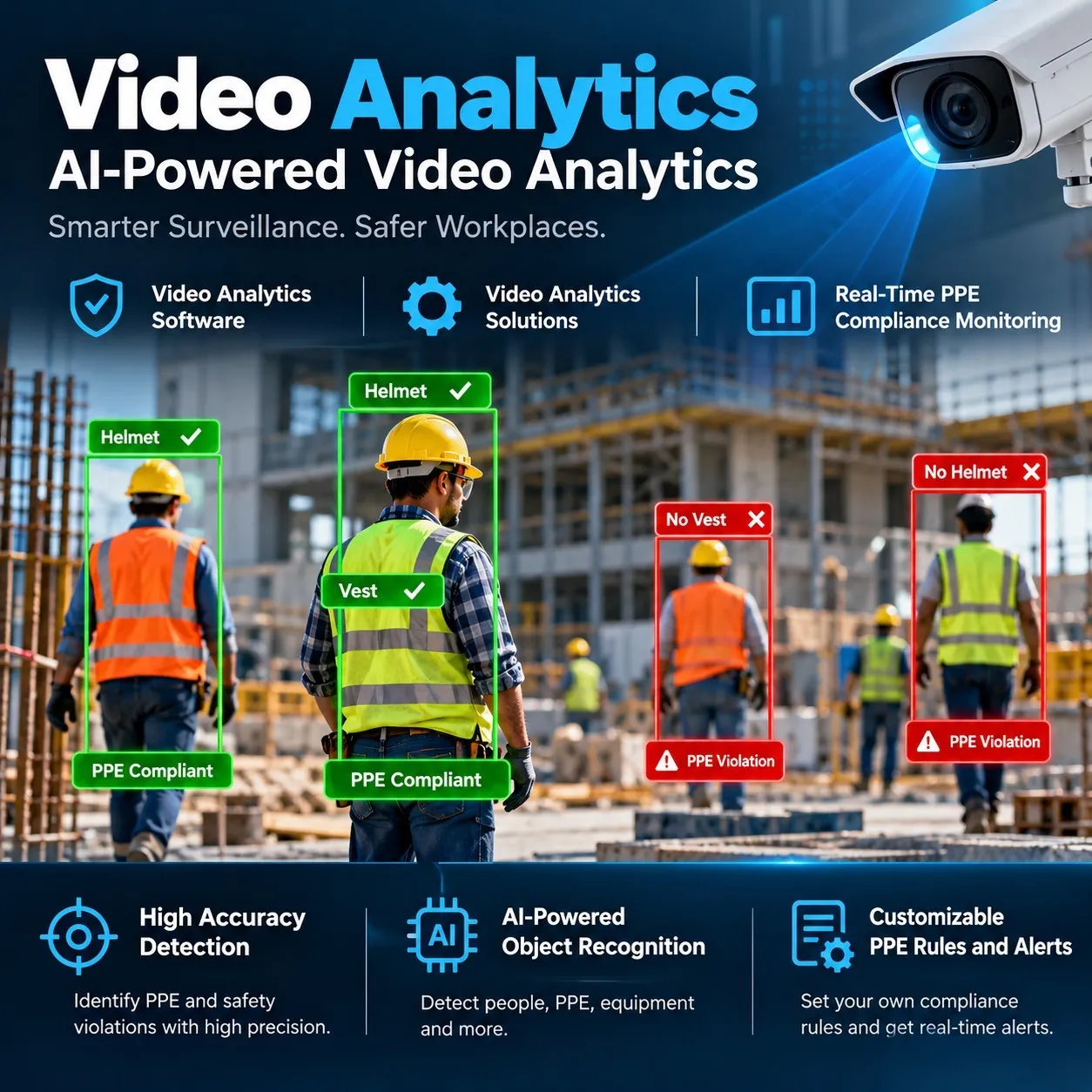
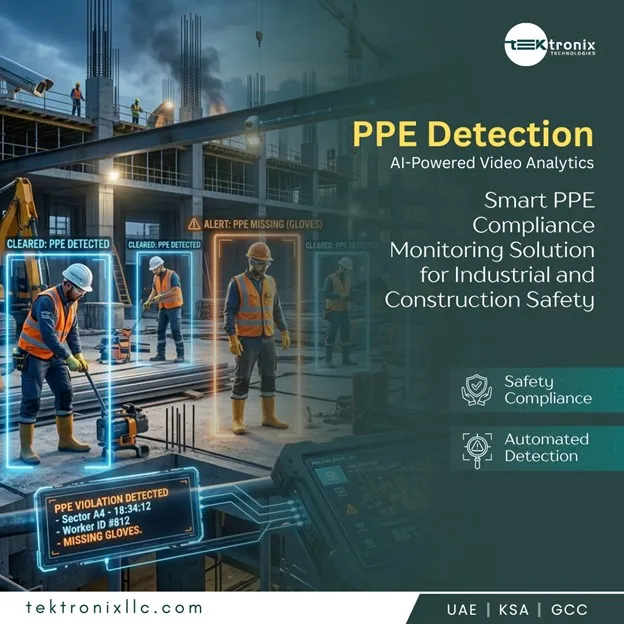
Cameras remain one of the most valuable layers in any facility, providing both a deterrent and a forensic record. Modern Data Center Surveillance deployments combine high-resolution fixed and PTZ cameras with video analytics that flag loitering, tailgating, or unauthorized zone entry in real time, rather than relying purely on after-the-fact footage review.
Footage is typically retained for a defined compliance period and integrated with the access control platform, so that every badge event can be cross-referenced against the corresponding video clip during an audit or investigation.
Data Center Intrusion Detection Systems
Where surveillance provides visual confirmation, Data Center Intrusion Detection systems provide automated alerting the moment a physical boundary is breached. Door contacts, vibration sensors on fencing, glass-break detectors, and motion sensors in restricted zones all feed into a central monitoring platform that can trigger an immediate response, whether that is a local alarm, a notification to the security operations center, or an automatic camera lock-on to the affected zone.
Data Center Threat Detection Across Physical and Digital Layers
Beyond individual sensors, mature facilities deploy centralized Data Center Threat Detection platforms that correlate signals from access control, surveillance analytics, network monitoring, and environmental sensors into a single risk picture. This correlation is what allows a security team to distinguish a genuine coordinated threat — for example, an unusual badge attempt followed by a network anomaly on the same segment — from an isolated, low-risk event.
Combining physical and digital threat feeds in one platform also shortens response times significantly, since operators are not switching between disconnected systems to piece together what happened.
Why Data Center Security UAE Facilities Are a Regional Priority
As government, banking, and cloud infrastructure increasingly localize within the UAE, facility operators face rising expectations around uptime, data residency, and resilience against both physical and cyber threats. Data Center Security UAE deployments increasingly reference international frameworks such as ISO 27001 and ANSI/TIA-942 tier classifications alongside local regulatory guidance, giving enterprise tenants confidence that a facility meets globally recognized benchmarks.
Colocation providers, banks, telecom operators, and government entities across the country are treating physical and cyber resilience as a single procurement requirement, rather than negotiating them as separate line items.
Data Center Security Dubai and Abu Dhabi: Regional Deployment Patterns
Facilities delivering Data Center Security Dubai projects are typically concentrated around free-zone technology parks and financial districts, where colocation providers and hyperscale cloud operators require Tier 3 and Tier 4-grade resilience to support enterprise and government tenants.
Meanwhile, Data Center Security Abu Dhabi deployments are common across government, energy, and sovereign-cloud facilities, where data sovereignty and long-term operational continuity are treated as strategic priorities rather than optional upgrades. In both emirates, facility design increasingly bakes physical and cyber controls together from the earliest planning stage rather than retrofitting them later.
Proven Standards Behind Every Deployment
Credible data center protection is built on recognized frameworks rather than ad-hoc measures. ANSI/TIA-942 defines physical security, access control, and monitoring requirements alongside its well-known tier rating system, while ISO 27001 provides the information-security management framework many enterprise tenants require of their hosting provider before signing a contract.
Tektronix LLC designs and integrates physical security layers against these recognized benchmarks, working alongside facility consultants, fire-safety authorities, and IT security teams so that access control, surveillance, and intrusion detection systems are specified correctly from the earliest design stage rather than added as an afterthought once construction is complete.
Best Practices for a Resilient Data Center Security Posture
Beyond individual technologies, the strongest facilities follow a consistent set of operational disciplines that keep every layer of protection effective over time:
- Least-privilege access: staff and vendors are granted only the zones they genuinely need to enter.
- Regular penetration testing: both network and physical entry points are tested against real attack scenarios.
- Incident response drills: security teams rehearse breach scenarios rather than relying on untested plans.
- Vendor and visitor management: every third party is logged, escorted, and time-limited within secure zones.
- Continuous system audits: access logs, camera health, and sensor status are reviewed on a fixed schedule.
These practices turn a collection of individual security products into a genuinely resilient operating model — one that keeps working even as staff, vendors, and threats change over time.
Common Gaps That Undermine Data Center Protection
Even well-funded facilities can carry hidden weaknesses that only surface during an audit or, worse, an actual incident. The most frequent gaps include unmonitored maintenance doors that bypass the main access control system, outdated firmware on cameras and door controllers that leaves known vulnerabilities unpatched, and shared or generic credentials used by contractors instead of individually tracked badges.
Another common issue is treating physical security and network security as separate budgets managed by separate teams, which creates blind spots exactly where an attacker is most likely to look — the seams between systems that no single owner is watching. Closing these gaps typically requires a single integrator who can assess both domains together rather than auditing them in isolation.
Who Relies on Hardened Data Center Facilities
- Colocation and hyperscale cloud providers hosting enterprise and government workloads.
- Banks and financial institutions with strict regulatory continuity requirements.
- Telecom operators managing national network cores and switching facilities.
- Government and sovereign-cloud entities with data residency obligations.
- Healthcare and insurance providers storing large volumes of sensitive records.
- Enterprises running on-premise private cloud or hybrid infrastructure.
A Typical Data Center Security Deployment Process
- Risk assessment: reviewing site layout, existing controls, and threat exposure.
- Layered design: mapping perimeter, building, zone, and cabinet-level controls.
- Technology selection: specifying access control, surveillance, and detection hardware.
- Network and cyber alignment: coordinating firewall, segmentation, and encryption policy.
- Integration and testing: validating alarms, camera analytics, and incident workflows.
- Ongoing monitoring: maintenance, firmware updates, and periodic compliance review.
Following this sequence ensures physical and digital controls are commissioned together, rather than security being bolted on after the facility is already live.
Why Choose Tektronix LLC for Data Center Protection
Protecting mission-critical infrastructure requires more than installing cameras and door readers — it demands a coordinated design across physical, network, and monitoring layers. Tektronix LLC has hands-on experience delivering data center perimeter security solutions across UAE colocation facilities, financial institutions, and government sites, backed by certified engineers who understand both the physical security hardware and the compliance frameworks unique to this market.
From initial risk assessment through system design, installation, and long-term monitoring support, the team configures every facility for resilience and measurable risk reduction. Explore the complete range of data center security solutions to plan your facility's next security upgrade.
Conclusion
Data Center Security is no longer optional for UAE facilities hosting critical infrastructure and sensitive data. A resilient facility pairs Cybersecurity for Data Center operations with Data Center Encryption and Data Center Firewalls to defend the network perimeter. Strong Data Center Access Control, Data Center Surveillance, and Data Center Intrusion Detection protect the physical facility around the clock. Centralized Data Center Threat Detection ties these layers together into one coordinated response strategy. For a compliant, well-engineered Data Center Security UAE rollout across Data Center Security Dubai and Data Center Security Abu Dhabi facilities, Tektronix LLC is a trusted regional partner.
FAQs
1. What is the difference between data center security and general IT security?
General IT security focuses on protecting networks and software, while data center security combines that digital protection with physical safeguards such as access control, surveillance, and intrusion detection for the facility itself.
2. How many layers of access control does a typical secure data center use?
Most facilities use at least four layers — perimeter, building, zone, and cabinet — so that Data Center Access Control never depends on a single locked door to protect critical equipment.
3. Why is encryption still necessary if the facility already has strong physical security?
Physical controls reduce the chance of unauthorized entry, but Data Center Encryption protects the data itself in case a drive, backup, or device is ever removed, lost, or intercepted, adding a critical final layer of protection.
4. Can surveillance and intrusion detection systems work together?
Yes. Data Center Surveillance and Data Center Intrusion Detection are typically integrated on the same platform, so a sensor alarm automatically pulls up the relevant camera feed for immediate visual verification.
5. What standards should a UAE data center security design reference?
Most credible designs reference ANSI/TIA-942 for physical infrastructure and tier classification, alongside ISO 27001 for information security management, giving enterprise tenants confidence the facility meets internationally recognized benchmarks.
For more information contact us on:
Tektronix Technology Systems Dubai-Head Office
+971 50 814 4086
+971 55 232 2390
Office No.1E1 | Hamarain Center 132 Abu Baker Al Siddique Rd – Deira – Dubai P.O. Box 85955























Sign in to leave a comment.