
Medical device testing helps manufacturers confirm that a device is safe, reliable, and fit for its intended use. Different devices need different tests based on their design, materials, risks, and intended use. From performance and safety testing to biocompatibility and reliability checks, the right testing plan can support product quality and regulatory needs. For manufacturers managing a complex medical device supply chain, testing also helps reduce product risks before devices reach the market.
Why Medical Device Testing Matters
Medical devices must perform as intended while protecting patients and users from avoidable risks. Testing helps identify design issues, material concerns, performance problems, and other defects before production or market release.
The FDA maintains a recognized consensus standards database with more than 1,700 listed standards across medical device categories. These standards can help manufacturers select appropriate methods for evaluating device safety and performance.
Key Types of Medical Device Testing
1. Performance Testing
Performance testing checks whether a device meets its stated specifications and intended function. Tests may measure accuracy, strength, flow rate, output, response time, or other device specific factors.
This testing is important during design verification and before final production.
2. Safety Testing
Safety testing looks for risks that could harm patients, operators, or other users. Electrical medical devices may require tests for basic safety and essential performance. IEC 60601 1 is one recognized standard covering these areas for medical electrical equipment.
3. Biocompatibility Testing
Biocompatibility testing evaluates whether materials used in a device may cause harmful biological effects. This is especially important for products that contact the body.
FDA recognizes several ISO 10993 standards covering areas such as biological evaluation, systemic toxicity, skin sensitization, irritation, and chemical characterization.
4. Reliability Testing
Reliability testing assesses how consistently a device performs over time and under expected conditions. It can help identify early failures and support product durability.
Common areas include:
- Repeated use testing
- Life cycle testing
- Environmental testing
- Stress testing
- Durability testing
5. Sterilization and Packaging Testing
For sterile medical devices, packaging and sterilization are critical parts of product quality. Testing can help confirm package integrity and support the required sterile barrier throughout the stated shelf life.
6. Chemical and Material Testing
Material testing checks whether components meet defined specifications and remain suitable for their intended use. Chemical characterization can also support biological safety assessments. FDA lists ISO 10993 18 among its recognized standards for chemical characterization within a risk management process.
Choosing the Right Testing Approach
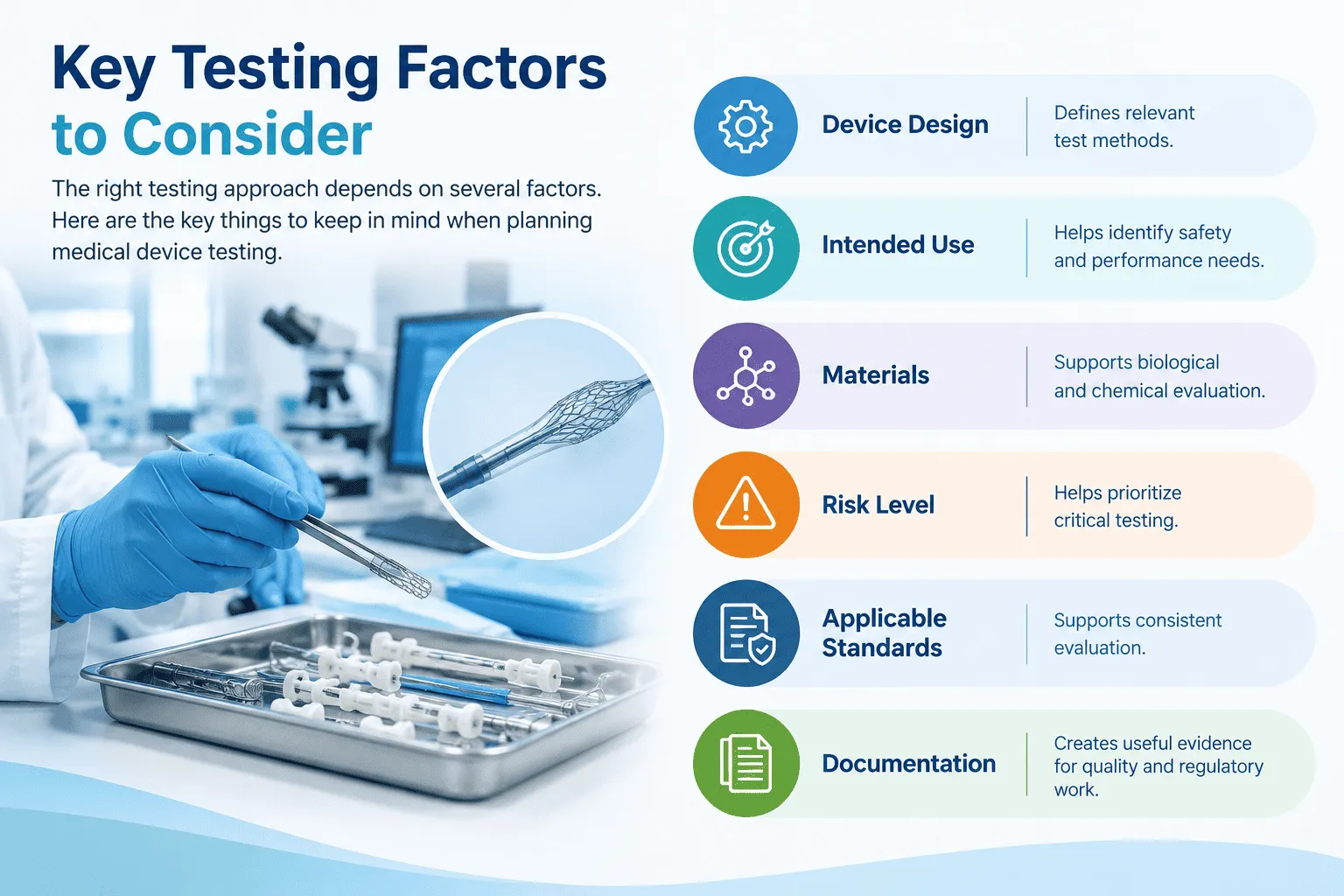
The testing plan should match the device, intended use, materials, risks, and applicable standards. Manufacturers should consider:
- Device Design: Defines the relevant test methods.
- Intended Use: Helps identify safety and performance needs.
- Materials: Supports biological and chemical evaluation.
- Risk Level: Helps prioritize critical testing.
- Applicable Standards: Supports consistent evaluation.
- Documentation: Creates useful evidence for quality and regulatory work.
Working with experienced medical device testing services can help manufacturers plan suitable tests, manage documentation, and address testing needs across the product lifecycle.
How Testing Supports the Medical Device Supply Chain
Testing is not only a final quality step. It can support supplier qualification, component checks, design changes, production controls, and final product evaluation. This makes testing an important part of a reliable medical device supply chain.
Frequently Asked Questions
What is medical device testing?
Medical device testing is the process of evaluating a device, component, material, or system to confirm safety, performance, reliability, and other defined requirements.
What are the main types of medical device testing?
Common types include performance, safety, biocompatibility, reliability, packaging, sterilization, electrical, environmental, and material testing.
Why is biocompatibility testing important?
It helps evaluate biological risks linked to materials that may contact patients or users.
Does every medical device need the same tests?
No. Testing depends on the device type, intended use, materials, design, risks, and applicable regulatory requirements.
Conclusion
A well planned testing program can help manufacturers identify risks early and build stronger evidence for product quality and regulatory needs. The right medical device testing services can also support testing requirements across development, production, and the broader medical device supply chain. Arterex Medical provides testing capabilities to help manufacturers address the testing needs of their medical devices.
Source:- https://tinyurl.com/y3zz85f4
























Sign in to leave a comment.