
Introduction:
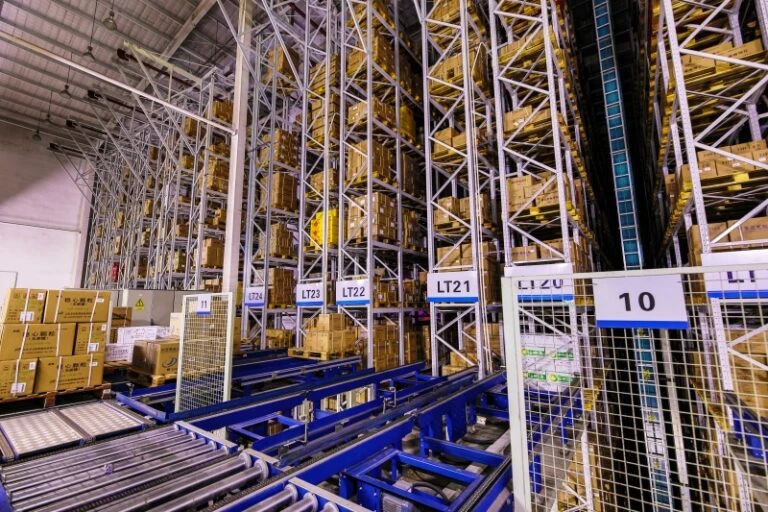
Pallet racking is a cornerstone of modern warehousing and logistics. As a leading Warehouse Automation Company in Canada, Greenspace Industrial is at the forefront of revolutionizing storage solutions with state-of-the-art Automated Storage and Retrieval Systems (ASRS) and Vertical Lift Modules (VLM). In this comprehensive guide, we delve into the various types of pallet racking, their differences, and their advantages to help you make informed decisions for your storage needs.
What is Pallet Racking?
Pallet racking is a storage system designed to store materials on pallets. These systems allow for the efficient use of space and improved organization in warehouses, distribution centers, and manufacturing facilities.
Importance of Pallet Racking in Modern Warehousing:
In modern warehousing, the need for efficient storage solutions cannot be overstated. Pallet racking systems optimize space, enhance accessibility, and improve inventory management, contributing to higher productivity and lower operational costs.
Types of Pallet Racking:
Selective Pallet Racking-
Selective pallet racking is the most common type of pallet racking system. It allows for direct access to each pallet, making it ideal for warehouses that store a wide variety of products.
- Advantages:
- Easy access to each pallet
- Versatile and adaptable to different pallet sizes
- Cost-effective
- Disadvantages:
- Requires more aisle space
- Less storage density compared to other systems
Drive-In Pallet Racking:
Drive-in racking systems allow forklifts to drive directly into the storage lanes to place and retrieve pallets. This type of racking is designed for high-density storage of homogeneous products.
- Advantages:
- Maximizes storage density
- Ideal for large quantities of the same product
- Disadvantages:
- Limited access to individual pallets
- Higher risk of damage to racks and pallets
Drive-Through Pallet Racking:
Similar to drive-in racking, drive-through racking allows forklifts to enter from either side, providing greater flexibility.
- Advantages:
- Increased storage density
- Improved flexibility with access from both ends
- Disadvantages:
- Requires careful management to avoid obstruction
- Higher installation and maintenance costs
Push-Back Pallet Racking:
Push-back racking systems use carts that move along inclined rails. Each pallet is loaded from the front, and subsequent pallets push the previous ones back.
- Advantages:
- High storage density
- Efficient use of space
- Disadvantages:
- Limited to last-in, first-out (LIFO) inventory management
- Higher initial investment
Pallet Flow Racking:
Pallet flow racking, or gravity flow racking, uses inclined rails with rollers to allow pallets to move from the loading end to the unloading end.
- Advantages:
- First-in, first-out (FIFO) inventory management
- High storage density
- Disadvantages:
- Higher cost due to complex structure
- Requires consistent maintenance
Cantilever Racking:
Cantilever racking is designed for storing long, bulky items such as lumber, pipes, and steel rods.
- Advantages:
- Ideal for storing long items
- Easy access and handling
- Disadvantages:
- Limited to specific types of inventory
- Requires more space
Mobile Pallet Racking:
Mobile racking systems are mounted on tracks, allowing the racks to move and create aisles only when needed.
- Advantages:
- Maximizes storage space
- Reduces the need for aisles
- Disadvantages:
- High initial cost
- Requires specialized equipment for operation
Double-Deep Pallet Racking:
Double-deep racking allows pallets to be stored two deep, effectively doubling the storage capacity of selective racking.
- Advantages:
- Increased storage density
- Cost-effective solution for high-density storage
- Disadvantages:
- Limited access to the rear pallets
- Requires a specialized reach truck
Key Features of Pallet Racking Systems:
Customization-
Pallet racking systems can be customized to fit specific needs, including varying heights, depths, and load capacities.
Durability-
Constructed from high-quality materials, pallet racking systems are designed to withstand heavy loads and harsh environments.
Versatility-
These systems can be adapted to store a wide range of products, making them suitable for various industries.
Scalability-
Pallet racking systems can be expanded or reconfigured as storage needs change, providing long-term value.
Advantages of Using Pallet Racking:
Optimized Space Utilization:
Pallet racking systems maximize vertical and horizontal space, increasing storage capacity without expanding the warehouse footprint.
Improved Inventory Management:
These systems facilitate better organization and accessibility, making it easier to manage inventory and reduce picking times.
Enhanced Safety:
Pallet racking systems are designed with safety features to prevent accidents and ensure a secure working environment.
Cost-Effective:
By improving space utilization and operational efficiency, pallet racking systems can lead to significant cost savings over time.
Applications of Pallet Racking in Different Industries:
Manufacturing:
In manufacturing, pallet racking systems streamline storage and retrieval of raw materials, components, and finished goods.
Retail and E-Commerce:
Retailers and e-commerce businesses use pallet racking to manage large volumes of inventory, ensuring quick and accurate order fulfillment.
Food and Beverage:
The food and beverage industry benefits from pallet racking systems that meet strict hygiene standards and facilitate efficient storage of perishable goods.
Pharmaceuticals:
Pharmaceutical companies use pallet racking to store and organize medications and medical supplies, maintaining product integrity and compliance with regulations.
Future Trends in Pallet Racking Systems:
Automation and Robotics:
The integration of automation and robotics in pallet racking systems will further enhance efficiency and accuracy in warehouses.
Smart Technologies:
IoT and smart technologies will enable real-time monitoring and data-driven decision-making, improving inventory management.
Sustainability:
Future pallet racking systems will focus on sustainability, incorporating eco-friendly materials and energy-efficient designs.
Choosing the Right Pallet Racking System for Your Business:-
Assessing Your Needs:
Evaluate your storage requirements, including the types of products you store, available space, and budget.
Evaluating System Features:
Compare different pallet racking systems based on their features, advantages, and disadvantages to find the best fit for your needs.
Considering Future Growth:
Choose a system that can be easily expanded or reconfigured to accommodate future growth and changing storage needs.
Conclusion:-
Pallet racking systems are essential for efficient and effective warehouse management. By understanding the different types of pallet racking and their advantages, you can choose the best system for your business. At Greenspace Industrial, we are committed to providing cutting-edge storage solutions that optimize efficiency and boost productivity.

























Sign in to leave a comment.