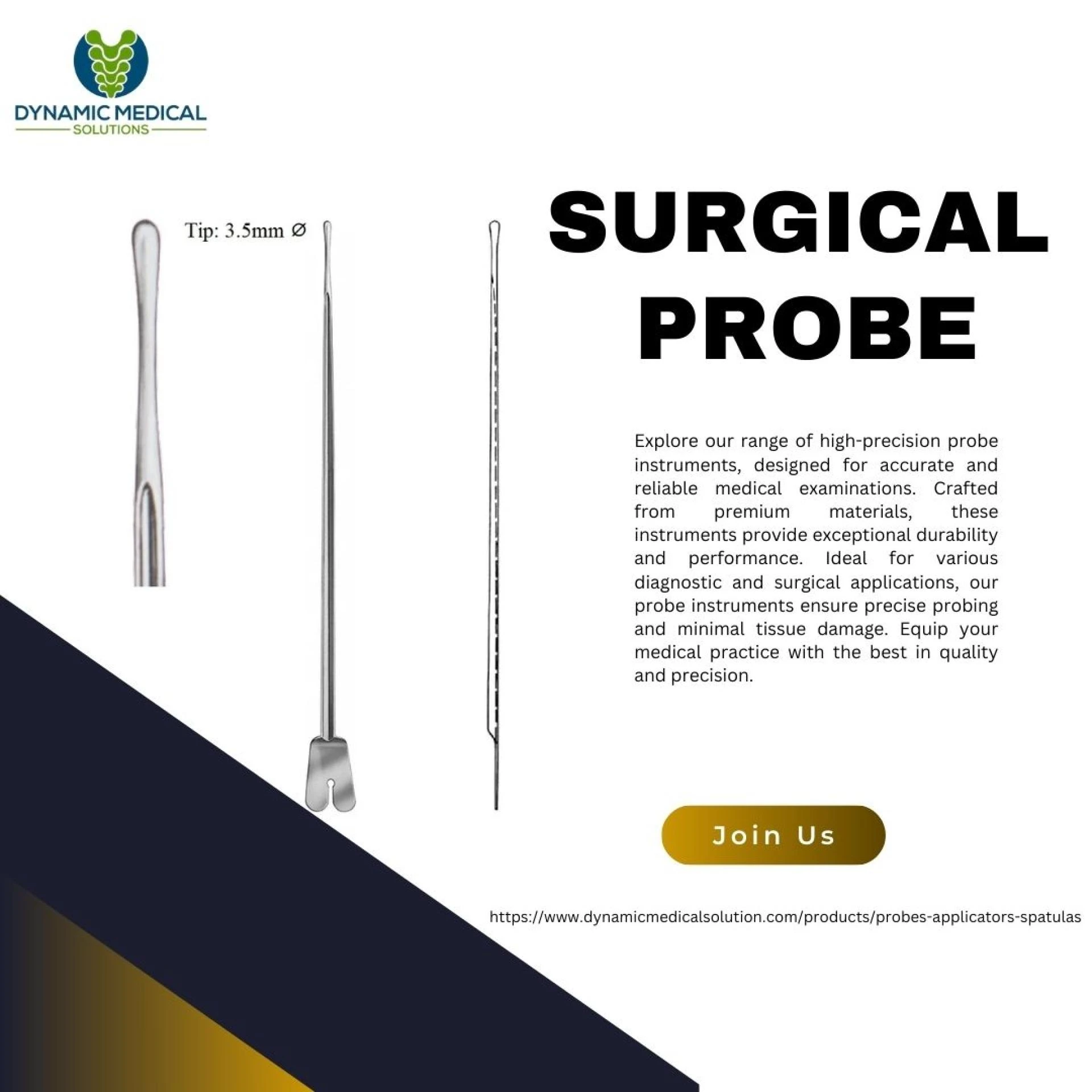

In the field of medicine, probe instruments are essential tools used to explore, examine, and interact with internal body structures during diagnostic and surgical procedures. These instruments, particularly surgical probes, are designed to provide surgeons with the ability to navigate delicate tissues and organs with precision. Understanding the different types of probe instruments and their specific applications is crucial for medical professionals to select the right tool for each procedure.
What is a Probe Instruments?
Probe instruments are versatile tools that can be used across various medical disciplines. They serve multiple purposes, from basic exploration and measurement to more complex functions like tissue manipulation and sensing. The design of these probes varies depending on their intended use, with each type offering unique features to meet specific surgical needs.
Types of Surgical Probes
There are several distinct types of surgical probes, each designed to address specific surgical requirements. Below, we explore some of the most commonly used types:
Blunt Probes
Blunt probes are among the most commonly used types of surgical probes. These instruments feature a rounded, non-sharp tip that allows surgeons to gently explore body cavities or wounds without causing additional trauma to surrounding tissues. Blunt probes are often employed in general surgery, where they help in assessing the depth and extent of a wound or cavity, as well as in procedures where tissue preservation is essential.
Sharp Probes
Sharp probes are characterized by their pointed, sharp tips, which are designed for precise and targeted exploration. These probes are particularly useful in procedures where surgeons need to navigate through or dissect tissues with high accuracy. Sharp probes are commonly used in orthopedic surgeries, where they help in assessing fractures or in neurosurgery to explore the intricate pathways of the brain and spinal cord.
Flexible Probes
Flexible probes are designed to bend and adapt to the body’s natural contours, making them ideal for minimally invasive surgeries. These probes can navigate through narrow or curved passages within the body, allowing surgeons to reach areas that are difficult to access with rigid instruments. Flexible probes are frequently used in endoscopic procedures, where they are inserted through small incisions to explore internal organs and tissues with minimal disruption.
Rigid Probes
Rigid probes are non-flexible instruments typically used in procedures where a firm and stable tool is required. These probes are commonly used in open surgeries where direct access to the surgical site is available. Rigid probes are often used in conjunction with other surgical instruments to provide leverage, measure depth, or guide other tools.
Temperature and Pressure Sensing Probes
Some surgical probes are equipped with advanced sensors that can measure physiological parameters such as temperature and pressure. Temperature sensing probes are often used in thermal ablation procedures, where precise temperature control is critical for the success of the treatment. Pressure sensing probes are used in cardiovascular surgeries to monitor intravascular pressure, ensuring patient safety and optimal surgical outcomes.
Imaging Probes
Imaging probes are specialized instruments that combine traditional probing functions with imaging capabilities such as ultrasound or MRI. These probes allow surgeons to visualize internal structures in real-time during surgery, providing critical information that guides surgical decisions. Imaging probes are particularly valuable in complex procedures where accurate visualization is necessary to avoid complications.
Applications of Surgical Probes
The variety of surgical probes reflects their wide range of applications in medical practice. Each type of probe serves a specific purpose, depending on the nature of the procedure and the requirements of the surgeon.
Diagnostic Use
Surgical probes are often used in diagnostic procedures to explore and assess internal structures. For example, during laparoscopic surgery, flexible probes are inserted through small incisions to examine the abdominal cavity, providing visual and tactile feedback that helps in diagnosing conditions such as tumors or adhesions.
Therapeutic Procedures
In therapeutic procedures, probe instruments are used to manipulate tissues or deliver treatments directly to the affected area. For instance, temperature sensing probes are used in radiofrequency ablation to treat certain types of tumors by delivering controlled heat to destroy cancer cells.
Navigational Aid
Probe instruments are also used as navigational aids in complex surgeries. In neurosurgery, for example, sharp probes are used to carefully explore and map out neural pathways before making incisions, minimizing the risk of damaging critical brain structures.
Conclusion
Probe instruments are fundamental tools in the medical field, offering a wide range of functionalities that are essential for both diagnostic and therapeutic procedures. From blunt and sharp probes to flexible and imaging probes, each type has a specific role in enhancing the precision and safety of surgeries. Understanding the different types of surgical probes and their applications is crucial for healthcare professionals to make informed decisions and achieve the best possible outcomes for their patients. For more details visit our website Dynamic medical.




























Sign in to leave a comment.