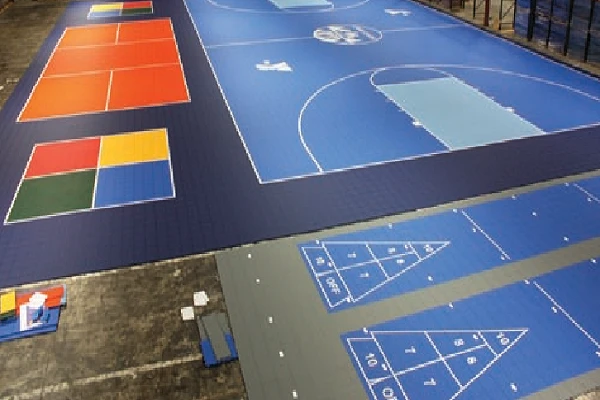

Shuffleboard is a popular game with a long history that dates back to 15th century England. It has evolved over the years, and today, there are multiple types of shuffleboard courts to cater to different preferences, skill levels, and spaces. Whether played indoors or outdoors, shuffleboard has become a favorite pastime for people of all ages. In this article, we will explore the various types of shuffleboard courts and discuss their key differences.
Table ShuffleboardTable shuffleboard, also known as indoor shuffleboard, is played on a long, narrow wooden table. Typically, these tables range from 9 to 22 feet in length, with a width of about 20 inches. The playing surface is coated with a special polymer or epoxy resin to ensure a smooth, even glide for the shuffleboard pucks. A thin layer of silicone sand, also known as shuffleboard powder or wax, is often sprinkled on the table's surface to reduce friction and increase the speed of the pucks.
Table shuffleboard is played using small, weighted discs called pucks, which are pushed down the table's surface towards the scoring areas at the opposite end. Players take turns sliding their pucks, with the objective of landing them in the highest-scoring zones without knocking them off the table. The game can be played one-on-one or in teams, and it's often found in bars, game rooms, and recreation centers.
Outdoor ShuffleboardOutdoor shuffleboard, also known as deck shuffleboard or floor shuffleboard, is played on a long, rectangular court made of concrete or other hard surfaces. The standard size of an outdoor shuffleboard court is 52 feet long by 6 feet wide. The court is divided into scoring zones, with the highest-scoring areas situated at the far ends of the court. Players use long cues to push large, weighted discs called "biscuits" or "pucks" down the court, aiming to land them in the high-scoring zones while knocking their opponents' pucks out of scoring positions.
Outdoor shuffleboard courts can be found in parks, retirement communities, and cruise ships, making it an accessible and enjoyable game for people of all ages. The game can be played in singles or doubles format, and various rule variations exist, such as "knock off" and "horse collar."
Bankboard ShuffleboardBankboard shuffleboard is a unique variation of the game that combines elements of both table and outdoor shuffleboard. It is played on a long, narrow table similar to the ones used for table shuffleboard but with raised banks or cushions along the sides. The table's dimensions are typically 12 to 14 feet long and about 30 inches wide. The playing surface is made of wood, and the banks are covered in carpet or another soft material to reduce noise and provide cushioning for the pucks.
In bankboard shuffleboard, players use cues to push the pucks down the table, aiming to bounce them off the side cushions and into the scoring zones at the far end of the table. This adds an extra level of strategy and skill to the game, as players must consider angles and bank shots in addition to speed and accuracy. Bankboard shuffleboard is often found in bars, pool halls, and other entertainment venues.
Dutch Shuffleboard (Sjoelbak)Dutch shuffleboard, also known as sjoelbak, is a traditional Dutch game played on a wooden board with a unique design. The board measures approximately 78 inches long by 16 inches wide and features a series of arches or "gates" at one end, each assigned a point value. Players take turns sliding wooden pucks down the board, aiming to pass them through the gates to score points. The objective is to accumulate the highest total score by strategically distributing the pucks among the gates.
Dutch shuffleboard is typically played with 30 pucks, and each player gets three turns to slide all of their pucks down the board. The game requires a combination of skill, strategy, and a bit of luck, making it an entertaining and competitive pastime. Sjoelbak is often found in Dutch homes, pubs, and community centers and is gaining popularity in other countries as well.
Carpet ShuffleboardCarpet shuffleboard is a more casual and portable version of the game, making it ideal for smaller spaces or events. As the name suggests, it is played on a carpet or rug, typically measuring between 12 and 20 feet long and 3 feet wide. The carpet features a printed shuffleboard court design, complete with scoring zones and boundary lines.
In carpet shuffleboard, players use small, lightweight pucks or discs that are designed to glide smoothly on the carpet's surface. The game can be played with cues or by hand, depending on the players' preferences and the specific rules being followed. Carpet shuffleboard is a versatile option for parties, picnics, or family gatherings, as it can be easily rolled up and transported.
Conclusion
Shuffleboard is a diverse and adaptable game, with various types of courts catering to different preferences, skill levels, and environments. From the classic table shuffleboard found in bars and game rooms to the outdoor variety popular in parks and retirement communities, there is a Shuffleboard Courts In Iowa to suit everyone's needs.
Other unique variations, such as bankboard shuffleboard and Dutch shuffleboard, offer added levels of strategy and skill, while carpet shuffleboard provides a portable and casual option for players with limited space. No matter which type of shuffleboard court you choose, this timeless game remains an enjoyable and engaging pastime for people of all ages.























Sign in to leave a comment.