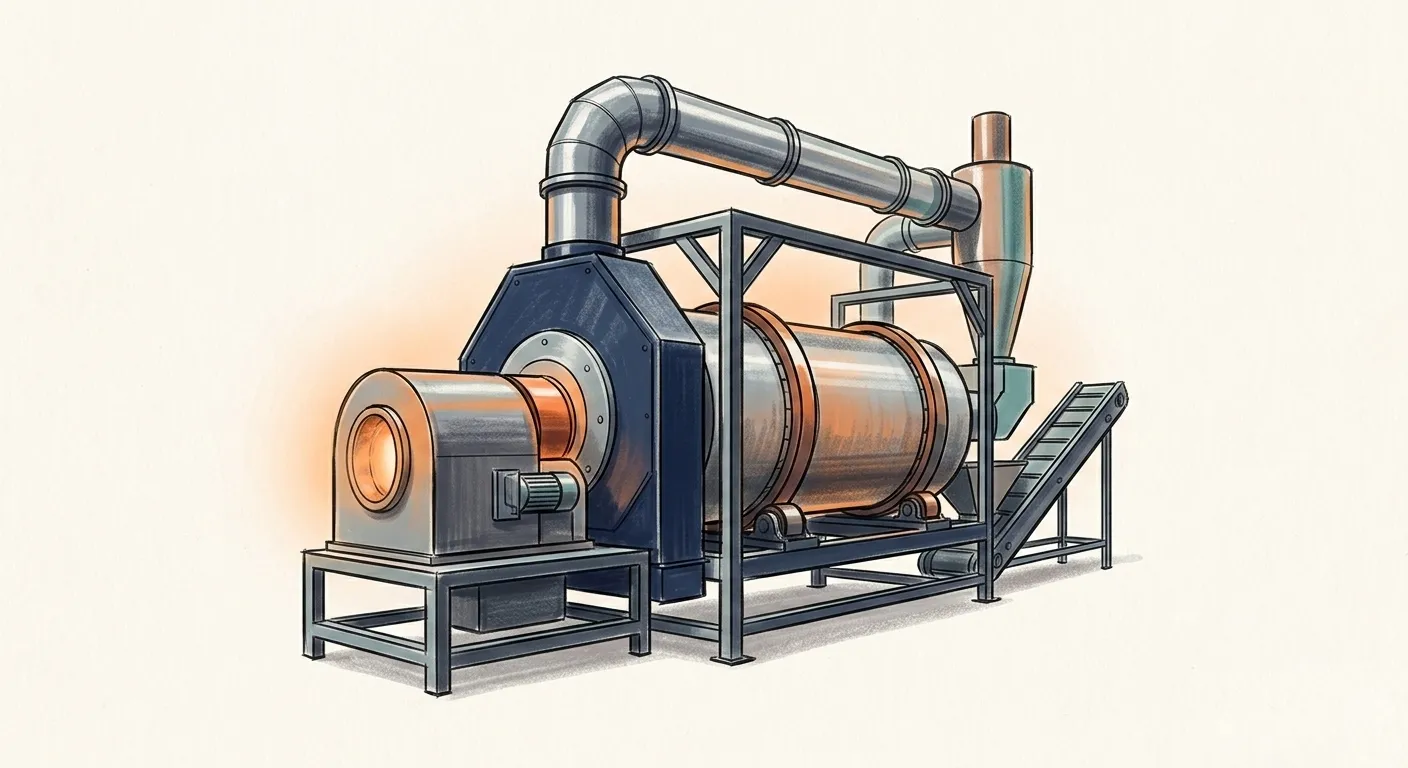

Walk into any plant manager's office and fuel price is usually the first thing on the whiteboard. That's fair, fuel is one of the biggest line items in any thermal process. But price only tells half the story. Two fuels priced almost identically can behave completely differently once they're actually burning, and that gap shows up in burner performance, production stability, energy use, and sometimes even in the finished product. Long before a burner fires or a dryer hits temperature, one number has already decided a lot of what happens next: calorific value.
Whether you're drying biomass, generating steam, recovering ethanol, or heating a reactor, the energy locked inside the fuel is quietly shaping every decision downstream. Chase the cheapest fuel without checking its energy content, and you often end up paying for it later, through higher consumption, oversized equipment, or a process that just won't hold steady.
Every Fuel Carries Its Own Energy Signature
Every fuel stores chemical energy, and combustion is simply the process of releasing it as heat. That total heat, released from a given quantity of fuel, is what we call calorific value, usually expressed in megajoules per kilogram, kilowatt-hours per kilogram, or British thermal units, depending on the region and industry.
It's not just a number sitting in a lab report. Engineers lean on it to estimate fuel consumption, pick the right burner, size the combustion chamber, and get a realistic sense of thermal performance before the plant is even switched on. A higher calorific value usually means more heat per kilogram, but that alone doesn't make a fuel the right choice. Availability, how it burns, moisture content, emissions, and what the process actually needs all factor into the final call.

Good fuel selection starts with the energy data first, then works toward the process requirements, not the other way round. Get that sequence right, and a lot of uncertainty disappears from plant design before it ever becomes a problem on the floor.
Heat Available on Paper Is Not Always Heat Available in the Plant
One of the first things engineers learn, often the hard way, is that not all the heat a fuel releases actually ends up doing useful work. That's the gap between Higher Heating Value (HHV) and Lower Heating Value (LHV).
HHV assumes the water vapour formed during combustion cools down enough to condense back into liquid. Condensation gives off extra latent heat, and HHV counts that in. LHV leaves it out, because in most real industrial systems, water vapour simply exits through the exhaust without condensing, so that latent heat is never recovered.
That's exactly why most industrial combustion systems, dryers, and process heaters are designed around LHV rather than HHV. It reflects the heat you'll actually get on a working day, not the heat you'd get under ideal lab conditions. This distinction is well recognised in thermal engineering and combustion practice.
Mix up HHV and LHV even once, and it can throw off your fuel calculations, efficiency estimates, and equipment sizing. Experienced engineers make a habit of checking which value they're looking at before comparing any two fuels.
Fuel Comparison Makes More Sense When Process Conditions Are Included
A fuel comparison only really means something once you bring the application into the picture. Numbers on their own rarely tell the full story.
Methane, for instance, sits near the top of the list for calorific value among common industrial fuels. Dry wood carries far less energy per kilogram, yet it stays relevant across biomass-based industries simply because it's renewable, locally sourced, and works well with a lot of existing thermal systems. Ethanol, meanwhile, holds less energy than petrol on a mass basis, but it still plays a real role in fuel blending, renewable energy strategy, and industrial processing.
This is precisely why engineers don't judge a fuel on one number alone. They weigh calorific value alongside combustion behaviour, moisture, storage needs, emissions, and how well it suits the existing equipment.
Moisture matters a lot in biomass processing specifically. As moisture climbs, part of the released heat gets used up just evaporating that water instead of driving the process forward. The result: less usable heat, more fuel burned, and a drop in thermal efficiency. This link between moisture and usable heating value is well documented in biomass engineering.
Calorific Value Influences More Than Fuel Selection
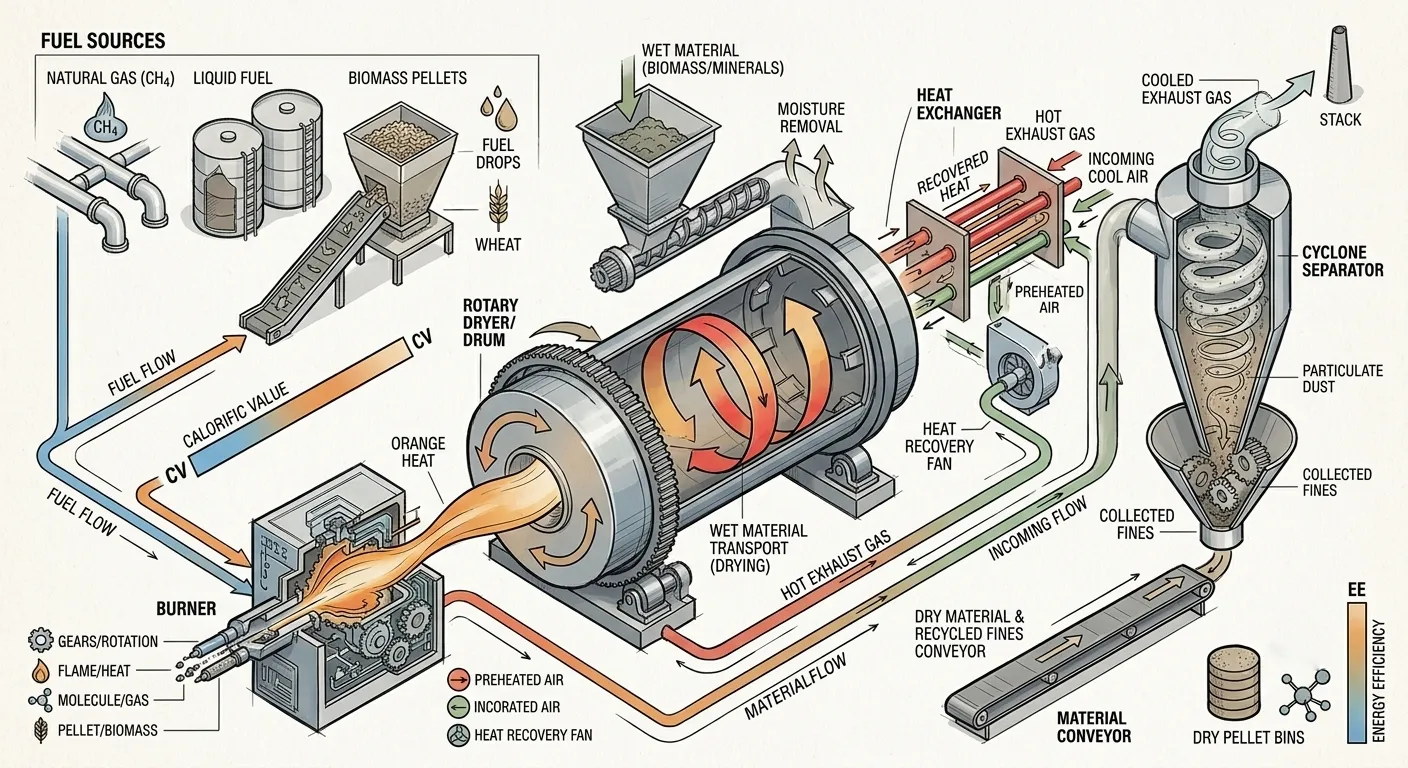
Once a fuel actually enters the process, its energy content starts shaping decisions well beyond just "which fuel to buy." Burner settings, air-to-fuel ratio, combustion chamber size, feed rate, all of it comes back to how much usable heat that fuel can actually deliver. Two fuels can produce what looks like the same flame and still send very different amounts of heat into the process.
This shows up most clearly in continuous production plants, where holding steady operating conditions matters a lot. Fuel quality that keeps shifting can trigger temperature swings, uneven drying, higher consumption, or constant manual adjustments during a run. Solid fuel data upfront helps catch these problems before they turn into operational headaches.
That's why engineers rarely pick a fuel purely on price or availability. Energy content gets studied alongside process temperature, production capacity, fuel handling logistics, and environmental factors, all together, not one at a time, before a fuel is signed off for a particular thermal application.
Moisture Can Reduce the Useful Energy Inside a Fuel
Of everything that affects fuel performance, moisture is one of the biggest, especially with biomass. Water itself contributes no heat during combustion. Instead, a chunk of the available energy goes into evaporating that moisture before the fuel can even burn properly.
So two batches of the same biomass can perform very differently depending on how wet they are. Dry wood or dry agricultural residue generally hands over more usable heat than a wet load, simply because less energy gets wasted boiling off water first. This relationship is especially relevant wherever biomass is used for industrial drying and thermal processing.

As moisture goes up, the effective heating value comes down, and that can mean higher fuel use, less stable combustion, and a harder time holding consistent process temperatures. In industries that lean heavily on biomass, controlling moisture ends up being nearly as important as choosing the fuel in the first place.
Energy Numbers Become Practical During Process Design
Calorific value isn't just a spec sitting in a fuel handbook, it becomes part of the actual engineering math during equipment design and process planning.
When engineers work out heat demand, they start by calculating how much thermal energy the process needs, then check that against the usable energy the chosen fuel can actually deliver. That comparison feeds straight into burner capacity, combustion air requirements, residence time, and overall thermal efficiency.
The same thinking applies when weighing conventional fuels against renewable ones. Ethanol carries a lower heating value than petrol, and that's a big part of why fuel blends are built in different ratios rather than swapping petrol out entirely. It's also part of why producing high-quality anhydrous ethanol matters so much for consistent fuel performance.
The principle holds across most industrial heating systems: understand the fuel's energy before locking in the equipment, and there's a lot less guesswork during commissioning, and a lot more stability over the life of the plant.
"A fuel is never judged only by the heat it can produce. It is judged by how efficiently that heat can be used inside the process."
Looking Beyond the Numbers
Calorific value is one of the simplest measurements you'll find in fuel evaluation, yet it touches almost every stage of industrial thermal processing. It gives engineers a common reference point for comparing fuels, estimating energy demand, and understanding how different materials behave once combustion starts.
But it's not the whole picture. Moisture content, combustion efficiency, operating conditions, emissions, equipment design, and the actual goals of the process all shape what you end up seeing on the plant floor. Look at these together, and you get a far more realistic view than any single energy number can give you on its own.
For industries working with biomass, thermal processing, or fuel-grade ethanol, that broader view is what supports better engineering decisions across the entire production cycle. At Kerone, this is the same approach built into our work on industrial drying, thermal processing, and ethanol recovery, fuel characteristics and process requirements considered together, not in isolation.
So the next time fuel options land on the table, does the decision start with price, or with the usable energy the process actually needs?




























Sign in to leave a comment.