
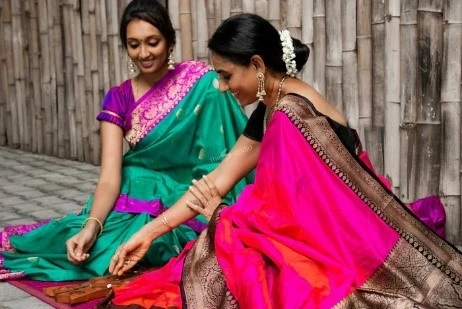
The colours used in sarees hold deep cultural, religious, and social significance, making them much more than just a fabric. Colour symbolism plays a significant role in Indian culture, and this is vividly reflected in the traditional attire of Indian women the saree. The Sanskrit word for caste, 'varna', literally means colour, and certain colours are traditionally associated with different castes. The history, methods, and types of color symbolism in Indian sarees reflect the diverse cultural tapestry of the country.
The history of colour symbolism in Indian sarees dates back centuries, with different colours being associated with various emotions, rituals, and occasions. For example, red symbolizes fertility, passion, and marriage in many regions of India, while white symbolizes purity and is often worn during religious ceremonies. Yellow is associated with auspicious beginnings and is often worn during religious ceremonies and festivals. White, on the other hand, represents purity and is commonly worn for mourning in some Indian cultures.































Sign in to leave a comment.