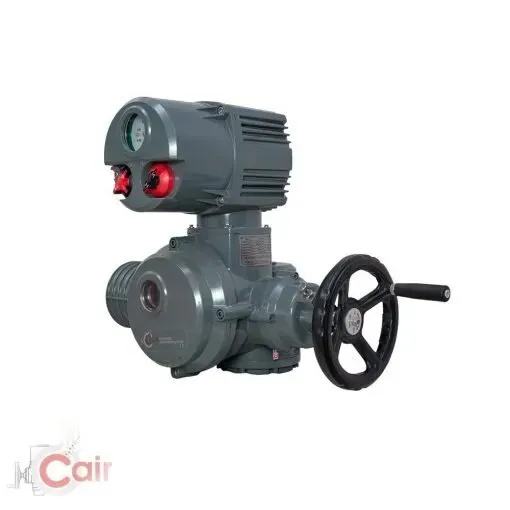

Selecting the correct actuator is an important engineering decision in any automated valve system. An actuator must generate enough torque or thrust to operate a valve reliably under actual process conditions, while also providing suitable control, speed, and environmental protection. An incorrectly sized actuator can result in poor valve operation, excessive energy consumption, premature wear, or unnecessary equipment costs.
Among the available automation options, electric actuators are widely used where reliable automated valve operation, precise positioning, and integration with electrical control systems are required. However, selecting an electric actuator should not be based only on the valve size. Engineers need to consider valve type, operating torque, pressure, temperature, duty cycle, control requirements, and environmental conditions.
Cair Euromatic Automation provides industrial valve automation solutions designed around practical application requirements. Understanding the fundamentals of actuator sizing can help plant engineers and maintenance professionals make better decisions when specifying automated valve equipment.
What Is an Electric Actuator?
An electric actuator is a motor-driven device used to automate the opening, closing, or positioning of an industrial valve. Electrical energy is converted into mechanical movement, which is then transferred to the valve stem, shaft, or other operating mechanism.
Depending on the valve and application, electric actuators may provide:
- Quarter-turn operation
- Multi-turn operation
- Open/close control
- Intermediate positioning
- Modulating control
- Remote operation
The correct actuator configuration depends on the mechanical and control requirements of the valve.
Why Correct Sizing Matters
The primary purpose of actuator sizing is to ensure that the actuator can operate the valve under the most demanding expected conditions.
If the actuator is undersized, it may struggle to move the valve, particularly when process pressure creates additional resistance. This can cause overheating, incomplete operation, or premature failure.
An oversized actuator may operate the valve successfully but can increase initial costs and may provide more torque than the valve and stem assembly require.
Correct sizing provides a practical balance between:
- Operating reliability
- Torque capacity
- Energy consumption
- Equipment cost
- Service life
- Control performance
Start With the Valve Type
Actuator selection begins with understanding the valve being automated.
Different valves require different types of mechanical movement.
For example, quarter-turn valves such as butterfly and ball valves typically require rotational movement through a limited angle. Gate and globe valves generally use linear or multi-turn stem movement.
Therefore, engineers must identify whether the application requires a quarter-turn or multi-turn actuator before selecting the equipment.
Determine the Required Torque
Torque is one of the most important parameters when sizing electric actuators for rotary valves.
The required torque can be influenced by:
- Valve design
- Valve size
- Operating pressure
- Fluid characteristics
- Seat friction
- Packing friction
- Temperature
- Valve condition
- Breakaway requirements
The actuator should provide sufficient torque throughout the complete operating cycle.
It is important not to rely solely on nominal valve size when determining torque requirements. Manufacturer-provided valve torque data should be considered wherever available.
Breakaway Torque
Breakaway torque refers to the torque required to initially move a valve from its seated or stationary position.
This can be higher than the torque required to keep the valve moving.
For this reason, actuator sizing should account for the highest torque demand rather than only the average running torque.
Ignoring breakaway requirements can lead to an actuator that appears adequate under normal conditions but fails to operate the valve when starting from a fully closed or seated position.
Running and Seating Torque
In addition to breakaway torque, engineers should consider running torque and seating or closing torque.
The actuator must have sufficient output throughout the complete valve cycle.
For valves with tight shut-off requirements, seating torque can be particularly important. The actuator should provide enough force to achieve the required valve closure without exceeding the valve's mechanical limits.
Consider Operating Pressure and Temperature
Process conditions can significantly influence valve operating torque.
Higher pressure may increase resistance to valve movement, while temperature can affect sealing materials, lubrication, and mechanical components.
When selecting electric actuators, engineers should evaluate:
- Normal operating pressure
- Maximum pressure
- Minimum and maximum temperature
- Process media
- Ambient temperature
These conditions help determine the appropriate actuator capacity and construction.
Duty Cycle Matters
Electric actuators are not all designed for the same operating frequency.
Some valves may operate only a few times per day, while others may cycle frequently or require continuous modulating control.
Duty cycle considerations include:
- Number of operations per hour
- Operating duration
- Required travel time
- Modulating or on/off operation
- Frequency of valve movement
Selecting an actuator based on actual duty requirements helps prevent overheating and premature wear.
Speed and Operating Time
Actuator speed can directly affect process performance.
Some applications require rapid valve operation, while others require controlled movement to prevent pressure surges or process instability.
For example, opening a large valve too quickly may contribute to undesirable flow changes. In other applications, rapid isolation may be necessary.
Therefore, actuator speed should be selected according to the process rather than simply choosing the fastest available option.
Environmental Conditions
Industrial actuators may operate in challenging environments.
The installation location may expose equipment to:
- Dust
- Moisture
- Chemicals
- Outdoor weather
- High temperatures
- Vibration
The actuator enclosure and protection level should be appropriate for the environment.
For outdoor or demanding industrial installations, environmental protection can be just as important as torque capacity.
Control and Feedback Requirements
Modern industrial facilities often require more than basic open-and-close operation.
Depending on the application, electric actuators may need to support:
- Local controls
- Remote operation
- Position feedback
- Limit switches
- Modulating control
- PLC integration
- Emergency shutdown functions
Control requirements should be defined before final actuator selection to ensure compatibility with the plant's automation system.
Common Sizing Mistakes to Avoid
Several mistakes can lead to incorrect actuator selection.
Choosing Based Only on Valve Size
A large valve does not automatically require a specific actuator size. Actual torque requirements should be evaluated.
Ignoring Breakaway Torque
The actuator must have enough torque to overcome initial resistance.
Overlooking Duty Cycle
An actuator suitable for occasional operation may not be appropriate for frequent cycling.
Neglecting Environmental Conditions
An actuator installed outdoors or in a dusty environment may require additional protection.
Forgetting Safety Margins
The actuator should have a suitable operating margin based on reliable engineering data and manufacturer recommendations rather than being selected exactly at the calculated minimum requirement.
Why Choose Cair Euromatic Automation?
Cair Euromatic Automation provides industrial valve and automation solutions for applications requiring dependable process control. Its product range includes industrial valves, electric actuators, pneumatic actuators, ball valves, butterfly valves, gate valves, and other automation solutions.
With a focus on practical industrial requirements, Cair Euromatic Automation supports customers in selecting valve automation equipment based on application parameters such as valve type, operating conditions, torque requirements, control method, and duty cycle.
The company emphasizes dependable engineering and application-oriented solutions to help industries improve valve automation and operational reliability.
Best Practices for Electric Actuator Selection
Before finalizing electric actuators for an industrial valve, engineers should:
- Identify the valve type and operating mechanism.
- Obtain reliable torque or thrust requirements.
- Consider breakaway, running, and seating loads.
- Review pressure and temperature conditions.
- Determine the required operating speed.
- Evaluate duty cycle and frequency.
- Check electrical supply requirements.
- Consider environmental protection.
- Confirm control and feedback requirements.
- Follow the actuator and valve manufacturer's technical recommendations.
This systematic approach reduces the risk of incorrect sizing and helps ensure reliable automated valve operation.
Conclusion
Correct actuator sizing is essential for achieving dependable valve automation. Electric actuators must be selected according to actual valve torque or thrust requirements, process conditions, duty cycle, operating speed, environmental factors, and control requirements.
Rather than choosing an actuator solely according to valve size, engineers should evaluate the complete application and use verified technical data wherever possible. Proper sizing helps prevent underperformance while avoiding unnecessary oversizing and associated costs.
With its experience in industrial valve automation, Cair Euromatic Automation provides solutions designed to support reliable and efficient automated valve operation. Careful engineering, correct actuator selection, and appropriate installation and maintenance can help industrial facilities achieve consistent performance and longer equipment service life.



























Sign in to leave a comment.